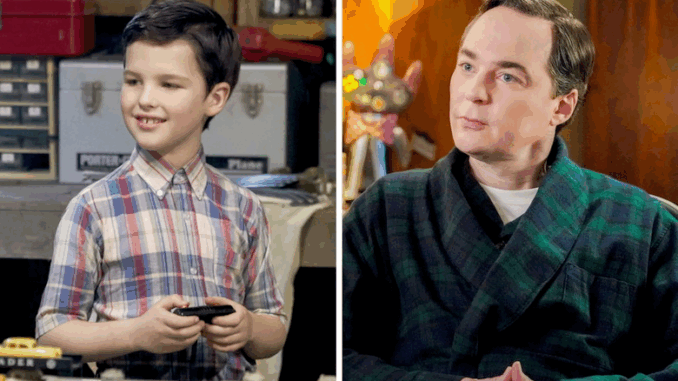
‘Young Sheldon’: Every ‘Big Bang Theory’ Easter Egg In Seasons 1–7
If you’re a fan of both The Big Bang Theory and Young Sheldon, then you already know the truth: the prequel wasn’t just built to tell Sheldon’s childhood story — it was built as a treasure hunt. Every season is sprinkled with hidden winks, callbacks, future foreshadowing, character references, and moments that link Sheldon’s past to the quirky genius we meet years later in Pasadena.
And now that Young Sheldon has wrapped its seven-season run, it’s the perfect time to break down every single Big Bang Theory Easter egg hidden throughout the show. Some are obvious. Others? So subtle you probably missed them completely.
Let’s dive deep into the crossovers, connections, characters, and storyline threads that stitched these two beloved shows into one shared universe.
Why Young Sheldon Is Filled With Easter Eggs
The creators always intended Young Sheldon to not just explain Sheldon Cooper — but to honor his future. That means:
-
references to characters we meet later,
-
early versions of iconic jokes,
-
backstory confirmations,
-
foreshadowing of major Big Bang Theory milestones,
-
and a whole lot of emotional nods that hit hard once you know the full story.
Every Easter egg becomes more meaningful when you remember how Sheldon’s adult life unfolds.
Sheldon’s Spot: The Birth of the Iconic Cushion Location
One of the earliest and funniest Easter eggs is the origin of Sheldon’s famous “spot.”
In Young Sheldon, he carefully picks a specific seat on the couch at home — citing airflow, sunlight angles, and proximity to the TV.
It’s a moment Big Bang fans instantly recognize, because this “spot logic” becomes a core part of Sheldon’s adult identity.
The First Use of “Bazinga!”
In The Big Bang Theory, “Bazinga!” becomes Sheldon’s signature prank phrase.
In Young Sheldon, we see the origin story: a comic-book inspired joke he reads as a kid.
His innocent fascination with it eventually evolves into the punchline we hear for 12 seasons.
It’s one of the best Easter egg payoffs between the two shows.
The Soft Kitty Connection
Fans of The Big Bang Theory know the “Soft Kitty” song as Sheldon’s go-to comfort ritual — and in Young Sheldon, we see exactly where it came from. His mother sings it to him when he’s sick, creating an emotional through-line that lasts his entire life.
Sheldon’s Fear of Driving
In The Big Bang Theory, Sheldon refuses to drive.
Young Sheldon reveals the root of this fear through early episodes showing:
-
anxiety about vehicles,
-
overly cautious observations,
-
and moments where he’s terrified of road unpredictability.
It’s not just played for laughs — the show gives it emotional depth.
The Roommate Agreement Seeds
While Sheldon doesn’t draft the infamous Roommate Agreement until he lives with Leonard, Young Sheldon subtly reveals early signs of his contract-loving personality:
-
strict house rules
-
laminated chore grids
-
rulebooks for toys
-
and even agreements with Missy and Georgie
You see the early lawyer inside of him — long before Leonard suffers through it.
Tam’s Future Disappearance Foreshadowed
Fans of The Big Bang Theory remember the adult Tam appearing in Season 12 — explaining why he and Sheldon drifted apart.
This moment is subtly foreshadowed in Young Sheldon several times, especially as Sheldon’s academic interests pull him away from typical friendships.
It’s one of the most emotional cross-series connections.
The Birth of Sheldon’s Catchphrases
Several of Sheldon’s future sayings appear in early forms throughout the show:
-
“Fun fact…”
-
“I’m not crazy. My mother had me tested.”
-
“That’s not how physics works.”
Each early version is like a callback in reverse — building the Sheldon we already know.
Dr. Sturgis as a Proto-Professor Proton
In The Big Bang Theory, Professor Proton becomes a major mentor figure for adult Sheldon.
In Young Sheldon, Dr. Sturgis fills a similar emotional role:
-
he inspires
-
he challenges
-
he comforts
-
he becomes Sheldon’s intellectual safe space
It beautifully echoes the impact mentors have on Sheldon’s life.
Connections to Leonard’s Childhood
Leonard’s struggles with his mother Beverly are a recurring theme in The Big Bang Theory.
In Young Sheldon, we see:
-
Sheldon casually invalidating Leonard’s future trauma,
-
Mary inadvertently paralleling Beverly’s emotional rigidity,
-
and tiny jokes that hint Sheldon will later be oblivious to Leonard’s suffering.
These Easter eggs hit differently when you know what’s ahead.
Howard’s Dad and Sheldon’s Disbelief
A major Howard storyline from The Big Bang Theory involves his missing father.
In Young Sheldon, Sheldon makes remarks ab
Sheldon’s inability to read emotional nuance?
It starts here.
The Elevator Tragedy Foreshadowed
In The Big Bang Theory, Leonard tells the story of how the elevator in the Pasadena apartment was destroyed.
In Young Sheldon, Sheldon’s fear of mechanical failures, structural calculations, and paranoia about disasters quietly set the stage for why he becomes so obsessed with safety.
The Explanation of Sheldon’s Love for Comic Books
While Sheldon becomes a comic-book lover in his adult life, Young Sheldon shows:
-
his first comic purchase,
-
his early obsession with superheroes,
-
and his fascination with fictional universes.
It’s the origin story fans always wanted.
Meemaw and Amy Parallels
Fans noticed something funny years ago:
Sheldon says Amy reminds him of his Meemaw.
Young Sheldon confirms it.
Meemaw’s:
-
sarcasm,
-
intelligence,
-
emotional walls,
-
and stubbornness
mirror Amy’s personality almost exactly.
This Easter egg is subtle but brilliant storytelling.
The Pasadena Mention
In one episode, Sheldon casually mentions Pasadena — long before he ever sets foot in California. It’s a cute nod to the future city he’ll eventually call home.
The Nobel Prize Obsession Begins Early
In The Big Bang Theory, Sheldon’s biggest dream is winning a Nobel Prize.
Young Sheldon shows that dream taking hold when he’s a child — complete with scenes of:
-
him practicing his acceptance speeches,
-
learning about past winners,
-
and obsessing over the rules.
It’s adorable… and very Sheldon.
Future Friendships Teased Through Narration
Adult Sheldon narrates much of the show — and he often drops Easter eggs referencing:
-
“my future best friend Leonard,”
-
“my not-so-close friend Howard,”
-
“my future wife Amy,”
-
and “Raj, who still doesn’t understand sarcasm.”
These small moments connect both timelines beautifully.
The Elevator Repair Scene Parallel
One episode has young Sheldon trying to fix a household appliance, and it ends… well, badly.
The scene mirrors the adult storyline where Leonard tries to fix the broken elevator.
Some fans call it a “spiritual prequel moment.”
Mary’s Overprotectiveness Explains Sheldon Completely
In The Big Bang Theory, Mary Cooper often swoops in to defend and excuse Sheldon.
Young Sheldon shows exactly why:
-
he’s brilliant,
-
he’s socially fragile,
-
and he’s different.
Her protectiveness becomes the root of Sheldon’s adult entitlement — a subtle but meaningful Easter egg.
The Show-Ending Easter Egg: Leonard’s Future Son
One of the final episodes of Young Sheldon quietly confirms a major Big Bang Theory future event:
Leonard eventually has a son named Leonard Jr.
Fans were stunned — and it tied the two universes together perfectly.
Conclusion
Across seven seasons, Young Sheldon delivered far more than childhood nostalgia — it gave fans a deeper, richer understanding of Sheldon Cooper and the entire Big Bang Theory universe. These Easter eggs didn’t just connect the shows; they expanded the emotional landscape of both series.
Every callback, every character reference, every subtle detail added a layer of meaning for longtime fans.
And now that both stories are complete, these connections feel more powerful than ever.
FAQs
1. How many Big Bang Theory Easter eggs appear in Young Sheldon?
Hundreds. Nearly every episode contains at least one reference or future payoff.
2. Does Young Sheldon change any Big Bang Theory canon?
Mostly, it expands it — though a few small details are reinterpreted for continuity.
3. Are there cameos from the original Big Bang Theory cast?
Yes, several cast members appear as voiceovers or in special narration moments.
4. Do we see how Sheldon meets Leonard in Young Sheldon?
No, but the show sets up the emotional path that eventually leads him to Pasadena.
5. Which season has the most Easter eggs?
Season 7 delivers the biggest emotional crossovers, but Seasons 1 and 2 contain the densest comedic references.