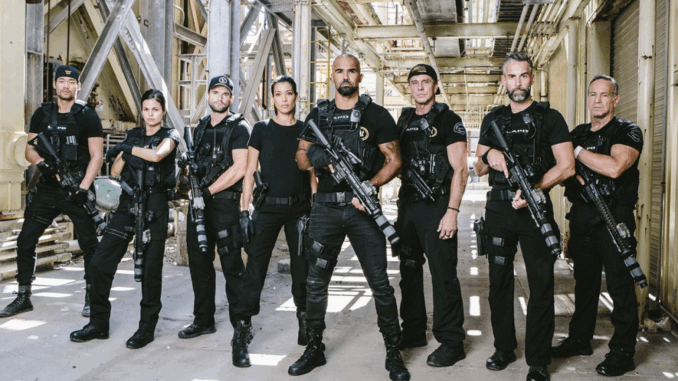
“S.W.A.T. Is Done: The Real Reason CBS Quit After Season 8 — And It’s Not Ratings”
Introduction: A Final Farewell That No One Saw Coming
When CBS confirmed that S.W.A.T. would end with Season 8, fans were blindsided. This show wasn’t some declining relic. It had passion, momentum, a loyal fandom, and—ironically—strong ratings for a long-running action series. So why would CBS walk away from such a steady performer?
Here’s the twist:
The cancellation had little to do with ratings… and everything to do with business.
Let’s take a deep dive into why CBS ultimately decided to end S.W.A.T., what was happening behind the scenes, and what this decision means for viewers, the cast, and the future of network TV.
A Show With Strong Ratings—So Why End It?
This is what confused fans the most. S.W.A.T. wasn’t failing. In fact, it often outperformed shows that did get renewed.
But TV decisions aren’t always about who’s watching.
The Hidden Costs of Long-Running Shows
Every season of a network series gets more expensive to produce. Salaries rise. Production budgets grow. Action-oriented shows—like S.W.A.T.—get particularly pricey.
Explosions aren’t cheap.
Stunts aren’t cheap.
Realistic tactical sequences definitely aren’t cheap.
By Season 8, the show’s budget ballooned enough that CBS had to ask a tough question:
Is the cost worth the return?
The Studio–Network Tug-of-War
Here’s something many fans don’t realize:
CBS airs the show, but Sony owns it.
That means CBS pays a licensing fee to Sony. When the fee becomes too high and CBS doesn’t own the backend profits? The math stops working.
This is the real battle behind many cancellations.
Think SEAL Team, Blue Bloods, Criminal Minds—it’s the same story over and over.
Shemar Moore’s Renewal-Season Drama—A Clue to the Truth
You might remember when S.W.A.T. was previously canceled after Season 6… only to be revived after an intense fan campaign.
Shemar Moore publicly called out the network.
Fans flooded social media.
CBS caved—briefly.
But here’s the truth:
The renewal after Season 6 was always a temporary extension, not a long-term commitment.
Season 8 was shaped as a send-off, not a continuation.
CBS Wanted a “Conclusion,” Not Another Extension
Networks don’t like messy exits. Instead of pulling the plug abruptly, CBS chose:
-
a final renewal
-
a shortened season
-
a structured goodbye
This gives the cast closure.
It gives fans closure.
And it gives the network an escape plan.
The Decision Was Financial, Not Personal
Shemar Moore wasn’t wrong when he said fans saved the show once. But even fan pressure can’t fight:
-
licensing fees
-
cost-per-episode
-
corporate restructuring
-
changing network priorities
CBS didn’t “quit” emotionally.
They quit financially.
The Changing Landscape of Network TV
Another big reason S.W.A.T. ended?
Television is changing—fast.
And traditional broadcast TV is shrinking.
Streaming Has Changed the Rules
CBS isn’t just competing with NBC and ABC anymore. They’re competing with:
-
Netflix
-
Amazon
-
Hulu
-
Peacock
-
Disney+
-
Paramount+ (their own platform!)
And action shows on streaming pull massive global audiences—far larger than a weekly CBS broadcast.
CBS Wants to Invest in Shows It Owns
When CBS owns a show, it profits from:
-
reruns
-
streaming deals
-
international licensing
-
merchandise
S.W.A.T. didn’t offer that advantage because Sony owns it.
CBS wants shows that feed Paramount+.
That wasn’t S.W.A.T.
Behind-the-Scenes Production Battles
Let’s talk logistics.
Location Costs Were Skyrocketing
S.W.A.T. wasn’t a cheap, “shoot in the neighborhood” drama.
It was a location-heavy, tactical action series.
Every season got more ambitious with:
-
armored vehicles
-
helicopter scenes
-
military-style rescues
-
complex urban shoots
The cost kept rising.
Contract Negotiations Got Complicated
Long-running cast contracts are expensive.
By Season 8, multiple actors were due:
-
big raises
-
backend points
-
guaranteed episode counts
Combine that with production cost inflation, and the math simply collapses.
Why CBS Truly Walked Away
Let’s recap the actual reasons:
1. Rising Production Costs
Action drama = high budget.
Stunts + gear + sets + tactical scenes = even higher budget.
2. Licensing Issues With Sony
CBS pays.
Sony owns.
CBS wasn’t getting backend profit.
3. Network TV’s Shrinking Revenue
Streaming is eating the landscape.
Ad revenue is shrinking.
Networks have to choose carefully.
4. Corporate Restructuring
CBS is reorganizing its slate.
Shows that cost more than they return get cut.
5. The Need for New, Cheaper Content
Fresh reboots, procedurals, and studio-owned shows take priority.
What Fans Can Expect From the Final Season
Season 8 is designed as a goodbye, not a cliffhanger.
Expect:
-
emotional closure
-
a major final mission
-
character endings that honor their arcs
-
a tribute to the team’s brotherhood
-
a satisfying finale
The writers know the fans fought for this show.
They’re sending it out with love.
Could S.W.A.T. Return on Another Platform?
This question keeps popping up.
And surprisingly… yes, it’s possible.
Sony Owns the Property, Not CBS
Which means Sony can sell it to:
-
Netflix
-
Amazon
-
Hulu
-
Paramount+
-
Apple TV+
CBS ending its run doesn’t kill the franchise.
Streaming LOVES Action Dramas
Shows like:
-
Jack Ryan
-
Reacher
-
Bosch
dominate streaming globally.
A S.W.A.T. revival or spin-off isn’t unrealistic.
And Shemar Moore has already said he’d be open to continuing.
Conclusion: It Was Never About Ratings—It Was About Money and the Future
Fans didn’t want S.W.A.T. to end.
Shemar Moore didn’t want it to end.
Even CBS didn’t want it to end emotionally.
But TV isn’t about emotion—it’s about economics.
And the numbers behind S.W.A.T. no longer aligned with CBS’ business strategy.
Still, the legacy of the show is powerful:
-
Tight storytelling
-
Strong representation
-
Incredible action
-
A loyal fanbase
-
Characters that became family
Season 8 may be the end of CBS’ journey with S.W.A.T., but the franchise? It might not be done yet.
Fans saved it once.
A streamer could save it again.
For now, we honor the ride.
FAQs
1. Did CBS cancel S.W.A.T. because of bad ratings?
No. Ratings were solid. The cancellation was due to cost, licensing, and shifting network priorities.
2. Who owns S.W.A.T.—CBS or Sony?
Sony owns it. CBS only licensed it, which reduced CBS’ benefit from keeping it.
3. Could S.W.A.T. move to streaming?
Yes. Because Sony owns the show, it can shop it to other platforms.
4. Why was Season 8 the final season?
It served as a planned conclusion that tied up storylines instead of ending abruptly.
5. Is Shemar Moore returning if a reboot happens?
He has hinted publicly that he’d be open to continuing the role if the show finds a new home.