
The Good Doctor has delivered emotional, heartbreaking, and philosophically heavy episodes before — but few moments capture the spirit of the series more cleverly than the scene where Shaun Murphy compares the structure of a car to the human body. What begins as a simple analogy becomes one of the show’s most memorable teaching moments, demonstrating how genius often hides inside unexpected logic.
In a show defined by unconventional thinking, this episode stands out as a masterclass in how The Good Doctor blends creativity, chaos, and medical brilliance.
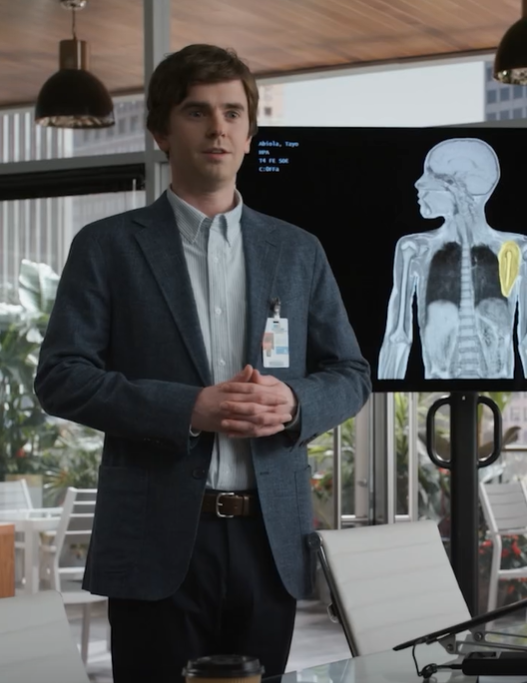
Why Shaun’s Car Analogy Works So Well
When Shaun says, “The anatomy of a car and a human body is the same, right?”, it initially sounds absurd — even to the other doctors. But the episode uses this analogy to reveal the way Shaun’s mind breaks down complex problems into familiar structures.
Both Have:
-
A power source (heart vs. engine)
-
A circulatory system (blood vessels vs. fuel lines)
-
A filtration system (kidneys/liver vs. oil and air filters)
-
Structural support (bones vs. chassis)
-
Communication systems (neurons vs. electrical wiring)
What seems like a childish comparison becomes the key to diagnosing a patient no one else can understand.
How the Episode Turns Shaun’s Logic Into a Life-Saving Breakthrough
During the case, the team hits a diagnostic dead end. Symptoms don’t match the tests, and every theory collapses. Shaun, watching a mechanic repair a car nearby, suddenly sees the parallel.
His Process:
-
Identify the “failing part.”
-
Consider the “system connected to that part.”
-
Look for the “blockage, leak, or misfire.”
-
Test the system based on mechanical logic, not medical convention.
This allows Shaun to discover an underlying condition the others missed — one that requires an unconventional treatment path only he would consider.
It’s classic Shaun: logic that seems wrong at first glance but becomes brilliant under pressure.
Why This Episode Defines Shaun’s Character Arc
Shaun doesn’t think like other doctors. He doesn’t communicate like them either. But that difference is his power — the reason he solves cases no one else can.
This episode highlights three major themes central to his character:
1. Pattern Recognition as Genius
Shaun’s gift is seeing the world in systems. When other doctors hit emotional or intellectual walls, Shaun rewires the problem entirely.
2. The Value of Neurodiversity in Medicine
Instead of framing Shaun’s autism as an obstacle, the episode shows how diversity of thought saves lives.
3. The Tension Between Logic and Empathy
Even though Shaun’s analogy is technical, the case forces him to connect emotionally as well — blending his mechanical worldview with human compassion.
How the Episode Impacts the Rest of the Series
This moment becomes a reference point in later episodes. Whenever the team faces a complex problem, Shaun’s ability to simplify the impossible becomes a quiet reminder: sometimes the solution comes from the least expected thinking.
It also:
-
strengthens Shaun’s credibility as a surgeon
-
reshapes the way his colleagues view “unusual logic”
-
contributes to the evolving trust between Shaun and his mentors
The analogy becomes part of his identity — the doctor who saves lives because he refuses to think like everyone else.
The Bottom Line
“The anatomy of a car and a human body is the same, right?” may sound like a joke at first, but in The Good Doctor, it becomes a powerful metaphor for Shaun Murphy himself:
unexpected, unconventional, and absolutely essential.
Episodes like this remind us why the series works so well — because it shows that brilliance doesn’t always come from following the rules, but from seeing the world differently.
If you want, I can expand this into a deep-dive episode recap, add analysis on how the analogy scientifically holds up, or continue with more iconic Shaun moments.