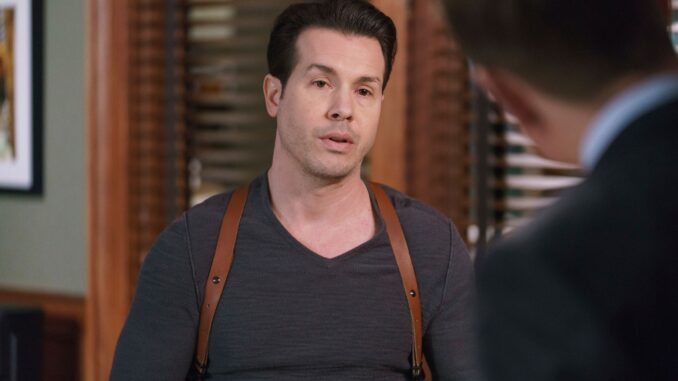
The sprawling, interconnected universe of Dick Wolf’s Chicago franchise thrives on its ensemble casts, characters who become as familiar and beloved to viewers as members of their own extended families. Among these, Jon Seda’s Antonio Dawson stood out as a beacon of integrity and dedication, a character whose journey from homicide detective to intelligence unit member and then to a dramatic exit left a significant void. Antonio’s departure from Chicago P.D. was not a simple farewell; it was a complex tapestry woven from compelling in-universe narrative threads and the often-unseen but powerful forces of television production decisions, creating a storyline that resonated with both heartbreak and the harsh realities of show business.
From his initial appearances on Chicago Fire before anchoring Chicago P.D., Antonio Dawson was established as a meticulous, morally upright detective, often serving as a foil to Hank Voight’s more ethically ambiguous methods. He was a family man, a seasoned investigator, and a steady hand within the volatile Intelligence Unit. His initial move to the State’s Attorney’s office in Season 4 was a temporary foray, driven by a desire for a different pace, but he soon returned to the Intelligence Unit, a move that delighted fans who missed his steadfast presence. However, it was his final departure at the beginning of Season 7 that truly marked an end to his tenure.
The in-universe narrative that propelled Antonio’s exit was a poignant and often harrowing descent into painkiller addiction. The storyline began with a severe shoulder injury sustained during a dangerous raid, which led to a prescription for opioids. What started as legitimate pain management quickly spiraled into dependence. Viewers watched with growing concern as Antonio, once the epitome of control and discipline, began to unravel. He made reckless decisions, became secretive, and his judgment grew increasingly clouded by his need for the pills. This arc was a powerful, if difficult, illustration of how easily even the strongest individuals can fall prey to addiction, especially when under immense physical and psychological stress.
The climax of this storyline saw Antonio at his lowest point, suffering a near-fatal overdose. It was Hank Voight, ironically the man whose methods Antonio often questioned, who discovered him and saved his life. This moment served as a stark realization for Antonio: he could no longer effectively serve as a police officer while battling such a profound internal war. His integrity, a cornerstone of his character, felt compromised, and the risk he posed to himself and his team was undeniable. The decision, though painful, became clear: he needed to leave Chicago to truly recover, to be with his family, specifically his sister Gabriela Dawson (from Chicago Fire), and to seek treatment in Puerto Rico. This dramatic, character-driven exit provided a compelling and emotionally charged reason for his absence from the unit.
However, the story on screen only tells half the tale. The decision to write Antonio Dawson out of Chicago P.D. was also deeply rooted in the practicalities of television production. Reports indicated that Jon Seda’s contract was not renewed by NBC and Wolf Entertainment for the seventh season. While the official reasons are rarely made public in detail, such decisions can stem from a variety of factors: creative changes in the direction of the show, budget considerations, or a desire to rotate cast members to keep the ensemble fresh. Seda had been a core part of the Chicago universe for years, and his popularity was undeniable, making the decision particularly surprising and disappointing for many fans.
This out-of-universe reality meant that the writers were tasked with crafting a plausible and impactful exit for a beloved character on short notice. The addiction storyline, while organic to the character’s journey, also served as a convenient and powerful narrative device to explain his abrupt departure. It provided a dramatic and final note to his time in Chicago, rather than a more open-ended or less definitive exit.
In essence, Jon Seda’s Antonio Dawson left Chicago P.D. due to a confluence of factors: the poignant and difficult battle with painkiller addiction that necessitated his removal from active duty for the sake of his recovery and the unit’s safety, and the behind-the-scenes business decision not to renew Jon Seda’s contract. The narrative provided a heart-wrenching justification for his absence, while the realities of television production dictated the ultimate timing and permanence of the exit. Antonio Dawson’s departure thus stands as a vivid illustration of the delicate balance between compelling storytelling and the often-unseen mechanics of show business, leaving fans with both a powerful memory of his struggle and a lasting appreciation for the steadfast detective he once was.