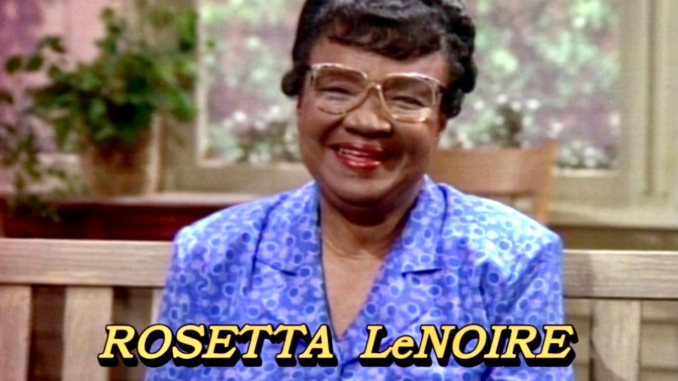
When fans think about Family Matters, they remember the humor, the warmth, and of course, the iconic Winslow family matriarch—Estelle “Mother” Winslow. She was sassy, wise, charming, and had impeccable comedic timing. But here’s the twist most people never knew: the actress behind the beloved Mother Winslow, Rosetta LeNoire, didn’t immediately want to take the role. Yes, the woman whose presence helped define the show had doubts from the very beginning.
So why did she hesitate? And what eventually convinced her to step into one of the most memorable grandmother roles in sitcom history? Let’s dive into the little-known story behind her casting—and the legacy she left behind.
The Hidden Story Behind the Casting
The Unexpected Hesitation From Rosetta LeNoire
Rosetta LeNoire was no newcomer to show business when Family Matters came calling. With a long and respected career in theater and television, she had already built a legacy as both an actress and an advocate for diversity in the arts. Taking a sitcom role—especially in a family-centered comedy—wasn’t automatically appealing to her.
She initially questioned whether the character was right for her and if joining a sitcom would align with the serious, purpose-driven work she built her career on. LeNoire was selective. She wanted roles with substance, and she wasn’t convinced Mother Winslow would provide that.
Why an Established Actress Was Uncertain
When you’ve spent decades shaping meaningful roles and fighting for representation, the fear of being typecast or underutilized becomes real. LeNoire’s hesitation stemmed from:
-
Concern about being reduced to a background grandmother
-
Uncertainty about the show’s long-term direction
-
Doubts about the depth the character would be allowed to have
-
A desire to maintain artistic integrity
She wasn’t looking for “just another job.” She wanted a role that mattered.
The Creative Team Knew They Needed Her
Why Casting Mother Winslow Was Crucial
The producers understood the show needed a character like Mother Winslow—someone who brought history, grounding, and a real generational dynamic to the Winslow household. Without her, the family’s emotional foundation would feel incomplete.
They didn’t just want an actress. They wanted someone with gravitas, warmth, and believable authority. In other words, they wanted Rosetta LeNoire, and no one else.
The Push to Convince Her
When she resisted the offer, the production team didn’t move on to someone new. Instead, they leaned in harder. They explained:
-
How pivotal the character was
-
How much creative freedom she would have
-
How the role would honor her strengths
-
How her presence could elevate the entire show
They weren’t exaggerating. They genuinely saw her as the glue that would bind the Winslow family dynamic.
How They Ultimately Won Her Over
Appealing to Her Artistic Purpose
LeNoire dedicated much of her life to improving representation in the entertainment industry. When producers explained their vision of a positive, grounded African-American family sitcom, that vision spoke to her values. She saw an opportunity to contribute to something meaningful—something that could shape perceptions and normalize representation.
That mattered.
The Promise of a Strong Matriarchal Role
The creative team made it clear Mother Winslow wouldn’t be a one-note character or a simple comedic accessory. She would:
-
Speak truth with heart
-
Guide the family through life’s challenges
-
Bring humor without sacrificing depth
-
Represent strength and generational wisdom
This was the kind of role LeNoire felt proud to embody.
Respect for Her Legacy
Producers showed respect not only for her talent, but for what she represented. They treated her as a foundational piece of the show, not an afterthought. That sense of dignity played a major part in changing her mind.
Transforming Doubt Into an Iconic Role
Mother Winslow Became a Fan Favorite
Once she accepted the role, LeNoire made Mother Winslow unforgettable. Her sass, charm, and perfectly delivered one-liners quickly made her one of the most beloved characters on the show. She wasn’t just a grandmother—she was the heartbeat of the Winslow home.
She Added Generational Depth
In a sitcom filled with everyday chaos, Mother Winslow brought perspective. She represented history, ancestral wisdom, and tradition. Her character grounded the show and gave it emotional richness.
Her Scenes Became Legendary
Some of the funniest, warmest, and most heartfelt moments in Family Matters stemmed from Mother Winslow’s interactions. She balanced sharp humor with soft wisdom—a combination fans adored.
Why Her Hesitation Makes Her Performance Even More Remarkable
She Wasn’t Just Acting—She Was Elevating the Role
Because LeNoire initially doubted whether the role would do her justice, she approached it with intention. She infused Mother Winslow with layers that may not have existed in the script.
Her Background Shaped Her Performance
Her lifelong dedication to representation, her theatrical training, and her experience as an artistic director all contributed to a character who felt authentic and influential.
The Show Became Better Because She Joined
Her presence didn’t just support the show—it strengthened it. The Winslow family dynamic became richer. The emotional storytelling grew more profound. Even the comedy felt sharper with her timing.
The Legacy of Rosetta LeNoire’s Contribution
She Helped Shape a Positive Portrayal of Black Family Life
Whether she intended to or not, her role became a symbol of how multigenerational families support and influence one another. In a media landscape that often lacked such portrayals, Mother Winslow mattered.
She Created a Blueprint for TV Matriarchs
Many sitcom grandmothers that followed carried echoes of Mother Winslow’s charm, sass, and warmth. LeNoire redefined what a TV grandmother could be.
Her Influence Continues Today
Even decades later, fans still reference her most memorable scenes. Her character continues to live in reruns, social media clips, and pop culture conversations.
What If She Had Said No?
It’s almost impossible to imagine Family Matters without Mother Winslow. Without her:
-
The Winslow household would have lacked generational balance
-
The family’s emotional grounding would be weakened
-
Many iconic scenes would have never existed
-
The show’s identity would have shifted completely
Her decision to take the role didn’t just affect her career—it shaped the entire series.
Conclusion
Rosetta LeNoire didn’t jump at the chance to play Mother Winslow. She questioned the role, the show, and the future it promised. But once she was convinced—once she understood the impact she could have—she poured her heart into the character. And that choice paid off, not just for her, but for millions of fans around the world.
Her journey from hesitation to legacy is a reminder that sometimes the roles we doubt the most become the roles that define us. Mother Winslow wasn’t just a character—she was a cornerstone of the Winslow family, a cultural icon, and a testament to Rosetta LeNoire’s brilliance.
FAQs
1. Why did Rosetta LeNoire hesitate to take the role of Mother Winslow?
She was unsure about joining a sitcom and questioned whether the character would have enough depth or align with her artistic goals.
2. How did the producers convince her to accept the role?
They highlighted the importance of her character, its depth, and how it fit her strengths and values.
3. Was Mother Winslow always meant to be a major character?
Yes. The creative team designed her as a foundational part of the Winslow family dynamic.
4. Did Rosetta LeNoire enjoy playing the role once she accepted it?
Absolutely. Her performance showed genuine passion, humor, and heart.
5. How did her role impact the show overall?
She added emotional grounding, generational insight, and unforgettable comedic timing, becoming one of the most beloved characters.