The Weight of Wonder: Carrie Preston and the Pressure of Playing Elsbeth
In the vibrant, often chaotic constellation of television characters, few shine with the singular, disarming brilliance of Elsbeth Tascioni. With her idiosyncratic observations, her seemingly tangential inquiries that inevitably lead to the truth, and a mind that operates like a beautifully cluttered attic of genius, Elsbeth has become a beloved icon. And behind this remarkable creation stands Carrie Preston, an actress whose recent acknowledgments of the “pressure” of bringing Elsbeth to life for a new season offer a profound illustration of the hidden labor, the meticulous craft, and the immense artistic responsibility that underpins truly great performance.
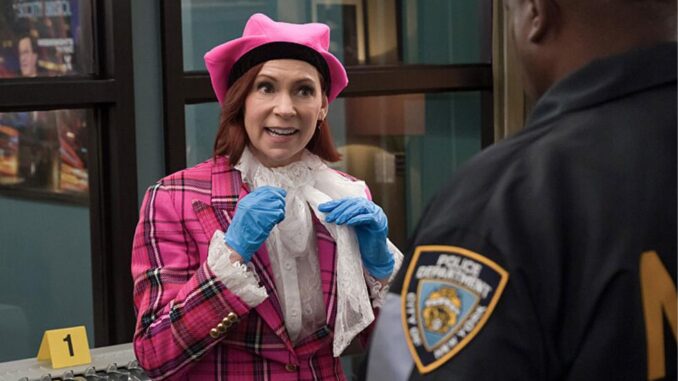
Elsbeth is not merely a character; she is an experience. First introduced in “The Good Wife” and later given her own eponymous spin-off, “Elsbeth,” her charm lies in a delicate tightrope walk between endearing eccentricity and razor-sharp intellect. She disarms with her unassuming demeanor, her brightly colored scarves, and her perpetual air of mild bewilderment, only to deliver an incisive insight that unravels the most convoluted mysteries. To play Elsbeth requires a meticulous calibration: too much quirk, and she becomes a caricature; too little, and she loses her unique sparkle. Preston doesn’t just wear Elsbeth’s clothes; she inhabits her unique worldview, her internal rhythm, and her almost alchemical process of deduction. This isn’t acting; it’s a form of channeling.
Preston’s revelation about the pressure isn’t a complaint; it’s an illuminating confession from the front lines of creative endeavor. It illustrates, first and foremost, the formidable weight of fan expectation. When a character becomes so deeply ingrained in the popular consciousness, there’s an unspoken demand to not just replicate, but to elevate. Fans don’t want a diluted Elsbeth; they want the Elsbeth they adore, amplified and recontextualized for a starring role. This pressure extends beyond mere character consistency; it demands that the new season not only live up to the legacy but forge its own distinct identity. Preston must navigate the treacherous waters of familiarity without predictability, and evolution without betrayal.
Beyond external expectations, her comments illuminate the self-imposed pressure of the meticulous artist. A performer of Preston’s caliber isn’t satisfied with “good enough.” The pressure she speaks of stems from a deep, internal drive to honor the character, to explore new facets of her, and to push the boundaries of her own performance. It’s the pressure to discover new nuances in Elsbeth’s kaleidoscope mind, to find fresh ways for her unusual perspective to crack a case, and to ensure that her seemingly effortless charm continues to resonate. This involves relentless self-scrutiny, endless takes, and a profound commitment to the internal logic of the character, ensuring that even Elsbeth’s most bizarre observations feel grounded and authentic.
Furthermore, Preston’s experience powerfully illustrates the paradox of performance: making the difficult look easy. We, the audience, delight in Elsbeth’s apparent spontaneity, her innocent directness that belies a formidable brain. We see the seamless unraveling of a crime, the perfectly timed comedic beat, the subtle shift in expression that conveys a world of thought. What we don’t always see is the intense preparation, the intellectual heavy lifting, the hours of character immersion, and the precise technical execution required to achieve that illusion of effortlessness. Preston’s pressure is the invisible scaffolding, the unseen labor that allows Elsbeth to float across the screen with such deceptive grace. It reminds us that “natural” acting is often the result of the most unnatural and demanding amount of deliberate effort.
Carrie Preston’s willingness to speak out about the pressure of playing Elsbeth is a gift to anyone who appreciates the performing arts. It strips back the veneer of glamor and reveals the raw, human commitment beneath. It illustrates that the creation of enduring characters is not a simple feat but a profound undertaking, fraught with the responsibility of meeting expectations, the exacting demands of artistic integrity, and the sheer intellectual and emotional labor of crafting wonder. When we next see Elsbeth Tascioni charming her way through a new mystery, we will perhaps watch with a deeper appreciation for the brilliant actress who carries the delightful, yet undeniably heavy, weight of her magic.