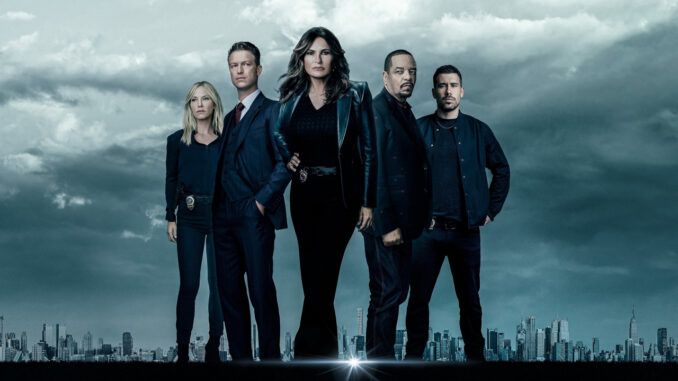
The Unseen Threads: Little-Known Behind-the-Scenes Relationships of the SVU Cast
For twenty-five years and counting, Law & Order: Special Victims Unit has held a grim mirror to the darkest corners of humanity, its enduring power largely attributed to the visceral performances of its cast. But beneath the procedural grit, the harrowing narratives, and the unflinching gaze into criminal psychology, lies a less visible, yet equally compelling narrative: the intricate, often little-known, behind-the-scenes relationships that have not only sustained the show but forged a true, resilient family. These are not merely professional acquaintances, but the quiet anchors, the shared laughter, the silent support systems that have weathered decades of onscreen trauma and real-world change.
The most iconic partnership, of course, is that of Olivia Benson and Elliot Stabler, brought to life by Mariska Hargitay and Christopher Meloni. While their on-screen chemistry is legendary, the depth of their off-screen bond is a rare phenomenon in Hollywood. It transcends mere friendship, entering a realm of professional soulmates. They didn’t just play partners; they became partners in the shared crucible of building a generational show. Their bond, often described by both as telepathic, was forged in early mornings and late nights, through emotionally draining scenes and the shared burden of carrying a nascent franchise. It’s a relationship built on mutual respect, deep personal affection, and an almost familial understanding that allowed them to be vulnerable with each other, knowing the other would catch them. This wasn’t a PR stunt; it was a genuine kinship, evident in their effortless reunions, their supportive social media exchanges, and the way they speak of each other with a reverence usually reserved for family members, reflecting the quiet understanding that only two people who have shared such an intense, prolonged experience can possess.
Beyond the magnetic core of Benson and Stabler, the show’s incredible longevity rests on a wider network of intergenerational connections. Consider the understated camaraderie between Ice-T (Fin Tutuola) and the late Richard Belzer (John Munch). These two veterans, from vastly different professional backgrounds – one a pioneering rapper, the other a counter-culture comedian – spent over two decades as the stoic, often sardonic, backbone of the squad room. Their off-screen relationship was less about explosive public declarations and more about a quiet, enduring mutual respect. Belzer, the elder statesman, with his encyclopedic knowledge of conspiracy theories and a dry wit, found an unlikely foil and friend in Ice-T, whose pragmatic realism and street smarts offered a different perspective. Their shared tenure meant they had a silent language, an understanding born of years spent observing human cruelty, finding dark humor in the absurd, and standing shoulder-to-shoulder through hundreds of “ripped from the headlines” plots. Their bond was a grounding force, a constant presence that provided stability for both the cast and the audience, and its depth was poignantly revealed in the heartfelt tributes from Ice-T upon Belzer’s passing, demonstrating that their connection ran far deeper than simply sharing a precinct desk.
Another fascinating, perhaps less obvious, dynamic was the quiet professionalism and deep mutual admiration between Dann Florek (Captain Cragen) and B.D. Wong (Dr. George Huang). While their characters rarely shared the intense personal drama of the detectives, their actors cultivated a bond rooted in their roles as the moral compass and the intellectual anchor, respectively. Florek, as the steady, father-figure captain, and Wong, as the thoughtful, empathetic psychologist, represented the strategic and philosophical heart of the show. Off-screen, their relationship was one of shared dedication to their craft, a mutual respect for the nuances each brought to their complex characters. They navigated the often-changing landscape of the show with a shared sense of purpose, often being the intellectual sounding boards for the younger cast members. Their bond was less about boisterous friendship and more about a deep, quiet appreciation for colleagues who understood the delicate balance of their roles in a highly dramatic ensemble, finding strength in their shared gravitas.
Even as the cast evolved, new relationships blossomed, often under the immense pressure of stepping into a beloved legacy. Kelli Giddish (Amanda Rollins) and Peter Scanavino (Dominick Carisi) are a prime example. Joining the show years after its inception, they had the daunting task of establishing new character dynamics that could resonate with a loyal audience. Their on-screen partnership evolved from professional colleagues to a deeply meaningful romance, mirroring an off-screen journey of shared growth and mutual support. They navigated the complexities of long-running TV production together, celebrated personal milestones like weddings and children, and became each other’s touchstones amidst the show’s intense emotional demands. Their behind-the-scenes relationship exemplifies the “next generation” of the SVU family – a bond built on shared struggle, a collective effort to honor the show’s legacy while forging their own path, and the discovery of genuine friendship and professional kinship in the process.
Ultimately, the enduring appeal of Law & Order: SVU is not solely a testament to its compelling scripts or its lead performances. It is a profound illustration of the power of human connection, of chosen families forged under extraordinary circumstances. From the profound, almost telepathic understanding between its leads, to the quiet wisdom shared by its veterans, to the supportive camaraderie of its newer recruits, these little-known, behind-the-scenes relationships are the unseen threads that weave together the tapestry of the show. They are the laughter that punctuates the serious scenes, the understanding glances across a crowded set, the private words of encouragement that allow actors to delve into the darkest human emotions, knowing they have a steadfast support system. It is this authentic, often unspoken, network of care and connection that not only brings the raw drama of SVU to life but imbues it with a deeper, more resonant humanity.