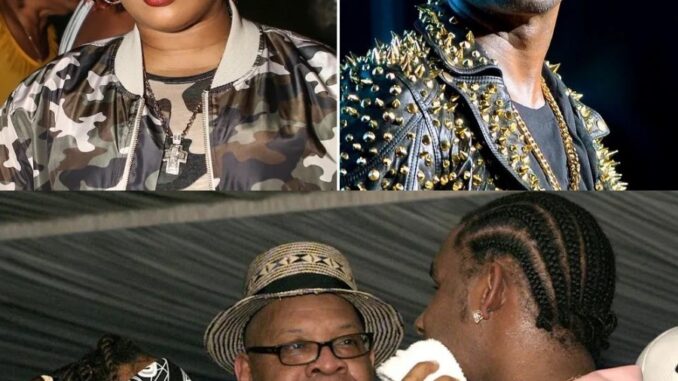
Da Brat has ignited a fierce conversation after speaking candidly about society’s selective accountability surrounding the controversies of R. Kelly. The iconic rapper didn’t hold back, pointing out a glaring inconsistency: while people are quick to condemn R. Kelly for his crimes, very few hold accountable the partners, enablers, or adults who surrounded him and played a role in enabling the behavior. Her comments go beyond music industry gossip—they cut straight to the heart of public hypocrisy and moral performativity.
Da Brat’s message resonated because it highlights a disturbing pattern. She emphasized that nine times out of ten, if R. Kelly were released and announced a new concert, many of the same individuals who publicly lambaste him would likely be the first to purchase tickets. It’s not an excuse for his actions—Da Brat was clear on that—but a stark observation on how outrage often exists more for show than for genuine moral principle. People can loudly advocate for justice on social media, yet privately continue to support the very figures they claim to condemn, exposing a troubling double standard.
Her comments also shed light on the broader cultural tendency to “cancel” someone publicly while continuing to consume and benefit from their work in private. This duality, Da Brat argues, isn’t just about R. Kelly; it’s a mirror reflecting society’s selective moral compass. Outrage is often performative, a way to signal virtue in public while convenience or entertainment dictates behavior in private. The rapper’s insight forces fans and critics alike to confront uncomfortable questions: Are we condemning actions out of genuine concern for victims, or are we participating in a ritualized social performance that benefits our image more than actual accountability?
Da Brat’s bold perspective invites a deeper discussion about responsibility and the people behind the headlines. Who enables abuse, and why are they so often overlooked in public conversations? Her candidness encourages society to look beyond individual blame and consider the larger ecosystem of complicity. This isn’t about diminishing accountability for R. Kelly—it’s about examining the structural and social factors that allow such behavior to persist and questioning why society is often selective in who it holds responsible.
Her commentary also resonates in the age of social media, where outrage can be instantaneous but fleeting. A trending hashtag condemning a celebrity can fade within hours, replaced by entertainment news or viral content. Da Brat’s words serve as a reminder that real accountability requires sustained reflection and action, not just performative virtue signaling. It’s a challenge to all of us to examine our own behavior: Are we consistent in our moral stances, or are we guilty of applauding justice publicly while supporting wrongdoing privately?
In a culture obsessed with public judgment, Da Brat’s voice stands out as refreshingly honest and unapologetic. By calling out selective outrage, she sparks a conversation about integrity, complicity, and the complexities of accountability. Her insight is uncomfortable but necessary, urging fans, critics, and the public to go beyond surface-level condemnation and confront the deeper, systemic issues that allow abuse to continue unchecked.
Ultimately, Da Brat’s message is clear: moral consistency is rare, and true accountability requires more than loud declarations. It requires courage, reflection, and the willingness to examine both public and private actions. Her comments aren’t just about R. Kelly—they’re a mirror held up to society itself, asking whether we are truly standing for what is right—or simply performing outrage for the applause.