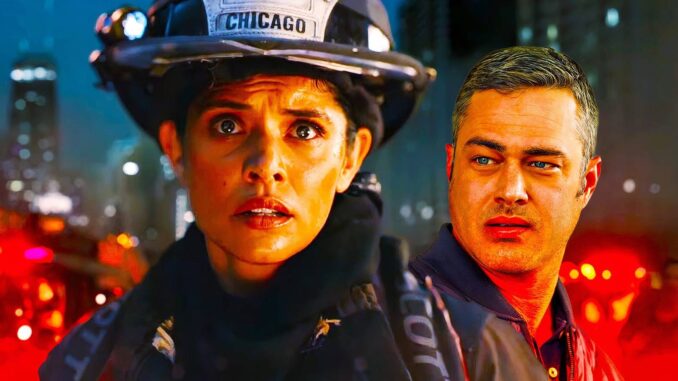
If you’ve spent any time at Firehouse 51, District 21, or Gaffney Chicago Medical Center, you know one thing to be true: happiness is a fleeting guest, but tragedy? Tragedy is a permanent resident. The One Chicago universe, masterminded by Dick Wolf, has built a decade-long legacy not on the “happily ever afters” of traditional television, but on the raw, often devastating reality of first-responder life. From the shocking death of Leslie Shay to the recent exits that left fans reeling, the franchise has proven that it is built on a foundation of sacrifice.
The Burden of the Badge: Why Happy Endings are Rare
In most TV dramas, the hero saves the day, gets the girl, and rides off into the sunset. In Chicago, the hero saves the day, loses their best friend in a backdraft, and ends the night staring into a glass of whiskey at Molly’s.
The Realism of High-Stakes Careers
The writers of Chicago Fire, Chicago P.D., and Chicago Med often argue that happy endings are a disservice to the real-life heroes they portray. Firefighters, cops, and doctors deal with “the worst day of someone’s life” every single shift. By leaning into tragedy, the show mirrors the PTSD and emotional toll that comes with the job.
The Rotating Door of Firehouse 51
Think about Otis. Think about Shay. Think about Benny Severide. Chicago Fire uses tragedy to remind the audience that the stakes are literal life and death. When a character leaves the show, they don’t always move to a different city—sometimes, they leave in a casket. This “no one is safe” mentality creates a level of tension that few other procedurals can match.
Chicago P.D.: Where the Shadows Are Darkest
If Fire is about the brotherhood of tragedy, Chicago P.D. is about the moral decay that comes with it. Hank Voight’s entire character arc is a monument to loss.
The Loss of Justin and Al: The Breaking of Voight
The deaths of Voight’s son, Justin, and his best friend, Al Olinsky, weren’t just plot points—they were the fuel that drove Voight further into the grey areas of policing. The show suggests that in the Intelligence Unit, you don’t get to be a hero and a happy family man at the same time. You have to pick one, and usually, the choice is made for you.
Upton and Halstead: The Bittersweet Goodbye
Even when characters survive, their “happy endings” are often tainted. When Jay Halstead left the show, it wasn’t for a promotion; it was a desperate attempt to find his soul again, leaving Hailey Upton behind in a wake of emotional wreckage. It’s this “bittersweet” flavor that keeps the “Upstead” fandom coming back for more.
Chicago Med: The Fragility of Life in the ER
At Chicago Med, the tragedy is often more clinical but no less personal. The doctors are experts at fixing bodies, but they are remarkably bad at fixing their own lives.
The Ethical Dilemmas That Tear Couples Apart
From Will Halstead and Natalie Manning to Ethan Choi and April Sexton, the show consistently uses professional tragedy—like a patient’s death or a legal malpractice suit—to drive a wedge between lovers. It reinforces the idea that the hospital is a place of healing for the patients, but a place of attrition for the staff.
The Anatomy of a One Chicago Tragedy
| Show | Signature Tragedy | Emotional Impact |
| Chicago Fire | Structural Fires/Line of Duty Death | Deep sense of lost brotherhood and “family” grief. |
| Chicago P.D. | Street Violence/Corruption | Loss of innocence and the hardening of the soul. |
| Chicago Med | Medical Miracles Gone Wrong | Existential dread and the burden of “playing God.” |
Why Fans Keep Coming Back for the Pain
It sounds masochistic, doesn’t it? Why do millions of us tune in every Wednesday knowing our hearts are likely to be stepped on?
The Catharsis of Shared Grief
There is something incredibly moving about watching Kelly Severide or Christopher Herrmann navigate a loss. It makes the characters more human. We don’t just watch them work; we mourn with them. This creates a bond between the viewer and the character that a “perfect” life simply couldn’t foster.
The “Molly’s” Factor: Healing Through Community
The only thing that balances the tragedy is the community. Whether it’s gathering at Molly’s Pub or the camaraderie in the locker room, the show teaches us that while life is tragic, you don’t have to face the tragedy alone. That is the true “happy ending” of One Chicago: not the absence of pain, but the presence of people who will help you carry it.
Conclusion: A Legacy Written in Tears
One Chicago isn’t built on tragedy because the writers are cruel; it’s built on tragedy because that is where the most compelling stories live. By denying us the easy “happy ending,” the franchise forces us to find beauty in the resilience of the characters. We don’t watch to see them win every time; we watch to see how they get back up after they’ve lost everything. In the Windy City, the wind might knock you down, but the family at 51, 21, and Med will always be there to pull you out of the rubble.