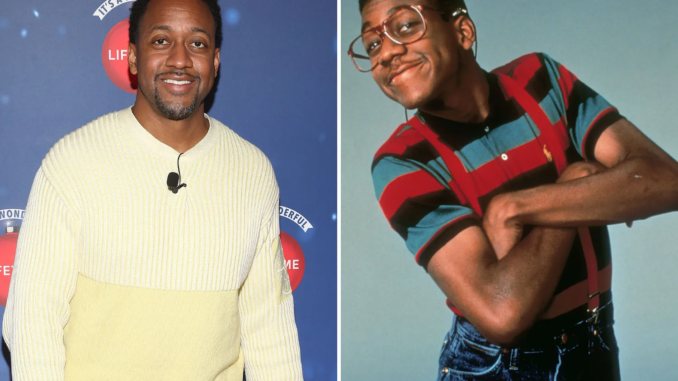
For millions of viewers, Steve Urkel was pure joy. High-waisted pants, suspenders, thick glasses, and that unforgettable voice turned Family Matters into a household staple. But behind the laughter and catchphrases, actor Jaleel White says there was a troubling reality—one that surfaced most clearly after the show entered syndication.
According to White, some local television channels were effectively “rewarded” for their bigotry during the syndication era of Family Matters. That’s a strong claim. And it’s one that opens the door to a much larger conversation about race, media power, and who really controls cultural narratives once a show leaves prime time.
So what exactly happened? And why does it still matter today? Let’s unpack it.
The Power of Family Matters in American Pop Culture
Family Matters wasn’t just another sitcom. It was a cultural landmark.
A Sitcom That Defined an Era
Premiering in 1989, the show centered on a middle-class Black family living in Chicago. At a time when diverse representation on television was limited, Family Matters offered warmth, humor, and relatability.
Steve Urkel: From Side Character to Cultural Icon
Originally meant to be a one-off character, Steve Urkel exploded in popularity. His nerdy charm and physical comedy made him unforgettable. But that popularity came with complications—especially when the show was later syndicated.
Understanding Syndication and Why It Matters
Before diving into White’s comments, it helps to understand what syndication actually is.
What Is TV Syndication?
Syndication happens when a show is sold to local stations after its original network run. These stations decide when, how, and sometimes if the show airs.
Local Control, Local Bias
Here’s the catch: local stations reflect local attitudes. And in some markets, those attitudes weren’t exactly welcoming.
Jaleel White’s Claim: Bigotry Was “Rewarded”
White didn’t mince words. He suggested that certain local channels benefited from discriminatory choices once Family Matters entered syndication.
What Does “Rewarded” Really Mean?
In this context, “rewarded” points to higher ratings, ad revenue, or leverage gained by stations that either:
-
Selectively aired episodes
-
Moved the show to less favorable time slots
-
Marketed it differently—or not at all
The Unspoken Filters of Television
No official memo said, “Don’t like this show because it’s Black.” But decisions can speak louder than policies. Subtle choices can carry loud messages.
How Bigotry Can Hide in Plain Sight
Bigotry in media isn’t always obvious. Sometimes it wears a business suit.
Programming Choices as Power Plays
When a station buries a show in a bad time slot, it limits exposure. When it skips promotional support, it stunts growth. These decisions can quietly marginalize content without public backlash.
The Plausible Deniability Problem
Stations could always claim, “It’s just business.” But when patterns repeat across regions, intent becomes harder to ignore.
The Burden Placed on Jaleel White
While Steve Urkel brought fame, it also came with pressure.
Typecasting and Cultural Weight
White became inseparable from Urkel. That kind of visibility can be a double-edged sword—especially when the character becomes a stand-in for broader stereotypes.
Being the Face of a Bigger Fight
In syndication, White wasn’t just an actor anymore. He became the most visible symbol of a show some people didn’t want to embrace.
Race, Ratings, and Resistance
The television industry loves numbers. But numbers don’t exist in a vacuum.
When Ratings Trump Responsibility
If a station believed controversy or selective airing boosted attention, it could profit from division rather than inclusion.
The Illusion of Neutral Markets
Markets aren’t neutral. They’re shaped by history, politics, and prejudice. Syndication exposed those fault lines.
Why Family Matters Was a Threat to Some Viewers
It sounds strange, right? A family sitcom as a threat?
Normalizing Black Family Life
Family Matters showed a loving, stable Black household. For some audiences, that challenged outdated narratives.
Comedy as Cultural Trojan Horse
Laughter lowers defenses. And when people laugh with characters they’re told not to relate to, stereotypes start to crumble. Not everyone welcomed that.
The Long-Term Impact on Black-Led Sitcoms
White’s comments don’t exist in isolation.
A Pattern Across Syndication History
Many Black-led shows faced similar hurdles in syndication—uneven airtime, inconsistent promotion, and regional resistance.
Lost Opportunities for New Generations
When shows are hidden or mishandled, younger viewers miss out on cultural touchstones that could broaden perspective.
Why Jaleel White Is Speaking Now
Timing matters.
A New Era of Media Accountability
Today’s conversations about representation give actors space to revisit old wounds with new clarity.
Reclaiming the Narrative
By speaking up, White reframes Family Matters not just as nostalgia—but as a case study in systemic bias.
The Audience Reaction: Support and Reflection
Fans didn’t dismiss his words. Many leaned in.
Validation from Viewers
People of color, in particular, recognized the pattern White described. It matched lived experiences.
A Wake-Up Call for Media Consumers
Viewers are starting to ask tougher questions: Why was this show always on at that time? Why did it disappear here but thrive there?
Media Gatekeeping and Who Loses
When gatekeepers act on bias, culture pays the price.
Stories That Never Get a Fair Shot
Syndication should extend a show’s life. Instead, it sometimes shortens its reach.
The Cost of Selective Visibility
What we see repeatedly becomes “normal.” What we don’t see becomes invisible.
Lessons for Today’s Streaming Era
You might think this is all old news. It’s not.
Algorithms Are the New Local Stations
Today, algorithms decide visibility. And guess what? Bias can be coded too.
Why Transparency Still Matters
White’s comments remind us to question who benefits when content is suppressed—or promoted.
Why This Conversation Still Matters
Because culture shapes belief.
TV as a Mirror and a Mold
Television doesn’t just reflect society—it helps form it. Limiting representation limits imagination.
Speaking Truth, Even Late, Is Still Powerful
White’s honesty adds depth to a legacy many thought they already understood.
Conclusion: More Than a Sitcom, More Than a Soundbite
Jaleel White’s statement about Family Matters syndication isn’t about bitterness. It’s about clarity. It’s about acknowledging that bigotry doesn’t always shout—sometimes it whispers through scheduling decisions and marketing budgets.
By naming what happened, White invites a broader reckoning with how media power operates. And maybe, just maybe, that honesty helps ensure future stories don’t face the same quiet resistance.
Because every family deserves to be seen. And every story deserves a fair shot.
FAQs
1. What did Jaleel White say about Family Matters syndication?
He stated that some local TV channels were effectively rewarded for bigoted decisions during the show’s syndication, impacting how it was aired and received.
2. Why is syndication so important for TV shows?
Syndication extends a show’s life, introduces it to new audiences, and generates long-term revenue and cultural impact.
3. Was Family Matters treated differently in certain regions?
According to White, yes. Local attitudes influenced how the show was scheduled and promoted.
4. How does this relate to media bias today?
Modern platforms use algorithms instead of program directors, but bias can still influence visibility and reach.
5. Why is Jaleel White speaking out now?
The current cultural climate allows for more open discussions about representation, legacy, and systemic issues in entertainment.