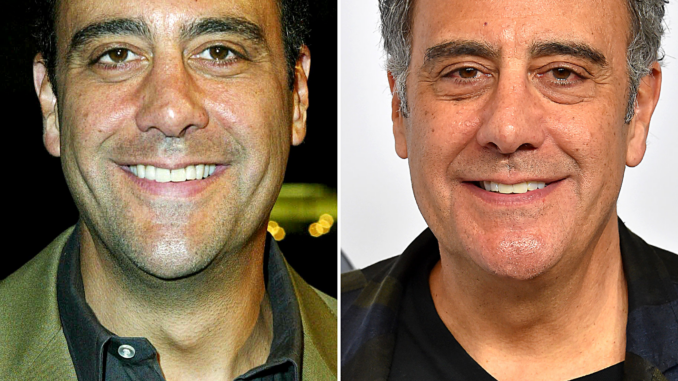
Brad Garrett’s Robert Barone was the embodiment of quiet misery—a towering police officer overshadowed by his younger brother and emotionally neglected by his family. The character became a fan favorite, yet his humor relied heavily on humiliation, rejection, and internalized resentment. In hindsight, Robert Barone raises uncomfortable questions about how sitcoms mine pain for laughs.
Garrett’s performance was widely praised for its physical comedy and emotional restraint. Robert’s slumped posture and monotone delivery conveyed decades of disappointment. Yet the joke was often that his suffering was permanent. Unlike Ray, Robert rarely received validation or growth.
The character’s treatment by his mother Marie became one of the show’s defining dynamics. While played for humor, the favoritism bordered on emotional cruelty. Modern viewers have questioned whether the joke normalized psychological neglect, particularly when Robert’s pain was consistently dismissed.
Garrett himself has acknowledged the darkness of the character. He has described Robert as “tragic” rather than merely funny, suggesting that the audience’s laughter masked deeper discomfort. Unlike Ray, Robert was punished for self-awareness—a man who knew he was unhappy but lacked the power to change his circumstances.
Behind the scenes, Garrett navigated his own challenges. As a supporting actor in a massively successful show, he benefited from visibility but remained secondary in public recognition. His later advocacy for union rights and fair compensation suggests an awareness of hierarchical power—both on screen and off.
Robert Barone’s eventual arc offered some resolution, but it arrived late and felt conditional. Happiness was portrayed as an exception rather than a right. This narrative reinforced the idea that some characters exist to absorb dysfunction so others can remain likable.
Garrett’s portrayal remains one of the most psychologically complex in sitcom history. Robert Barone forces audiences to confront an uncomfortable truth: comedy often relies on a designated loser. The question is whether laughter excuses the cost.