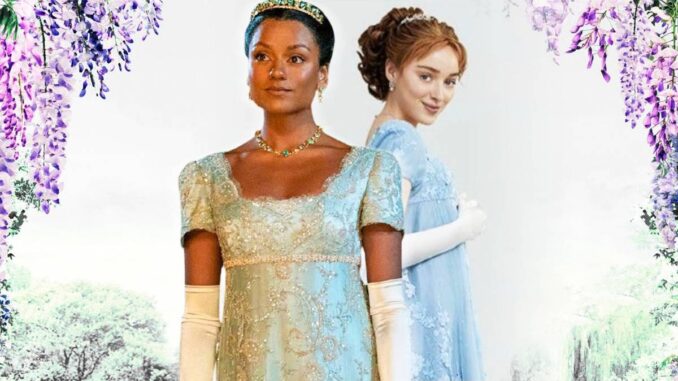
Bridgerton’s treatment of Kate Sharma reveals a troubling pattern of overlooking her character and her struggles compared to other leads.
Kate Sharma’s (Simone Ashley) introduction to Bridgerton as the female lead in Season 2 brought a much-needed narrative of diversity to the Netflix show. The storyline of her love affair with Anthony Bridgerton captivated audiences, but it also revealed a disturbing racialized double standard. As Kate navigated love, family loyalty, and responsibility, she was emotionally and socially policed in ways that Daphne Bridgerton (Phoebe Dynevor) and even Penelope Featherington (Nicola Coughlan) were not.
From the moment Kate arrived, expectations surrounding her were not just about romance but also shaped by a sense of responsibility. As a dark-skinned South Asian woman, she faced different expectations compared to her white counterparts. This double standard isn’t just limited to character treatment but extends into how the show handled her role and representation.
Kate Sharma’s Development Was Sidelined in Julia Quinn’s Bridgerton
Adapted from Julia Quinn’s book series, Netflix’s Bridgerton offers a fresh perspective on race and identity. Kate Sharma, a British-Indian woman of Tamil descent, enters season 2 aiming to find a suitable suitor for her sister, Edwina, in London’s high society. However, her storyline is overshadowed by a love triangle and family dynamics, highlighting her as the self-sacrificing older sister. While her emotional narrative is touched upon, it is primarily framed through struggle and restraint.
Season 1, Daphne Bridgerton was announced as the season’s Diamond. Her journey was defined by her pursuit of love and her personal growth. But it was equally marked by her Diamond status. Her marriage to Simon Basset, stemming from a fake courtship, allowed her to approach the marriage market with her, as if it were her birthright.
Even when Daphne struggled with her new role as a wife, her actions were often excused as part of the traditional coming-of-age narrative. Penelope Featherington, though a more nuanced character, also enjoys a similar grace in her growth and conflicted role within the show.

While Daphne’s emotional growth was central to her arc, Kate’s character was defined by sacrifice. She constantly held back her feelings for Anthony to prioritize her sister’s happiness. Unlike Daphne, whose love story with Simon was the sole focus, Kate’s narrative was sidelined. She found herself not just in a love triangle with Anthony and Edwina, but also had held back from sharing the spotlight on screen.
Unlike Daphne in season 1 or Penelope in season 2, Kate did not receive the focus she deserved. Even in future seasons, her character was sidelined. In contrast, Daphne and others were allowed to be seen as fully developed individuals, free to express their desires and needs.
Bridgerton: Is Kate’s Representation True Inclusivity or Marketing Bias?
The treatment of Kate Sharma also extends beyond her character arc into the realm of marketing and representation. Despite being one of the central leads, Kate is often sidelined in promotional materials.
The lack of promotional photo shoots with her and Anthony together indicates a minimal investment in her character as a lead. In contrast, there have been high-profile campaigns for Daphne and Simon, as well as Colin and Penelope.
This disregard in promotion and representation goes hand-in-hand with the racialized nature of her portrayal. This treatment is particularly concerning when considering that the Bridgerton series prides itself on being inclusive and diverse. The lack of equal treatment for Kate, who is both a leading character and an empowering figure for fans of color, tells a different story.
Representation must extend beyond mere casting; it should encompass how characters are treated both on and off screen. It is undeniable that Kate has made every South Asian representation worthwhile.
What do you think? Does Kate Sharma’s representation fall short of being a diverse character? Let us know your thoughts.
Bridgerton Seasons 1-3 are available to stream, and Season 4 Part 1 is premiering on January 29, 2026, and Part 2 on February 26, 2026, on Netflix (US).