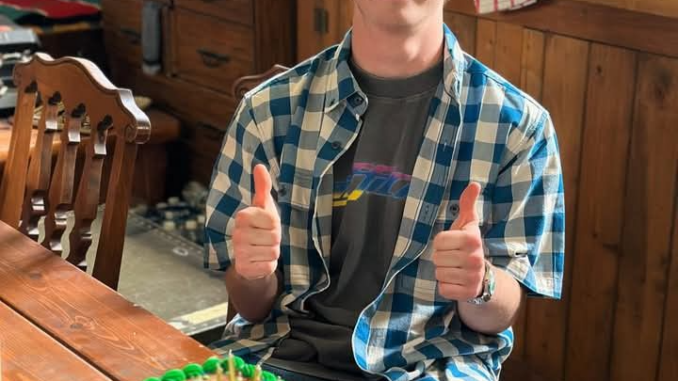
Finn Little, the Australian breakout talent from Brisbane, entered Yellowstone in Season 4 and instantly shifted the show’s emotional terrain. While the Duttons were busy fighting for land, power, and survival, Carter arrived fighting for something quieter but just as heavy: a place to belong. And from the moment he stepped onto the Dutton Ranch, the series quietly adopted a new storyline it didn’t know it needed — one about redemption, found family, and emotional inheritance rather than bloodlines.
The Character No One Saw Coming
Carter wasn’t introduced as a hero. He was introduced as a fracture — a kid hardened by loss, anger, and instability. A troubled teenager carrying more emotional scars than life experience. In a show filled with cowboys, crime wars, and empire battles, he stood out by doing something rare: being a character who needed saving rather than delivering it.
And maybe that’s why fans connected so aggressively.
Because while the Dutton adults healed themselves through violence and loyalty, Carter began healing through routine, patience, discipline, land, horses, and people who didn’t give up on him.
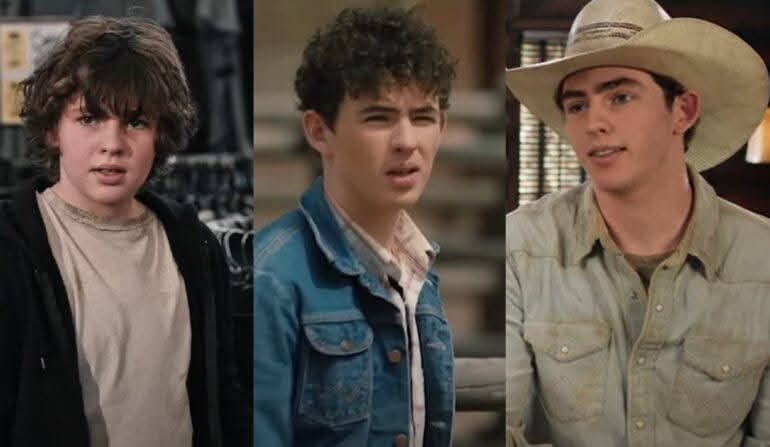
Finn Little Didn’t Just Play Carter — He Reframed Him
Finn Little brought a performance style that contrasted the show’s usual emotional volume. Instead of explosive pain, he delivered restrained hurt. Instead of speeches, he delivered reaction-based storytelling. His Carter doesn’t demand attention — he absorbs it through expression, silence, discomfort, and small moments that land emotionally harder than the dramatic arcs.
His portrayal succeeded because it felt honest. You could see the calculation in his eyes when he’s deciding whether to trust someone. You could feel the tension in his shoulders when he wants to speak but doesn’t. You could hear the emotional subtitle even when the script didn’t write one.
That’s the genius of the performance:
Carter talks loudest when he talks least.
From a Kid in Crisis to a Future Fans Are Already Debating
Carter evolved into one of the most talked-about symbols of the franchise:
-
Resilience without swagger
-
A found-son of the ranch
-
The next generation shaped by land, not lineage
-
Proof that the ranch can raise souls, not just cattle
-
A quiet reminder that the Dutton legacy might survive in someone who never shared the Dutton name
And this is where the controversy lives.
Some fans now argue:
“Carter is the ranch’s future.”
Others fire back:
“He is the ranch’s softest spot, not its successor.”
And the debate keeps spreading because Carter represents both at the same time:
Strength being built and a heart being protected.
Why Fans See Themselves in Carter
Because Carter embodies the story many viewers live but don’t say out loud:
-
Being shaped by environments that are harsh
-
Learning love from people who don’t express it softly
-
Growing up without a guidebook
-
Finding family in places that don’t look like family at first
-
Becoming someone better even when no one expected it
Fans root for him because his arc isn’t inspirational — it’s earned through friction, routine, and quiet reconstruction.