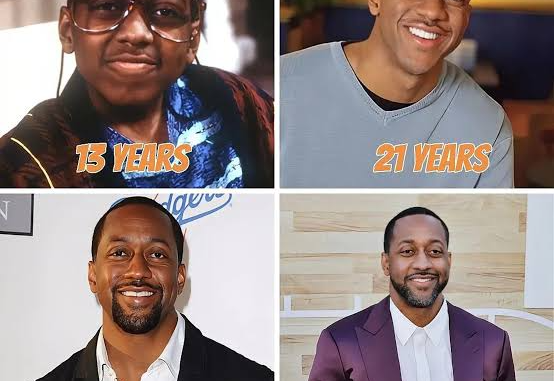
When Family Matters premiered on ABC in 1989, it was conceived as a traditional family sitcom centered on the Winslow family, a middle-class African American household in Chicago. Few could have predicted that a secondary character—introduced midway through the first season—would evolve into one of the most recognizable figures in American television history. That character was Steve Urkel, portrayed by actor Jaleel White.
Over nine seasons, White’s performance transformed Family Matters from a conventional family comedy into a cultural phenomenon. Steve Urkel became not merely a breakout character but a defining symbol of 1990s television, influencing sitcom tropes, youth culture, and representations of intelligence, awkwardness, and Black identity on mainstream American TV.
The Accidental Star
Steve Urkel was originally intended as a one-off guest character. With his high-pitched voice, exaggerated posture, suspenders, oversized glasses, and awkward social mannerisms, Urkel was designed to function as comic relief. However, audience reaction was immediate and overwhelming. Viewers responded to the character’s sincerity, unpredictability, and emotional openness—qualities that set him apart from typical sitcom side characters.
Jaleel White’s performance was central to this response. Trained as a child actor, White infused Urkel with a rare combination of slapstick comedy and emotional vulnerability. Rather than portraying Urkel as merely a joke, White gave him interiority: loneliness, devotion, intelligence, and moral clarity. This depth allowed audiences to laugh at Urkel while also empathizing with him.
Performance Style and Comedic Craft
White’s portrayal of Urkel was physically demanding and technically precise. His exaggerated walk, nasal voice, and rigid posture were sustained across nearly 200 episodes, a feat of consistency rarely acknowledged in sitcom performance analysis. More importantly, White mastered timing—knowing when to push a joke to absurdity and when to pull back for emotional resonance.
As the series progressed, White expanded Urkel into multiple alter egos, including the suave Stefan Urquelle and the villainous Bruce Lee Urkel. While some critics argue that these transformations shifted Family Matters away from realism, they also showcased White’s versatility and reinforced his centrality to the show’s identity.
Cultural Impact
Steve Urkel became a merchandising juggernaut. Catchphrases like “Did I do that?” entered the American lexicon. Lunchboxes, dolls, cereal commercials, and cross-network appearances turned Urkel into a pop culture brand. Importantly, Urkel represented a version of Black masculinity rarely seen on television at the time: intellectually gifted, emotionally expressive, and socially awkward.
In an era when Black male characters were often confined to narrow archetypes, Urkel disrupted expectations. He was unapologetically intelligent and scientifically inclined, foregrounding academic excellence rather than athletic prowess. This representation resonated deeply with audiences who had rarely seen themselves reflected on screen.
Legacy
Although Family Matters ended in 1998, Steve Urkel remains one of the most enduring sitcom characters in American history. Jaleel White’s performance shaped not only the trajectory of the series but also the cultural memory of 1990s television. His work continues to influence how sitcoms balance comedy, character, and cultural commentary.
Steve Urkel was not merely a character; he was a phenomenon. And Jaleel White was the architect.