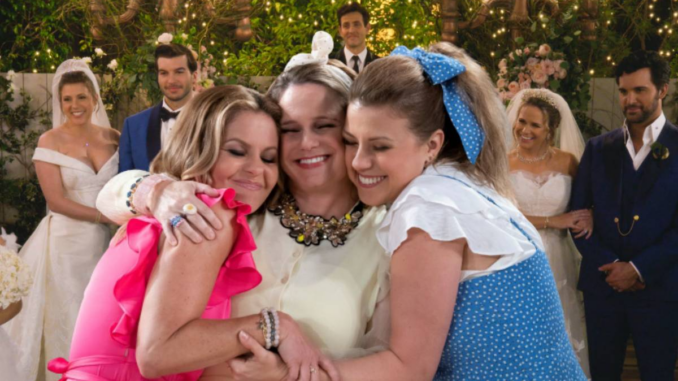
When Fuller House came to an end, fans didn’t just watch the finale—they felt it. For some, it was the perfect goodbye. For others, it felt rushed, overly sweet, and almost too neat. So what really happened in the Fuller House ending, and why did it spark such mixed reactions?
Let’s break it all down—emotion by emotion, decision by decision—and explain why the finale landed exactly the way it did.
Why the Fuller House Ending Mattered So Much
This wasn’t just another sitcom finale.
Fuller House carried decades of emotional weight. Fans didn’t just grow attached to the characters—they grew up with them. Saying goodbye meant closing a chapter that started in childhood for many viewers.
That’s why expectations were sky-high.
The Setup: Everything Led to One Big Moment
The final episodes focused heavily on wrapping up romantic storylines, unresolved feelings, and long-running questions about the future of the Tanner-Fuller household.
The writers made one thing clear:
This ending would be about closure, not surprises.
And that choice shaped everything.
The Triple Wedding: Why It Happened
The most talked-about moment of the finale was the triple wedding.
-
DJ and Steve
-
Stephanie and Jimmy
-
Kimmy and Fernando
Three weddings. One night. One house.
To critics, it felt excessive. To fans, it felt symbolic.
What the Triple Wedding Represented
The triple wedding wasn’t about realism—it was about unity.
Each relationship represented a different kind of love:
-
Rekindled love (DJ and Steve)
-
Unexpected growth (Stephanie and Jimmy)
-
Imperfect but committed love (Kimmy and Fernando)
The show wasn’t saying this is how life works.
It was saying this is how this family works.
Why DJ Chose Steve (And Why It Was Inevitable)
DJ’s love triangle was a major storyline, but the ending made one thing clear: Steve was always the emotional endgame.
Steve symbolized:
-
Stability
-
Shared history
-
Emotional safety
Choosing Steve wasn’t about drama—it was about coming home.
Stephanie’s Happy Ending Meant More Than Romance
Stephanie’s arc may be the most quietly powerful part of the finale.
Her journey touched on:
-
Fear of motherhood
-
Insecurity
-
Finding purpose
Ending the series with her starting a family wasn’t just romantic—it was healing.
Kimmy Gibbler’s Growth Was the Biggest Surprise
Kimmy began Full House as comic relief. By the end of Fuller House, she was a fully realized character.
Her ending proved:
-
People grow
-
Chaos can coexist with love
-
Being “too much” doesn’t mean being unlovable
That’s a message fans deeply connected with.
Why the Ending Felt “Too Perfect” to Some Fans
Let’s address the criticism head-on.
Some viewers felt the finale:
-
Wrapped everything too neatly
-
Avoided emotional risk
-
Played it safe
And they’re not wrong.
But that was intentional.
Fuller House Never Wanted to Be Gritty
Fuller House wasn’t trying to reflect messy reality.
It was comfort TV.
The finale leaned into:
-
Optimism
-
Warmth
-
Predictability
In a chaotic world, that predictability felt like a feature—not a flaw—for many fans.
The House Itself: The Real Final Character
One subtle but powerful element of the finale was the house.
The Tanner house wasn’t just a set—it was a symbol:
-
Of stability
-
Of shared history
-
Of unconditional support
Ending the series there reinforced the idea that home is the heart of the story.
Why the Finale Echoed Full House’s Ending
The Fuller House finale intentionally mirrored Full House’s emotional beats.
Both endings focused on:
-
Togetherness
-
Family over individual ambition
-
Emotional reassurance
It wasn’t about innovation.
It was about continuity.
Fan Reactions: Love, Tears, and Frustration
Reactions split into two camps:
Fans Who Loved It
-
Appreciated the closure
-
Felt emotionally satisfied
-
Valued nostalgia over shock
Fans Who Wanted More
-
Expected deeper conflict
-
Wanted a slower goodbye
-
Felt the ending was rushed
Both reactions are valid—and telling.
Why the Ending Still Works Years Later
With time, many critics softened.
Why?
Because endings age differently than premieres. When the emotions settle, what remains is tone—and Fuller House nailed its tone.
The Message the Finale Wanted to Leave Behind
At its core, the ending delivered one clear message:
Life changes, but family stays.
Careers shift. Relationships evolve. Kids grow up.
But the support system remains.
That message is timeless.
Could the Ending Have Been Different?
Sure.
The writers could have:
-
Split the weddings
-
Left some storylines open
-
Added more tension
But that would have meant betraying the show’s identity.
And Fuller House never wanted to be something it wasn’t.
Why the Ending Fits the Show Perfectly
Think of Fuller House like comfort food.
You don’t order it for surprises.
You order it because it feels familiar and warm.
The finale delivered exactly that.
Conclusion: A Goodbye That Stayed True
The Fuller House ending didn’t aim to shock or redefine television. It aimed to comfort, close, and celebrate.
And while not everyone loved every choice, the finale stayed honest to the show’s heart.
Sometimes, the best goodbyes aren’t loud.
They’re gentle.
FAQs About the Fuller House Ending
1. Why did Fuller House end with a triple wedding?
To symbolize unity, closure, and the strength of chosen family.
2. Was the ending rushed?
Some fans felt it was, but others appreciated the clean resolution.
3. Why did DJ choose Steve over Matt?
Steve represented emotional history and long-term stability.
4. Did fans like the Fuller House finale?
Reactions were mixed, but many viewers found it emotionally satisfying.
5. Does the ending leave room for a future revival?
Yes. While the story closed, the door remains open.