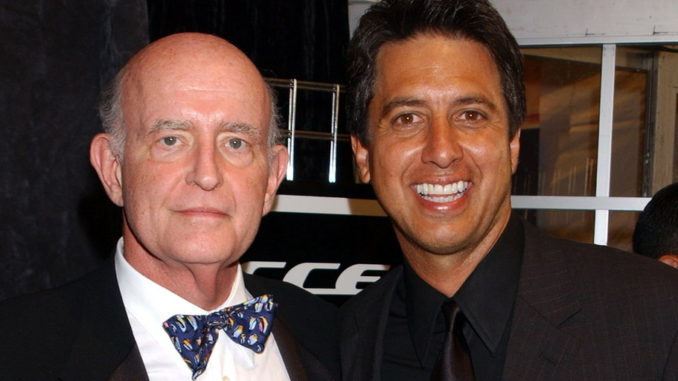
When people think of Everybody Loves Raymond, one name immediately comes to mind: Ray Romano. Not because he played the loudest character. Not because he was the most dramatic. But because he turned the quiet frustrations of everyday family life into one of the most relatable sitcoms in television history.
Ray Romano didn’t act like a traditional TV star. And that’s exactly why he worked.
Who Is Ray Romano Before Everybody Loves Raymond?
Before the fame, Ray Romano was just a stand-up comic grinding it out in comedy clubs.
No flashy punchlines.
No exaggerated physical comedy.
Just observations about marriage, kids, and family tension.
His comedy felt like a conversation at the dinner table—awkward, honest, and painfully familiar.
That authenticity would later become his biggest asset.
How Ray Romano Created Everybody Loves Raymond
Unlike many sitcom stars, Ray Romano wasn’t just cast into a role. He helped create it.
The character of Ray Barone was built around:
-
His real personality
-
His real marriage struggles
-
His real relationship with his parents
In many ways, Ray Barone was Ray Romano—with the volume turned up just enough for TV.
Ray Barone: A Sitcom Dad Unlike Any Other
Ray Barone broke almost every sitcom rule.
He wasn’t:
-
Confident
-
Responsible
-
Emotionally mature
Instead, he was:
-
Lazy
-
Conflict-avoidant
-
Constantly intimidated by his wife and parents
And yet… people loved him.
Why? Because he felt real.
Why Ray Romano’s Performance Felt So Natural
Ray Romano didn’t “perform” comedy. He reacted to it.
His humor came from:
-
Awkward pauses
-
Defensive sarcasm
-
Nervous laughter
He wasn’t trying to be funny. He was trying to survive his family.
That subtlety made the show believable.
The Power of Relatable Weakness
Most sitcom dads try to win arguments.
Ray Barone tried to escape them.
That weakness became the heart of the show. Viewers didn’t admire Ray—they recognized him.
He was the voice inside your head saying, “I know I’m wrong, but please don’t make me admit it.”
Ray Romano as a Writer, Not Just an Actor
Ray Romano played a huge role behind the scenes.
He:
-
Helped shape storylines
-
Fought to keep humor grounded
-
Resisted turning the show into broad slapstick
This creative involvement ensured consistency. The tone never drifted. The characters never betrayed themselves.
Why the Show Never Felt Fake
Many sitcoms exaggerate family conflict for laughs.
Everybody Loves Raymond did the opposite.
Arguments felt:
-
Unresolved
-
Petty
-
Emotionally messy
Ray Romano understood that real family tension doesn’t end with a lesson—it ends with silence and resentment.
That honesty made the comedy hit harder.
Working With a Strong Supporting Cast
Ray Romano didn’t dominate scenes. He let others shine.
With:
-
Patricia Heaton, he played insecurity
-
Doris Roberts, he played fear and guilt
-
Peter Boyle, he played emotional avoidance
His restraint gave the ensemble room to breathe.
Ray Romano’s Chemistry With Patricia Heaton
Their dynamic worked because it felt unbalanced.
Debra was sharper. Stronger. More aware.
Ray knew it—and leaned into it.
Instead of competing, Romano played vulnerability, which made Debra’s frustration believable and funny.
Why Ray Barone Never Truly “Grew Up”
One criticism of the show was that Ray never evolved.
But that was intentional.
Real people don’t transform overnight. They repeat mistakes. They backslide. They avoid growth.
Ray Romano protected that realism, even when it made the character uncomfortable to watch.
Awards and Industry Recognition
Despite his understated style, Ray Romano received major recognition.
He won awards not because he was loud—but because he was consistent.
Comedy doesn’t always need punchlines. Sometimes it needs truth.
Why Ray Romano Ended the Show on His Own Terms
Ray Romano chose to end Everybody Loves Raymond while it was still successful.
He didn’t want:
-
Creative burnout
-
Repetitive storylines
-
A diluted legacy
That decision preserved the show’s reputation and his own.
Life After Everybody Loves Raymond
After the show ended, Romano didn’t rush back into sitcoms.
Instead, he:
-
Took dramatic roles
-
Did voice acting
-
Chose smaller, meaningful projects
He avoided becoming trapped by his most famous role.
Ray Romano as a Dramatic Actor
Many fans were surprised by his dramatic ability.
But if you look closely, the emotional honesty was always there. Comedy just hid it.
Drama allowed him to slow down even more—and let silence speak.
Why Ray Romano Never Tried to Recreate Raymond
He understood something rare in Hollywood:
You don’t remake lightning. You respect it.
Rather than chasing nostalgia, he focused on growth.
The Legacy of Ray Romano
Ray Romano didn’t create a perfect character.
He created a familiar one.
Someone flawed. Passive. Loving. Annoying.
Someone human.
That’s why Everybody Loves Raymond still works today.
Conclusion: A Quiet Genius in Sitcom History
Ray Romano proved that comedy doesn’t need spectacle.
Sometimes, it just needs honesty.
By leaning into awkwardness, insecurity, and everyday frustration, he built a sitcom that feels less like TV—and more like family.
That’s not easy.
And that’s why Ray Romano’s performance still matters.
FAQs About Ray Romano and Everybody Loves Raymond
1. Was Ray Barone based on Ray Romano’s real life?
Yes, heavily. Many family dynamics were inspired by his own experiences.
2. Did Ray Romano write episodes of the show?
He wasn’t the sole writer but had major creative influence.
3. Why did Ray Barone stay immature throughout the series?
To reflect real human behavior rather than forced character growth.
4. Did Ray Romano want a reboot?
He has expressed hesitation, preferring to protect the original legacy.
5. What made Ray Romano different from other sitcom stars?
His restraint, realism, and refusal to exaggerate emotion.