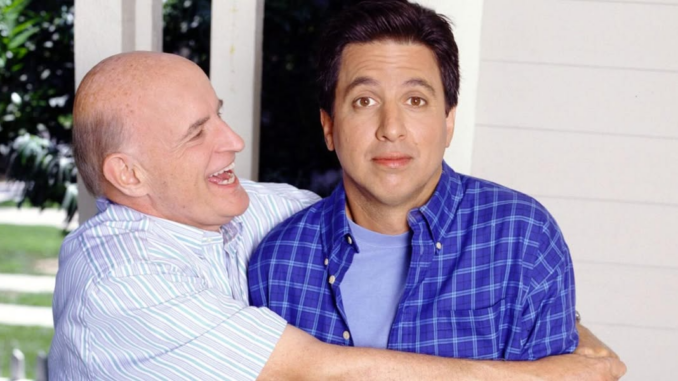
Frank Barone didn’t soften his words.
He didn’t apologize often.
And he definitely didn’t care if your feelings got hurt.
Yet somehow, Frank Barone became one of the most beloved characters on Everybody Loves Raymond. That magic came from one man: Peter Boyle.
Frank wasn’t just funny. He was uncomfortably real.
Who Was Peter Boyle Before Everybody Loves Raymond?
Before sitcom fame, Peter Boyle had a long and impressive career.
He was known for:
-
Serious film roles
-
Stage performances
-
Intense, dramatic characters
Comedy wasn’t his primary lane—until Everybody Loves Raymond proved he could dominate it.
Frank Barone: A Man of Few Filters
Frank Barone said what others only thought.
He was:
-
Blunt
-
Emotionally closed-off
-
Proudly stubborn
Peter Boyle never tried to make Frank “nice.” He leaned into the discomfort—and that honesty made the character hilarious.
Why Frank Barone Felt So Real
Frank didn’t speak in sitcom punchlines.
He spoke in:
-
Half-finished thoughts
-
Complaints
-
Grunts and silence
Boyle understood that real men of Frank’s generation weren’t expressive—they were defensive.
Comedy Through Stillness
Frank Barone’s funniest moments often came when he said nothing.
A glare.
A pause.
A slow reaction.
Peter Boyle mastered the art of reaction comedy, letting the absurdity happen around him.
Frank and Marie: A Marriage Built on Survival
Frank and Marie didn’t communicate emotionally.
They coexisted.
Their marriage worked because:
-
They understood each other’s limits
-
They tolerated flaws
-
They rarely tried to change
Boyle played Frank as a man who had learned when to fight—and when to retreat.
Why Frank Rarely Apologized
Frank didn’t apologize because he didn’t know how.
That emotional limitation wasn’t played for cruelty—it was played for realism.
Peter Boyle portrayed a generation of men taught to suppress vulnerability.
Frank as a Father Figure
Frank loved his sons—but struggled to express it.
Affection came through:
-
Sarcasm
-
Teasing
-
Rare, awkward praise
Boyle captured that tension perfectly, especially in quieter episodes.
Why Frank Barone Wasn’t a Villain
Frank wasn’t malicious.
He was tired.
Set in his ways.
Emotionally under-equipped.
Peter Boyle ensured Frank always felt human—even when he was wrong.
Physical Comedy Without Exaggeration
Unlike many sitcom characters, Frank didn’t rely on big gestures.
Boyle used:
-
Minimal movement
-
Heavy posture
-
Controlled reactions
This grounded physicality made the comedy believable.
Working With Ray Romano On Screen
Frank and Ray’s relationship felt strained—and intentionally so.
Frank rarely respected Ray’s authority.
Ray rarely earned it.
Boyle played Frank’s disappointment subtly, never turning it into cruelty.
Awards and Respect
Peter Boyle received major recognition for his role.
But more importantly, he earned respect for proving that:
-
Comedy doesn’t require volume
-
Depth enhances humor
Off-Screen, Peter Boyle Was Deeply Different
In real life, Boyle was:
-
Thoughtful
-
Intelligent
-
Politically aware
That contrast highlighted his range as an actor.
Why Frank Barone Could Only Work With Peter Boyle
Another actor might’ve played Frank as angry.
Boyle played him as resigned.
That distinction changed everything.
Frank Barone as a Cultural Archetype
Frank became shorthand for:
-
Emotionally distant fathers
-
Blunt older men
-
Unfiltered honesty
That cultural recognition doesn’t happen by accident.
Why Frank’s Humor Aged So Well
Frank’s jokes weren’t trendy.
They were rooted in human behavior.
And human behavior doesn’t expire.
The Legacy of Peter Boyle
Peter Boyle didn’t chase attention.
He earned it through restraint.
Frank Barone stands as proof that quiet performances can leave the loudest impact.
Conclusion: A Master of Controlled Brutality
Peter Boyle turned Frank Barone into more than a sitcom character.
He made him:
-
Uncomfortable
-
Familiar
-
Deeply human
Frank didn’t always say the right thing—but Peter Boyle always played him truthfully.
That’s why Frank Barone still resonates.
FAQs About Peter Boyle and Frank Barone
1. Was Frank Barone based on a real person?
Yes, inspired partly by Ray Romano’s father.
2. Why was Frank so emotionally distant?
It reflected generational attitudes toward masculinity.
3. Did Peter Boyle enjoy playing Frank?
He appreciated the realism and complexity of the role.
4. Was Frank meant to be likable?
He was meant to be authentic, not charming.
5. Is Frank Barone one of sitcom’s best fathers?
He’s one of the most realistic—not idealized—fathers on TV.