
In a universe where danger is routine and goodbyes are never guaranteed, very few relationships feel earned. Severide and Kidd do. Not because their love story was easy — but because it was tested, fractured, and rebuilt in the same flames they run into every day.
From the beginning, Severide carried the weight of loss and legacy. He’s instinct-driven, emotionally guarded, and shaped by a life where hesitation can cost lives. Kidd, on the other hand, is discipline in motion — strategic, resilient, and grounded by purpose. On paper, they shouldn’t work. On screen, they do — powerfully.
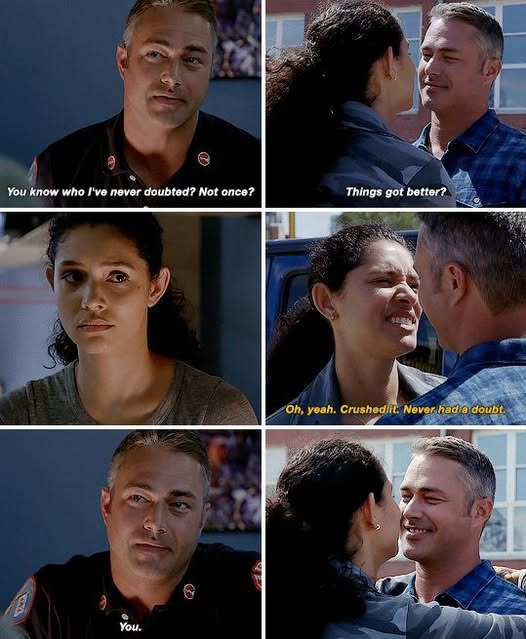
What sets this pairing apart isn’t grand romantic gestures or constant reassurance. It’s the quiet understanding. The kind that comes from standing in the same firehouse, facing the same alarms, and knowing exactly what the other risks every shift. They don’t need words to communicate trust. It’s already there, built through shared danger and mutual respect.
Their journey hasn’t been without fractures. Time apart, unresolved trauma, and the pressure of leadership tested them in ways most couples never face. Yet those breaks never weakened their bond — they refined it. When they came back together, it wasn’t out of fear of being alone, but out of certainty. Certainty that they were stronger side by side.
On screen, their chemistry feels lived-in rather than manufactured. There’s a steadiness to them — a sense that when they stand together, chaos has less room to breathe. Kidd doesn’t soften Severide; she centers him. Severide doesn’t overshadow Kidd; he trusts her strength enough to step back when needed.
In a franchise built on fire, loss, and resilience, Severide and Kidd represent something rare: a relationship that grows without losing its edge. They aren’t perfect. They’re believable. And in Chicago Fire, that might be the most powerful love story of all.
Because some bonds aren’t written in the script —
they’re forged in the fire.