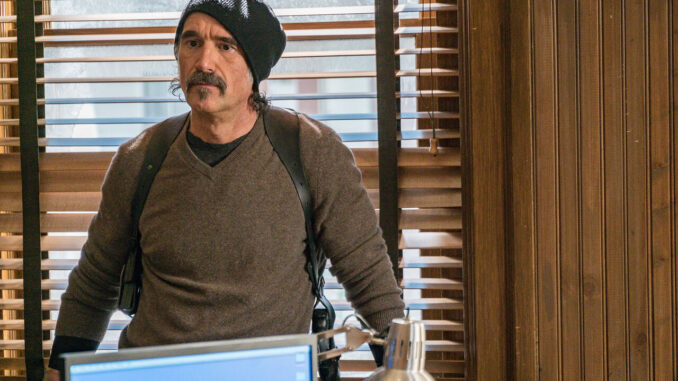
Few character deaths in Chicago P.D. have left a wound as deep—and as lasting—as the loss of Alvin Olinsky. Years have passed since the episode aired, yet for many fans, the pain of his death still feels raw. Played with quiet strength and emotional depth by Elias Koteas, Olinsky wasn’t just another detective on the Intelligence Unit. He was its moral compass, its steady hand, and, in many ways, its heart.
From the very beginning, Alvin Olinsky stood apart. He wasn’t loud or flashy. He didn’t dominate scenes with explosive speeches or constant action. Instead, he carried himself with calm authority, wisdom earned through years on the job, and a deeply human vulnerability. Olinsky felt real—like someone who had seen too much, lost too much, and kept going anyway.
That realism is what made his death so devastating.
More Than Voight’s Partner
Olinsky’s relationship with Hank Voight was central to the show’s emotional core. They weren’t just colleagues; they were brothers in arms. Olinsky understood Voight in ways no one else could. He challenged him when necessary, protected him when needed, and stood by him even when the cost was unbearably high.
When Olinsky took the fall to protect Voight’s son, it wasn’t a shocking twist—it was heartbreakingly in character. His loyalty was absolute. And that made his fate feel tragically inevitable rather than sensational.
A Death That Felt Unfair—and Final
Olinsky’s death in prison wasn’t heroic or cinematic. There was no last stand, no dramatic goodbye. Instead, it was brutal, sudden, and painfully realistic. He was attacked, rushed into surgery, and died off-screen—leaving both the characters and the audience stunned.
That quiet finality is part of what still hurts. Fans didn’t get closure. Voight didn’t get a chance to save him. Olinsky didn’t get justice. The world simply moved on, leaving a void that could never be filled.
The Emotional Fallout
After Olinsky’s death, Chicago P.D. changed. Voight became darker, more isolated, and visibly broken. The Intelligence Unit lost its grounding force. Even when new characters joined the team, something essential was missing.
Fans noticed.
Online discussions still describe Olinsky as “the soul of the show” and “the one loss Chicago P.D. never recovered from.” His absence wasn’t just narrative—it was emotional. The silence he left behind spoke louder than any storyline.
Why Fans Still Grieve
What makes Alvin Olinsky’s death linger isn’t just the sadness—it’s the sense of wasted goodness. He was a flawed man, but a decent one. A father. A partner. A cop who tried to do the right thing in a world that punished him for it.
In a series filled with violence and moral ambiguity, Olinsky represented restraint and conscience. Losing him felt like losing hope—like a reminder that in Chicago P.D., even the best people don’t always survive.
Never Forgotten
When Olinsky briefly reappeared as a vision years later, it wasn’t fan service—it was acknowledgment. The show itself recognized what fans had known all along: Alvin Olinsky still mattered.
And he always will.
Because some characters don’t just exit a series—they leave a scar. And Alvin Olinsky’s death remains one of Chicago P.D.’s most heartbreaking moments, not because it shocked us, but because it felt tragically real.