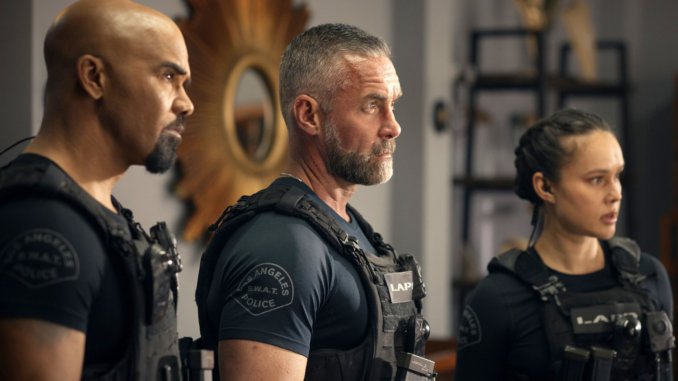
If you’ve ever sat on the edge of your couch, heart pounding as Hondo and the rest of 20-Squad breach a door in a cloud of flashbangs and tactical precision, you’ve probably asked yourself: Is this actually real? The short answer is: No, the specific characters aren’t real, but the foundation they stand on is 100% true. While the show we love today on CBS (and Netflix) is a dramatized thrill ride, its roots are buried deep in the soil of Los Angeles history. It’s a blend of 1970s nostalgia, real-world law enforcement evolution, and the very real tensions that define the city of angels. Let’s pull back the curtain on what’s fact, what’s friction, and what’s purely for the cameras.
The Origin Story: A Trip Back to the 1960s
To understand the show, we have to look at the birth of the concept. S.W.A.T. (Special Weapons and Tactics) wasn’t just a cool acronym dreamed up by a Hollywood writer. It was a response to a very dark and chaotic time in American history.
The Watts Riots and the Need for Change
The mid-1960s in Los Angeles were a powder keg. Following the Watts Riots in 1965, the LAPD realized that standard patrol officers weren’t equipped to handle high-intensity civil unrest or sniper situations. Imagine trying to fix a leak with a toothpick—that’s how the police felt trying to handle heavy artillery with standard-issue revolvers.
Daryl Gates: The Architect of the Elite
The man often credited with the real-life creation of S.W.A.T. is Daryl Gates. Before he became the controversial Chief of Police, he was a young officer looking for a solution to barricaded suspects and urban warfare. He wanted a team that operated more like a military unit but within the framework of domestic law.
Is Hondo Based on a Real Person?
This is the question every Shemar Moore fan wants to know. Is there a real-life Daniel “Hondo” Harrelson out there barking orders and looking incredible in a tactical vest?
The Legend of the “Original” Hondo
While Hondo is a fictional creation, he is loosely inspired by the archetype of the “bridge-builder” officers who served in the late 60s and early 70s. These were men who lived in the communities they patrolled—often Black or Latino officers who faced the impossible task of being “blue” in a neighborhood that didn’t trust the badge.
The Literary and Cinematic Heritage
We also have to acknowledge that Hondo existed long before the 2017 reboot. The character first appeared in the 1975 S.W.A.T. series (played by Steve Forrest) and later in the 2003 movie (played by Samuel L. Jackson). The character is a vessel for a specific theme: the struggle of a man who loves his city but must enforce the law in its roughest corners.
The Evolution of Tactics: From 1975 to Today
When you watch the modern show, the tech is sleek. We see drones, thermal imaging, and high-tech communication. But the “True Story” of S.W.A.T. began with much humbler beginnings.
The First Major Engagement: The Black Panthers
In 1969, the newly formed S.W.A.T. unit faced its first true test during a shootout with the Black Panther Party. It was a four-hour standoff that changed everything. It proved that a specialized team could handle high-risk situations with fewer casualties than a disorganized group of patrol officers.
The 1974 SLA Shootout
If you want to see the real-life inspiration for the “high-stakes” feel of the show, look up the 1974 shootout with the Symbionese Liberation Army (SLA). It was one of the first times a police action was broadcast live on television. The world watched in horror and fascination—and Hollywood took notice.
Bridging the Gap: The 1975 TV Series
The current show is actually a reboot of a 1975 series produced by Aaron Spelling. Back then, it was criticized for being too violent. Looking back now, it’s almost quaint compared to the modern version, but it set the template. It took the real-world concept of a tactical unit and turned it into a “superhero” squad.
The Catchy Theme Song and Cultural Impact
Even if you’ve never seen the 70s version, you know the theme song. That “dum-dum-dum-dum” rhythm is the heartbeat of the franchise. It turned the unit into a brand. Suddenly, kids wanted S.W.A.T. lunchboxes instead of cowboy hats.
How Realistic is the Modern S.W.A.T. Series?
Let’s get into the “nitty-gritty.” As a high-end copywriter and fan of the show, I have to admit: there’s a lot of “Hollywood Magic” going on.
The Speed of the Action
In the show, the team gets a call, gears up, drives across LA in five minutes, and finishes a hostage situation before lunch. In reality? S.W.A.T. calls are often hours—sometimes days—of waiting, negotiating, and sitting in a van. It’s a game of patience, not just a sprint.
The “20-Squad” Autonomy
On TV, Hondo’s team seems to do everything. They investigate crimes, interview witnesses, and kick down doors. In the real LAPD, S.W.A.T. is a support unit. They don’t typically do the detective work; they are called in by detectives when things get “hairy.”
Real Equipment vs. TV Props
The show does an excellent job of using gear that looks authentic. They often consult with real tactical officers to make sure the “stacking” (how they line up at a door) and the “slicing the pie” (how they clear a room) looks legitimate.
The BearCat: A Real-Life Beast
That armored vehicle they ride in? That’s a Lenco BearCat, and it’s a staple for real-world tactical units. Seeing it on screen gives the show a grounded, gritty texture that separates it from a standard police procedural.
The Social Justice Angle: Is That Based on Truth?
One of the best things about the current S.W.A.T. is how it tackles police-community relations. It doesn’t shy away from the friction between the LAPD and the citizens of Los Angeles.
Art Imitating Life
The show often draws directly from real-life headlines. Whether it’s a storyline about racial profiling, a botched raid, or the mental health of officers, the writers are clearly reading the news. While the characters are fake, the problems they face are very, very real.
The Real Life of a S.W.A.T. Officer
What’s it actually like to be in the unit? It’s not all glory and Shemar Moore’s biceps. It’s a grueling job that requires peak physical condition and an incredible mental toll.
Training and Selection
In real life, getting into the LAPD’s Metropolitan Division (where S.W.A.T. lives) is harder than getting into the Ivy League. You have to be an officer for years, pass a “hell week” of physical testing, and show a level of emotional intelligence that can handle life-or-death pressure.
The Mental Health Aspect
The show has done a great job lately of showing “Deacon” or “Street” dealing with the trauma of the job. Real officers face incredibly high rates of PTSD. The show’s shift toward focusing on the “human” behind the mask is perhaps its most “true” element.
Why We Love the Fantasy of the True Story
We love S.W.A.T. because it represents the idea that there are “good guys” who are trained enough, strong enough, and brave enough to handle the things we can’t. Even if the stories are written in a writers’ room in Burbank, they speak to a real desire for justice and protection.
An Analogy of the Shield
Think of the show like a high-performance sports car. The engine and the chassis are based on real engineering (the history and tactics), but the paint job and the nitro boost (the drama and the pacing) are all for the show. You wouldn’t drive it to the grocery store, but you love watching it on the track.
The Global Influence of the S.W.A.T. Concept
Because of the LAPD and the media that followed, the S.W.A.T. concept has spread globally. From the GSG 9 in Germany to the GIGN in France, the idea of a specialized, highly trained tactical police unit is now a worldwide standard. The “True Story” of S.W.A.T. is actually the story of how modern policing changed across the entire planet.
The Cinema-Police Feedback Loop
It’s a weird cycle: the police inspire the movies, and then the movies inspire how the police want to look. Real tactical units often adopt the “cool” gear they see in films, and film consultants try to make the movies look like the real units. It’s a mirror reflecting a mirror.
Conclusion: Fact, Fiction, and the Space In-Between
So, is S.W.A.T. based on a true story? It’s based on a true legacy. While 20-Squad doesn’t exist in the LAPD directory, the spirit of the unit—the bravery, the specialized training, and the complex relationship with the city—is as real as it gets. The show takes the skeleton of history and dresses it in the armor of entertainment. And honestly? We wouldn’t have it any other way. As long as there are doors to be breached and hearts to be won, Hondo and his team will have a home on our screens.
Frequently Asked Questions
1. Was there ever a real “Hondo” in the LAPD? No. Daniel “Hondo” Harrelson is a fictional character created for the 1975 TV series and reimagined for the 2003 film and 2017 series. However, he represents the real-life struggles of minority officers in specialized units.
2. Does the LAPD really have a S.W.A.T. team? Yes! The LAPD S.W.A.T. team was the first of its kind in the United States and remains one of the most elite tactical units in the world.
3. Do real S.W.A.T. teams use the same tactics shown in the show? Mostly. The show hires technical advisors who are former S.W.A.T. or military members to ensure the “tactical movements” are accurate. However, the timing and some of the investigative work are exaggerated for TV.
4. Where did the name S.W.A.T. come from? It was originally going to stand for “Special Weapons Attack Team,” but it was changed to “Special Weapons and Tactics” to sound less aggressive and more community-oriented.
5. Is the show filmed in Los Angeles? Yes! One of the reasons the show feels so “true” is that it is actually filmed on the streets of LA, using real landmarks and neighborhoods.