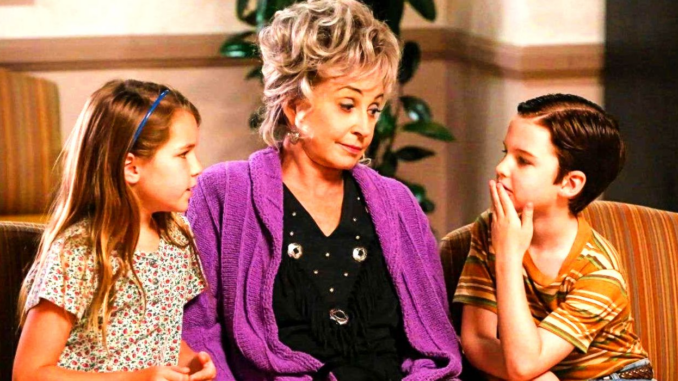
If you grew up watching The Big Bang Theory, you probably had a very specific mental image of Sheldon Cooper’s legendary grandmother. She was the woman who called him “Moonpie,” the grandmotherly figure we all imagined baking cookies while simultaneously keeping Mary Cooper in check. But when CBS finally brought her to the screen in the flesh, and later reimagined her for Young Sheldon, something shifted.
The “quiet replacement” of Meemaw isn’t just about a change in actors; it’s about a total DNA transplant of one of the most beloved off-screen characters in sitcom history. Fans are now looking back and realizing that the version of Meemaw we were promised is lightyears away from the version we got. Did CBS make a mistake, or did they just evolve with the times? Let’s dive into the controversy that has the Coopers’ kitchen table shaking.
The Legend of the Off-Screen Meemaw
For nine long years, Meemaw was a ghost. We heard her name whispered with reverence by Sheldon. We saw the emotional weight she carried in his life. She was a paragon of Southern virtue—or so we thought. Because she was off-screen for so long, our imaginations did the heavy lifting.
The First Appearance: June Squibb Takes the Reins
In Season 9 of The Big Bang Theory, the veil finally dropped. CBS cast the legendary June Squibb to play Connie Tucker. She arrived to “inspect” Amy Farrah Fowler, and she was every bit the stern, protective, and slightly intimidating Southern matriarch we expected. She was the person who could make the world’s most stubborn physicist melt like butter on a hot biscuit.
The Young Sheldon Pivot: Enter Annie Potts
When Young Sheldon was greenlit, the producers faced a massive hurdle. They needed a Meemaw who could handle a series-regular workload and provide a comedic foil to the pious Mary Cooper. They didn’t call June Squibb back for the prequel. Instead, they “replaced” the character’s personality entirely by casting Annie Potts.
The Personality Paradox
Suddenly, the stern grandmother from the flagship show vanished. In her place was a gambling, beer-drinking, brisket-cooking, brisket-stealing rebel with a purple convertible. This wasn’t just a recast; it was a character assassination of the original “Moonpie” protector—at least, according to the purists.
Why Fans Think the Show Was Never the Same
The shift from the “June Squibb vibe” to the “Annie Potts vibe” created a massive rift in the fanbase. For some, the new Meemaw was a breath of fresh air. For others, it felt like CBS was gaslighting them about who this woman really was.
The Loss of the “Soft” Grandmotherly Magic
Many fans argue that the original version of Meemaw—the one Sheldon described in the early seasons—represented a safe haven. By turning her into a “cool,” edgy character, some feel the show lost that grounded, sentimental anchor that made Sheldon’s childhood feel truly special.
The Timeline Trouble: A Continuity Headache
Let’s be honest: the Big Bang universe has a bit of a messy relationship with its own history. If Meemaw was a wild child in the 80s and 90s, why did she become so stiff and judgmental by the time she met Amy in 2016?
The “Hardening” Theory
Some fans have tried to bridge the gap with their own theories. Did the death of Pop-Pop or the eventual departure of Sheldon to California turn our fun-loving Annie Potts into a grumpy June Squibb? It’s a bit of a stretch, isn’t it? It feels more like a creative pivot than a planned character arc.
Annie Potts: The Rebellious Heart of East Texas
Despite the controversy, you can’t deny that Annie Potts brought a certain je ne sais quoi to the role. She turned Connie Tucker into a feminist icon of the 80s. She wasn’t just a grandma; she was a woman with her own life, her own romances (looking at you, Dr. Sturgis), and her own business ventures.
The Chemistry with Iain Armitage
The “new” Meemaw worked because her chemistry with young Sheldon was undeniable. They were partners in crime. While Mary was busy worrying about Sheldon’s soul, Meemaw was busy teaching him how to bluff at poker. Is that more entertaining than a woman baking cookies? Probably. But does it fit the “Moonpie” mythos? That’s where the debate heats up.
The Impact on Mary and George’s Marriage
By replacing the traditional Meemaw with a more chaotic version, CBS also changed the dynamics of the Cooper household. Meemaw became a constant thorn in George Sr.’s side, providing some of the show’s best comedic barbs.
The Mother-Daughter Friction
The “new” Meemaw also highlighted Mary’s rigidity. Having a mother who didn’t follow the rules gave Mary a reason to be even more devout. It created a “burstiness” in the family scenes that the original, softer Meemaw might not have provided.
The Fans Strike Back: Reddit and Social Media Reacts
If you go to any fan forum today, the “Meemaw Replacement” is a top-tier thread. “I loved the idea of Meemaw being this sweet, untouchable figure,” one user wrote. “Making her a gambler at a laundromat made her feel like a different person entirely.”
The “Two Connies” Debate
It’s almost like we have two different characters named Connie Tucker.
-
Connie A: The stern inspector of girlfriends.
-
Connie B: The brisket-obsessed gambler. Which one is the “real” Meemaw? It depends on which show you watched first.
Was CBS Trying to “Coolify” the Coopers?
There is a trend in TV prequels to make the older characters “cooler” than they were in the original show. Think of it as the “prequel glow-up.” By replacing the traditional Meemaw with Annie Potts, CBS ensured the show would appeal to a wider, perhaps younger audience who wanted more sass and less sentiment.
The Risk of Alienating the OG Audience
While it worked for the ratings, it did leave a sour taste for those who had spent a decade building a version of Meemaw in their heads. When you’ve told an audience for ten years that a character is “X,” and then you show them “Y,” you’re going to get some pushback.
The Brisket Incident: A Metaphor for Change
Remember the secret brisket recipe episode? In The Big Bang Theory, the recipe was a sacred family heirloom. In Young Sheldon, it was a source of a bitter, hilarious feud. This change perfectly encapsulates the shift: from a sacred memory to a comedic plot point.
Why the Change Mattered for the Prequel’s Success
Without the “Potts replacement,” Young Sheldon might have been too somber. The show needed energy. It needed someone to roll their eyes at the church and the school board. In that sense, “replacing” the character was a survival tactic for the writers.
Comparing the Two Actors: A Masterclass in Style
Both June Squibb and Annie Potts are powerhouses. Squibb brought the gravitas of an Oscar nominee, while Potts brought the comedic timing of a Ghostbusters veteran.
June Squibb’s Subtle Authority
Squibb’s version felt like someone Sheldon would actually be afraid of. There was a quiet power in her voice. When she spoke, the room got quiet.
Annie Potts’ Magnetic Energy
Potts, on the other hand, owned every scene she was in with high energy and sharp wit. She wasn’t just a grandma; she was the life of the party.
The Legacy of the Meemaw Switch
As Young Sheldon concluded its run and moved into the Georgie and Mandy spinoff territory, the legacy of this “quiet replacement” remains. It’s a reminder that in television, characters are often at the mercy of the current show’s needs, regardless of what came before.
The Fans’ Final Verdict
So, was the show never the same? In many ways, yes. It was funnier, faster, and more irreverent. But it also lost a bit of the mystery that Sheldon’s stories had built up. We no longer had to wonder who Meemaw was; we knew exactly what she was doing—usually at the gambling room.
Conclusion: A Character of Two Tales
Ultimately, the “replacement” of Meemaw is a tale of two visions. CBS chose to prioritize the needs of a new sitcom over the strict continuity of the old one. While it might frustrate the lore-hunters, it gave us seven seasons of a character who became the heart and soul of Young Sheldon. We might miss the grandmotherly sweetness of the version Sheldon described in the early days of Big Bang, but it’s hard to imagine the Cooper family without the fiery spirit of the Connie Tucker we eventually got. Whether you prefer the “Moonpie” baker or the “Laundromat” mogul, Meemaw remains the most influential woman in Sheldon Cooper’s life—even if she had to change her entire personality to get there.
Frequently Asked Questions
1. Why wasn’t June Squibb cast in Young Sheldon? The creators wanted a younger, more active version of the character who could participate in physical comedy and long-term storylines. June Squibb’s portrayal was perfect for a “one-off” guest spot, but Annie Potts was seen as a better fit for a series regular.
2. Is there a canon explanation for the personality change? There is no official in-universe explanation. Fans generally accept it as a continuity error or “creative reimagining” to fit the tone of the prequel.
3. Did Sheldon ever mention Meemaw being a gambler in The Big Bang Theory? Rarely, if ever. Most of his stories revolved around her being protective, sweet, and an excellent cook. The gambling and rebellious side were largely inventions for Young Sheldon.
4. Which version of Meemaw appeared in the most episodes? Annie Potts’ version appeared in nearly every episode of Young Sheldon (over 140 episodes), whereas June Squibb appeared in only one episode of The Big Bang Theory.
5. How did the real Meemaw (the inspiration for the character) feel about the show? Sheldon’s character is based on the real-life experiences of the show’s creators and writers, but Meemaw herself is a fictionalized composite of many Southern grandmothers.