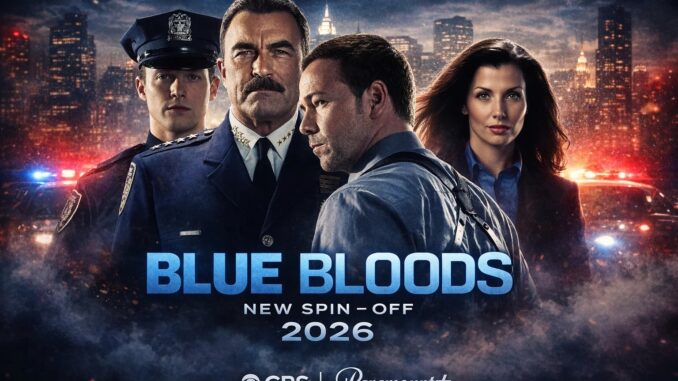
Boston Blue is officially set to arrive in 2026, expanding the beloved Blue Bloods universe with a feature-length spin-off film that shifts the focus from New York City to Boston. Following the long-running success of Blue Bloods, the film represents CBS’s effort to continue the franchise in a new format while preserving the themes that made the original series a staple of network television.
After more than a decade on the air, Blue Bloods built a deeply loyal audience through its focus on family, law enforcement ethics, and generational duty. Rather than launching a direct sequel series, the network opted for a standalone film, allowing the franchise to evolve creatively while maintaining continuity. Boston Blue is positioned as both a continuation and a fresh starting point for longtime fans and new viewers alike.
The film reportedly centers on a new chapter of the Reagan legacy, with the story moving to Boston and exploring a different law-enforcement environment shaped by the city’s unique political history, community dynamics, and criminal challenges. While New York’s Reagan family defined the original series, Boston Blue expands the world by introducing new characters and alliances, while still honoring the moral framework established in Blue Bloods.
Although CBS has not yet released a full cast list, industry sources suggest that at least one familiar face from Blue Bloods is expected to appear, serving as a narrative bridge between the original series and the spin-off film. These connections are designed to reassure fans that Boston Blue remains firmly rooted in the same universe, rather than functioning as a loose or symbolic offshoot.
One of the most notable aspects of Boston Blue is its format. As a television film rather than an episodic series, the project allows for a tighter, more cinematic story structure. This approach gives the writers room to craft a focused narrative with higher emotional stakes, while also testing audience interest in potential future installments or additional spin-off projects.
CBS’s decision to expand Blue Bloods through a film reflects a broader trend in franchise storytelling. With traditional procedural dramas facing increasing competition from streaming platforms, established brands offer stability and built-in audiences. Boston Blue leverages that familiarity while offering a new setting and tone that distinguishes it from its predecessor.
Thematically, the film is expected to retain the core elements that defined Blue Bloods: questions of justice versus loyalty, personal morality within institutional power, and the tension between professional duty and family obligations. By placing these themes in Boston, the story gains a new cultural and political backdrop that may allow for more complex conflicts and perspectives.
As anticipation builds toward its 2026 release, Boston Blue stands as a strategic evolution of one of television’s most enduring franchises. Rather than closing the book on Blue Bloods, the film opens a new chapter—one that honors its roots while signaling that the Reagan legacy, in one form or another, is far from over.