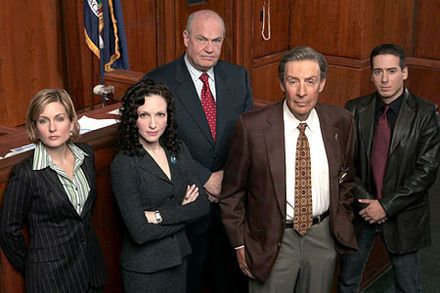
The Law & Order franchise is one of television’s most enduring success stories, spawning multiple spin-offs that captivated audiences for decades. Among them, Law & Order: Trial by Jury stood out with its unique focus on the courtroom side of justice. Premiering in March 2005 on NBC, the series promised an in-depth look at criminal trials from the perspectives of prosecutors, defense attorneys, and judges. Despite a strong cast, high production values, and the massive popularity of the original Law & Order, the show was abruptly canceled after just one season and 13 episodes.
So, why was Law & Order: Trial by Jury canceled so quickly? The reasons are a combination of tragic real-life events, stiff competition in a tough time slot, disappointing viewership numbers, and broader network programming decisions. In this article, we’ll explore the show’s premise, its promising launch, the major setbacks it faced, and the key factors that led to its demise—while examining why other Law & Order spin-offs thrived where this one faltered.
The Premise and Unique Appeal of Law & Order: Trial by Jury
Unlike the original Law & Order, which split its time between police investigations (“law”) and courtroom proceedings (“order”), Trial by Jury flipped the formula. It focused almost exclusively on the trial phase, showing how cases were prepared, argued, and decided. Viewers got to see both the prosecution and defense strategies, jury deliberations in some episodes, and the behind-the-scenes drama of the justice system.
The series starred Bebe Neuwirth as Tracey Kibre, a tough and intelligent Executive Assistant District Attorney leading the homicide division. Supporting roles included Kirk Acevedo as ADA Hector Salazar, Amy Carlson as ADA Kelly Gaffney, Fred Thompson as DA Arthur Branch (a crossover from the original series), and Scott Cohen as Detective Chris Ravell. Adding star power was the legendary Jerry Orbach, reprising his iconic role as Detective Lennie Briscoe to help bridge the franchise.
The show aimed to deliver the signature Law & Order ripped-from-the-headlines realism but with a fresh courtroom-centric twist. Episodes often featured high-profile cases involving celebrities, corrupt officials, or controversial defenses, keeping the procedural tension high. Critics and fans praised its ambitious approach, with some calling it a bold evolution of the formula.
High Expectations and a Strong Start
When NBC announced Law & Order: Trial by Jury in 2004, expectations were sky-high. The Law & Order brand was a ratings powerhouse, with the original series in its 15th season and spin-offs like Law & Order: Special Victims Unit and Law & Order: Criminal Intent performing solidly. Creator Dick Wolf had built an empire on reliable procedurals, and this new entry seemed like a natural extension.
The series premiered on March 3, 2005, in the Friday 10 p.m. ET time slot. Its debut episode, “The Abominable Showman,” drew 17.29 million viewers—a respectable number for a midseason launch. The show continued to attract around 10-12 million viewers per episode in its early run, bolstered by the familiar Law & Order format and guest stars.
However, the Friday night slot proved challenging. Fridays are notoriously difficult for networks, as audiences often shift to weekend plans or other programming. More critically, CBS had launched Numb3rs in January 2005, a math-driven procedural that quickly gained traction. Numb3rs consistently outperformed competitors in the same time slot, including NBC’s previous occupant, Medical Investigation, which was canceled to make room for Trial by Jury.
The Tragic Loss of Jerry Orbach
One of the most heartbreaking factors in the show’s downfall was the death of Jerry Orbach. The actor, beloved for his portrayal of the wisecracking Detective Lennie Briscoe, had been diagnosed with prostate cancer. He left the original Law & Order after Season 14 in 2004 but agreed to reprise the role for the first few episodes of Trial by Jury to provide continuity and draw fans.
Orbach filmed only two episodes before his health deteriorated. He passed away on December 28, 2004, at age 69—months before the series premiere. His final on-screen appearance aired in the second episode, “41 Shots,” where Briscoe helped crack a case. The loss was devastating for the cast, crew, and fans. Orbach’s character was written out off-screen (Briscoe died of cancer, mirroring the actor’s fate), removing a major draw.
Without Orbach’s charisma and the emotional anchor he provided, the show struggled to maintain viewer loyalty. Many fans tuned in primarily for his return, and his absence left a noticeable void in the ensemble dynamic.
Ratings Struggles and Intense Competition
Despite a solid premiere, Law & Order: Trial by Jury saw its viewership decline as the season progressed. It averaged around 10.73 million viewers for the full season, ranking #37 overall—not terrible, but not enough to secure renewal in a competitive landscape.
The head-to-head battle with Numb3rs was decisive. CBS’s show appealed to similar demographics with its blend of crime-solving and intellectual elements, often winning the Friday 10 p.m. slot in total viewers and key 18-49 demos. NBC’s Friday lineup was weakening overall, and the network needed stronger performers to compete.
Additionally, the show’s format may have contributed to the ratings dip. While innovative, the heavy emphasis on courtroom drama felt slower-paced compared to the action-oriented police procedurals fans loved in the franchise. Some viewers found the lack of investigative elements less engaging, leading to audience erosion.
NBC’s Programming Decisions and Sunday Night Football
The final nail in the coffin came from NBC’s broader scheduling strategy. In 2005, the network acquired the rights to Sunday Night Football, starting in the 2006 season. This high-profile addition required reshuffling the entire primetime lineup to accommodate NFL games, which promised massive ratings and ad revenue.
NBC Entertainment President Kevin Reilly cited the “real estate issue”—limited prime-time slots—as a key reason for canceling Trial by Jury. With Sunday Night Football taking a major slot and other shows underperforming, the network prioritized proven hits and new pilots. Even though Trial by Jury had “reasonable ratings” that might have warranted a second season in normal circumstances, it became expendable.
Dick Wolf was reportedly “blindsided” by the decision, as NBC had initially assured him of a renewal. The sets from Trial by Jury were later reused for another short-lived Wolf-produced series, Conviction (2006), which also lasted only one season.
Legacy and Why Other Spin-Offs Survived
Law & Order: Trial by Jury holds a unique place as the first Law & Order spin-off to be canceled (the original ran 20 seasons before its 2010 cancellation and 2022 revival). It remains a “what if” for fans—many believe that with Orbach’s full involvement and a better time slot, it could have lasted longer.
In contrast, SVU succeeded by blending procedural elements with serialized character arcs and social issues, while Criminal Intent offered psychological depth. Later spin-offs like Organized Crime benefited from crossovers and streaming platforms. Trial by Jury‘s pure courtroom focus, while ambitious, didn’t capture the same broad appeal in the broadcast era.
Today, the series is available on streaming and appreciated by die-hard fans for its strong performances (especially Neuwirth’s commanding presence) and insightful portrayal of the legal system. It serves as a reminder of how fragile network TV success can be—even for a franchise powerhouse.
Conclusion
Law & Order: Trial by Jury was canceled after one season due to a perfect storm: the tragic death of Jerry Orbach, fierce competition from Numb3rs, declining viewership in a tough Friday slot, and NBC’s need to clear space for Sunday Night Football. What began as a promising expansion of the Law & Order universe ended prematurely, becoming the franchise’s first short-lived spin-off.
Despite its brief run, the show offered a fresh perspective on justice and featured memorable performances. For fans of courtroom dramas and the Law & Order legacy, it remains a fascinating—if bittersweet—chapter. Perhaps in today’s streaming world, a revival could give it the second chance it deserved.