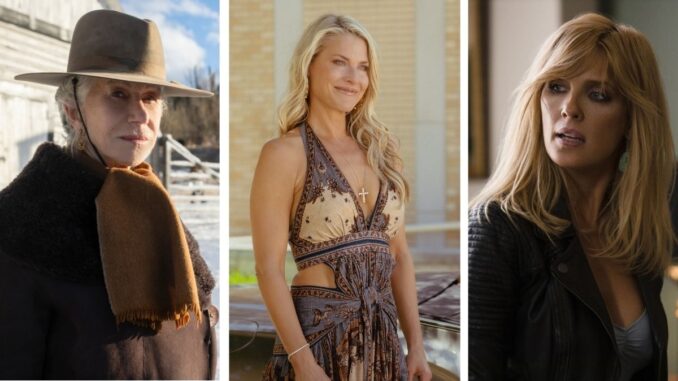
5 ‘Yellowstone’ and ‘Landman’ Leading Ladies Reveal What They Really Think About Taylor Sheridan’s Portrayal of Women
Taylor Sheridan doesn’t just write television — he builds worlds. Gritty, masculine, dust-covered worlds where power is currency and survival is a daily negotiation. But one question keeps circling fans and critics alike: How does Taylor Sheridan really portray women?
Now, five leading ladies from Yellowstone and Landman are pulling back the curtain — and their answers are far more layered than you might expect.
This isn’t a simple love-it-or-hate-it debate. It’s a conversation about complexity, agency, discomfort, and realism. Let’s dig in.
Why Taylor Sheridan’s Female Characters Spark So Much Debate
Taylor Sheridan writes women who don’t fit neatly into boxes. They’re not always likable. They’re not always nurturing. And they’re rarely safe.
That’s exactly why they stir conversation.
Breaking the Traditional TV Mold
In a TV landscape where female characters are often softened for mass appeal, Sheridan does the opposite. His women are:
-
Aggressive when needed
-
Emotionally guarded
-
Morally complicated
-
Fiercely intelligent
Some viewers call that empowering. Others call it brutal.
Both might be right.
Beth Dutton Changed the Game for Female TV Characters
You can’t talk about Sheridan’s women without starting with Beth Dutton.
Kelly Reilly on Playing Beth
Kelly Reilly has never pretended Beth is easy to love. In fact, she’s said the character is intentionally uncomfortable.
Beth is rage wrapped in silk. She’s trauma wearing lipstick.
And according to Reilly, that’s the point.
A Woman Who Refuses to Be Palatable
Beth doesn’t exist to soothe the audience. She exists to survive. That rawness, Reilly believes, is what makes Beth revolutionary — not her one-liners, but her refusal to apologize for her damage.
Monica Dutton and the Weight of Representation
While Beth dominates headlines, Monica Dutton carries a different burden entirely.
Kelsey Asbille on Playing Monica
Asbille has spoken openly about the pressure of representing Indigenous women on a massive platform like Yellowstone.
Monica isn’t written as a fantasy. She’s written as someone caught between worlds — culture, marriage, motherhood, and personal identity.
Complexity Over Comfort
Some fans find Monica frustrating. But Asbille argues that discomfort is honest. Growth isn’t linear, and Sheridan doesn’t pretend it is.
Women in Landman: A New Evolution
With Landman, Sheridan shifts settings — but not his philosophy.
A Different Industry, Same Power Struggles
Set in the oil business, Landman introduces women navigating corporate dominance rather than ranch warfare.
And the stakes? Just as high.
Leading Lady #1: Strength Without Softening
One actress from Landman describes Sheridan’s writing as “refreshingly unafraid.”
No Emotional Training Wheels
These women aren’t explained to the audience. They’re not softened through exposition. They exist fully formed — and you either keep up or fall behind.
Leading Lady #2: Power Isn’t Always Pretty
Another Landman star points out something critics often miss.
Flawed Doesn’t Mean Weak
Sheridan allows women to fail publicly. To be wrong. To be ruthless. That freedom, she says, is rare in television.
The Masculine World Sheridan Writes Into
Let’s be honest — Sheridan’s worlds are male-dominated by design.
Survival in Hostile Territory
Whether it’s Montana ranch land or Texas oil fields, women in these stories aren’t handed power. They fight for it.
And sometimes, they lose.
That realism hits hard.
Is Taylor Sheridan Writing for the Male Gaze?
This is the accusation that keeps coming back.
What the Actresses Say
Interestingly, none of the five women describe Sheridan as dismissive or unaware. Instead, they say he listens — but doesn’t sanitize.
He writes women in male spaces, not women protected from them.
Leading Lady #3: “He Writes Women Like People”
One actress summed it up perfectly.
Not symbols. Not statements. People.
Messy, contradictory, ambitious people.
Sex, Power, and Control in Sheridan’s Scripts
Sexuality in Sheridan’s work is rarely romanticized.
A Tool, Not a Reward
Women use sex strategically. Men do too. It’s power currency, not fantasy fulfillment — and that choice unsettles some viewers.
Leading Lady #4: The Cost of Realism
One star admits that playing these roles can be emotionally exhausting.
No Escape Hatch for Trauma
Sheridan doesn’t offer easy healing arcs. Pain lingers. Consequences stick. And that weight follows the actors home.
But she believes that honesty is worth it.
Why These Characters Stick With Audiences
Love them or hate them, Sheridan’s women are unforgettable.
They Don’t Fade Into the Background
They dominate scenes. Drive conflict. Make brutal choices. And refuse to be side characters in their own lives.
Leading Lady #5: “These Women Scare People — And That Matters”
Perhaps the most powerful takeaway?
Strong women don’t always inspire applause. Sometimes they inspire fear.
And that reaction says more about the audience than the writing.
The Cultural Impact of Sheridan’s Female Characters
From Beth Dutton memes to heated Reddit debates, these women live beyond the screen.
They’ve become symbols — not of perfection, but of agency.
What Taylor Sheridan Gets Right About Women
He doesn’t idealize them.
He doesn’t protect them.
He doesn’t simplify them.
And in a strange way, that might be the most respectful portrayal of all.
Criticism Isn’t Going Away — And That’s Okay
Art that sparks conversation usually means it’s doing something right.
Sheridan’s women aren’t meant to unite everyone. They’re meant to challenge expectations.
The Future of Women in the Sheridan Universe
If Landman is any indication, the future holds:
-
More power
-
More conflict
-
More unapologetic complexity
And fewer compromises.
Conclusion: Complicated Women in a Complicated World
Taylor Sheridan’s portrayal of women isn’t clean, comforting, or universally adored — and that’s exactly why it matters.
Through the voices of five leading ladies from Yellowstone and Landman, one truth becomes clear: these characters aren’t written to be liked. They’re written to be real.
In a television landscape obsessed with likability, that realism feels downright rebellious.