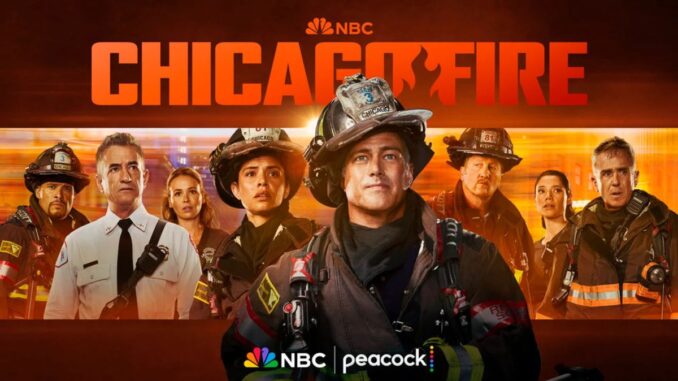
In a city where sports aren’t just entertainment but a way of life, it takes something truly unexpected to confuse Chicago fans. Yet somehow, a long-running NBC drama about firefighters managed to do exactly that.
The title Chicago Fire has sparked years of accidental misunderstandings, double takes, and even heated debates—especially among sports fans in the Windy City. While millions of viewers around the world immediately recognize the name as a hit television series, many locals—particularly those deeply immersed in Chicago’s sports culture—have been tripped up by it more than once.
So how did a TV show end up causing so much confusion in one of America’s most sports-obsessed cities? The answer lies in history, branding, and Chicago’s deeply emotional relationship with its teams.
A Name That Already Meant Something in Chicago
Long before Chicago Fire premiered on NBC in 2012, the words already carried a powerful meaning in the city.
Chicago Fire is the name of the city’s Major League Soccer (MLS) team, founded in 1997. The team was named after the Great Chicago Fire of 1871, one of the most defining events in the city’s history. For decades, “Chicago Fire” meant soccer—matches at Soldier Field, scarves in red and navy, and loyal fans who stuck with the club through rebuilding years and ownership changes.
So when NBC announced a new drama called Chicago Fire, sports fans didn’t immediately think “firefighters.” They thought goals, lineups, transfers, and match results.
For many, the confusion wasn’t theoretical—it was immediate and practical.
When Headlines Collide
One of the biggest sources of confusion has been headlines.
Imagine scrolling through social media or a sports news app and seeing something like:
“Chicago Fire Loses Key Player”
Or:
“Chicago Fire Faces Major Changes This Season”
For a soccer fan, those headlines sound urgent—and familiar. But click the link, and suddenly it’s about a fictional firefighter being written off a TV show.
The reverse has happened, too. Entertainment fans have clicked on sports articles expecting behind-the-scenes TV news, only to land in discussions about midfield strategies or coaching decisions.
In a media landscape driven by fast scrolling and shortened headlines, context often disappears. And in Chicago, that missing context has caused years of low-level chaos.
Sports Fans Are Wired Differently
To understand why this confusion sticks, you have to understand Chicago sports fans.
Chicagoans are famously loyal to their teams. Cubs fans waited over a century for a World Series. Bears fans debate quarterbacks like it’s a civic duty. Bulls fans still speak about the Jordan era with near-religious reverence.
So when a familiar team name appears—especially one tied to local pride—fans react emotionally first and logically second.
A headline mentioning “Chicago Fire” isn’t neutral. It triggers expectation, memory, and sometimes frustration. When that expectation turns out to be about a TV storyline instead of a roster update, the reaction can range from mild annoyance to full-on outrage.
It sounds dramatic, but in Chicago, sports are dramatic.
The NBC Factor: A Chicago Brand Overload
NBC didn’t stop at Chicago Fire.
The network built an entire franchise around the city:
-
Chicago Fire
-
Chicago P.D.
-
Chicago Med
Collectively known as the “One Chicago” universe, these shows dominate primetime and heavily brand themselves around the city’s identity.
While this strategy has been incredibly successful for NBC, it also intensified the naming confusion. The city name appears constantly in TV listings, trending topics, and news alerts—often right next to real headlines about Chicago sports.
For locals, the line between fictional Chicago and real Chicago sometimes blurs, especially at a glance.
When Social Media Makes It Worse
Social media didn’t create the confusion—but it definitely amplified it.
On platforms like X (formerly Twitter) and Facebook, context is everything, and character limits don’t help. A post saying:
“Chicago Fire shock fans with unexpected departure”
can spark instant reactions from soccer fans before anyone even clicks the link.
Reply threads often turn into a mess of confused comments:
-
“Wait, who left the team?”
-
“This is about a TV show???”
-
“Why are you posting this in sports news?”
Over time, these moments became running jokes—but also genuine points of irritation for fans who just wanted clear information.
Two Audiences, One Name
What makes the situation especially tricky is that Chicago Fire attracts two very different audiences.
On one side, you have sports fans—mostly local, deeply invested, emotionally attached to the real Chicago Fire soccer club.
On the other, you have TV viewers—national and international, emotionally invested in characters, relationships, and dramatic story arcs.
Both groups feel a sense of ownership over the name. And neither group is wrong.
The problem isn’t the title itself—it’s that it sits at the intersection of two passionate communities.
Did NBC Ever Consider Changing the Name?
Short answer: no.
From a branding perspective, Chicago Fire is a strong, evocative title. It immediately suggests danger, heroism, and urgency. It fits perfectly alongside Chicago P.D. and Chicago Med, creating a cohesive franchise identity.
Changing the name to avoid confusion—something like Chicago Fire Department—would have weakened that brand and likely made the show feel less dramatic.
NBC bet that over time, audiences would learn the difference.
And for the most part, they did—just not completely.
Why the Confusion Still Matters Today
More than a decade after its premiere, Chicago Fire is still on the air, and the confusion hasn’t entirely disappeared.
That’s partly because both the show and the soccer team still exist. As long as they share the same city and name, overlap is inevitable.
But it also says something deeper about how modern media works.
We live in a world where headlines are skimmed, context is optional, and names travel fast across platforms. When entertainment and sports collide linguistically, even loyal fans can get tripped up.
In Chicago, that collision just happens to hit closer to home.
A Uniquely Chicago Problem
Would this confusion happen in another city?
Probably not at the same scale.
Chicago’s combination of intense sports loyalty, strong city branding, and a massive TV franchise makes this situation unique. Few cities have both a long-running prime-time drama and a professional sports team sharing the exact same name.
It’s a perfect storm of identity, pride, and pop culture.
In the End, It’s Almost a Compliment
Strangely enough, the confusion might actually be a compliment—to both sides.
It shows how deeply embedded Chicago Fire is in the city’s consciousness, whether as a soccer club or a TV show. Both versions matter. Both inspire loyalty. And both reflect different sides of Chicago’s identity.
Sure, it’s annoying when headlines mislead. But it also speaks to how powerful a name can be.
In the Windy City, Chicago Fire doesn’t just mean one thing—and maybe that’s exactly why it continues to spark conversation.