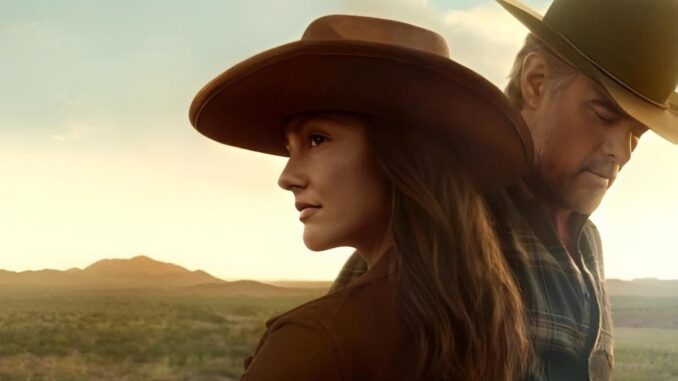
In an industry that has long celebrated progress while quietly preserving inequality, Minka Kelly’s experience on Ransom Canyon exposes a truth Hollywood still struggles to confront: pay equality remains more aspiration than reality.
Despite her status as a seasoned actress and a central figure in Netflix’s Ransom Canyon, Kelly reportedly had to actively fight for compensation that reflected her contribution to the series. While Netflix ultimately intervened and adjusted her pay, the initial disparity—by multiple accounts—was staggering.
Kelly’s story is not just about one contract negotiation. It’s a revealing case study of how gendered pay gaps continue to exist behind the scenes of even the most modern, progressive streaming platforms.
A Leading Role — With Unequal Pay
Ransom Canyon arrived with considerable buzz, marketed as an emotionally rich drama driven by complex relationships, generational conflict, and strong character arcs. Minka Kelly was positioned as one of the emotional anchors of the series, carrying storylines that demanded both vulnerability and authority.
Yet according to sources close to the production, Kelly’s initial salary offer reportedly fell significantly below that of her male co-stars—some of whom had comparable screen time, fewer emotional beats, or less narrative responsibility.
The discrepancy wasn’t marginal. It was “massive,” as insiders described it—large enough that Kelly felt compelled to challenge it rather than quietly accept an industry norm she has encountered before.
The Cost of Speaking Up
For actresses, pushing back on pay inequity is rarely just a financial decision. It’s a professional risk.
Kelly, who has worked steadily in television and film for more than two decades, understood that demanding equal pay could label her as “difficult,” a stigma that has historically followed women who advocate for themselves in Hollywood.
Still, she chose to push forward.
Sources say Kelly presented a clear case: her experience, her centrality to the show, and the value she brought to Ransom Canyon justified pay on par with her male counterparts. The discussion reportedly became tense, underscoring how deeply ingrained these disparities remain—even when logic and fairness are on the table.
Netflix Steps In — But Only After Resistance
Eventually, Netflix intervened.
The streamer, which has publicly positioned itself as a champion of diversity, inclusion, and equity, reportedly reassessed Kelly’s compensation and made adjustments to close the gap. The move was seen internally as a corrective measure—but one that came only after sustained pressure.
While the final outcome was a win, the process raised uncomfortable questions.
Why did it take a fight?
Why wasn’t parity built into the deal from the start?
And how many women lack the leverage—or security—to push back the way Kelly did?
Netflix’s willingness to step in matters. But so does the fact that the system initially failed.
A Pattern, Not an Exception
Kelly’s experience mirrors those of countless actresses before her.
From award-winning stars to first-time series leads, women across Hollywood have spoken openly about discovering pay gaps only after contracts were signed—or after male co-stars revealed their salaries.
What makes Kelly’s case particularly striking is the context: a major Netflix production in an era where gender pay equality is not just discussed, but publicly championed.
And yet, the gap persisted.
Industry analysts note that while streaming platforms have reshaped distribution models, they often replicate the same compensation structures that traditional studios used for decades—structures that historically undervalued women’s labor.
The Emotional Toll of Fighting for Fairness
Beyond the numbers, there is an emotional cost to advocating for equality.
For Kelly, pushing back reportedly came with frustration and disappointment—not just with the disparity itself, but with the realization that her worth was not immediately recognized.
Friends of the actress say the situation was draining, forcing her to justify her value in ways her male peers were never asked to do.
“It’s exhausting to have to prove you deserve what others are simply given,” one source familiar with the matter shared.
Why This Story Matters Now
Kelly’s experience lands at a moment when Hollywood is publicly reckoning with systemic inequities—but privately still struggling to dismantle them.
Pay equality is no longer a fringe issue. It is central to conversations about gender justice, labor rights, and institutional accountability. And stories like Kelly’s serve as reminders that progress is uneven and often reactive rather than proactive.
Her willingness to speak up—or at least allow the truth to surface—adds to a growing chorus of voices demanding transparency and fairness.
A Win, With Conditions
Ultimately, Kelly did receive improved compensation. That matters.
But the victory is complicated.
It underscores that fairness is still something women must fight for, negotiate for, and risk their reputations to achieve. It also highlights the power imbalance that allows inequity to persist until someone with enough standing pushes back.
Kelly’s case is both a success story and a cautionary one.
Looking Forward
As Ransom Canyon continues to gain attention, Kelly’s performance stands as a reminder of what she brings to the screen: depth, resilience, and emotional intelligence.
Off-screen, her experience contributes to a larger narrative—one that challenges Hollywood to align its values with its actions.
The hope is that future negotiations won’t require fights, public scrutiny, or corporate intervention after the fact.
Until then, stories like Minka Kelly’s remain essential—not because they are rare, but because they are still far too common.