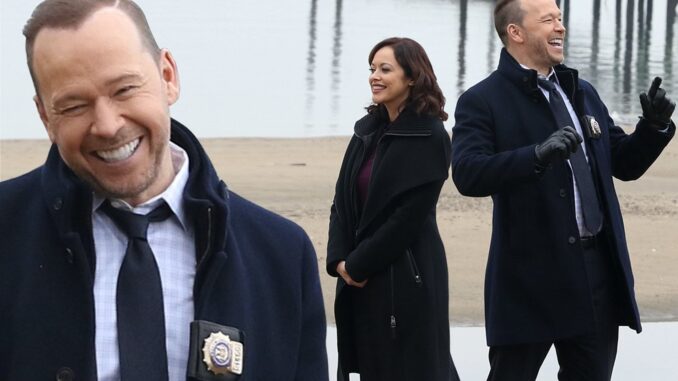
As Blue Bloods settles into its post-finale afterlife, something unexpected has happened: instead of fading quietly into nostalgia, the series has been pulled back into the spotlight. Old interviews are being recirculated. Past absences are being reexamined. Long-rumored tensions—once dismissed as background noise—are now being discussed openly across fan spaces and entertainment media. What was once a tightly controlled, disciplined public image is suddenly being viewed through a far more critical lens.
This renewed scrutiny isn’t coming out of nowhere. When a long-running show ends, audiences often look backward, searching for meaning—not just in storylines, but in behavior. With Blue Bloods, that instinct is amplified. The series built its reputation on order, loyalty, and moral clarity. Naturally, fans are curious whether those values extended beyond the screen.
One of the biggest catalysts has been the resurfacing of older interviews from various cast members. Comments that once felt innocuous—or were barely noticed at the time—now read differently in hindsight. Fans are parsing phrasing, tone, and context, asking whether subtle frustrations were hiding in plain sight. In an era where media literacy is sharper and social platforms reward reinterpretation, nothing stays frozen in time.
Absences have also become a focal point. Over the years, several Blue Bloods actors missed episodes, seasons, or press appearances, often explained at the time as scheduling conflicts or personal matters. Now, those gaps are being reevaluated. Viewers are connecting dots—sometimes responsibly, sometimes speculatively—between on-screen changes and off-screen dynamics. While no single absence proves anything, the pattern itself has sparked curiosity about how harmonious the set truly was.
It’s important to be precise here: no confirmed accounts suggest a toxic environment across the board. By most industry standards, Blue Bloods maintained a reputation for professionalism and stability—rare achievements in network television. Still, longevity can complicate even the healthiest workplaces. Fourteen seasons mean evolving power dynamics, creative disagreements, and shifting priorities. Tension doesn’t require scandal to exist; sometimes it’s simply the byproduct of time.
Jennifer Esposito’s past comments, frequently cited in current discussions, exemplify how unresolved narratives linger. Her departure from the series years ago was explained publicly, yet never fully settled in the court of public opinion. As fans revisit her interviews alongside newer revelations about industry pressures, her experience is being reassessed with greater empathy—and skepticism toward official narratives.
Even the show’s most central figures have not been immune to renewed analysis. Lead performances once accepted as steady and reassuring are now being dissected for signs of creative fatigue or behind-the-scenes strain. Silence, too, is being interpreted. Cast members who have chosen not to engage in retrospective conversations about the show are seen by some as guarded, by others as simply private. In the absence of clarity, speculation thrives.
What makes this moment particularly intense is the contrast between Blue Bloods’ on-screen ethos and the ambiguity off-screen. The series consistently emphasized accountability, truth, and moral debate—often resolved around the Reagan family dinner table. Fans internalized that framework. So when real-life questions arise and remain unanswered, the disconnect feels jarring.
Social media has amplified everything. Clips circulate without context. Quotes are condensed into headlines. Nuance is flattened into narrative. In this environment, even benign remarks can be framed as evidence of discord. That doesn’t mean concerns should be dismissed—but it does mean they should be approached carefully. Retrospective judgment is powerful, and not always fair.
At the same time, the scrutiny reflects something deeply human: audiences want authenticity. As television becomes more transparent and performers more vocal about working conditions, fans expect honesty, even after the cameras stop rolling. The days when a long-running procedural could end without questions are over. Viewers now see themselves as stakeholders in the full story, not just the scripted one.
For the Blue Bloods cast, this moment is likely uncomfortable but inevitable. Their work mattered. The show mattered. And when something holds that much cultural weight, its history will be examined from every angle. Some actors may choose to clarify. Others may let the noise pass. Both choices are valid—and revealing in their own ways.
Ultimately, what’s resurfacing now says as much about the audience as it does about the cast. Fans are grappling with the end of a series that felt stable in an unstable media landscape. In that process, they’re asking harder questions about power, representation, and truth in long-running television.
Blue Bloods may be off the air, but the conversation around it is evolving—messy, unresolved, and very real. Behind the badge, behind the scripts, behind the carefully managed image, there is complexity. And for many viewers, confronting that complexity is part of finally letting the show go.