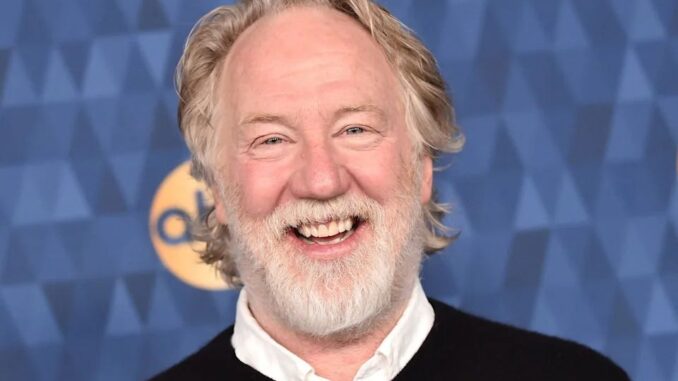
The Law & Order franchise has built its legacy on confronting society’s darkest crimes with a blend of realism, restraint, and moral clarity. But in early 2026, the long-running series Law & Order: Special Victims Unit found itself at the center of an unsettling off-screen controversy after reports emerged that actor Timothy Busfield had been recast amid a developing child sex abuse case connected to his character’s storyline.
The decision, while swift and largely quiet, has sparked widespread discussion among viewers, industry insiders, and legal analysts—raising questions about accountability, public perception, and how television productions navigate sensitive legal territory while remaining true to their creative and ethical responsibilities.
A Sudden Recast That Raised Eyebrows
According to multiple industry sources, Busfield—an Emmy-winning actor known for Thirtysomething, The West Wing, and numerous guest roles across network television—was originally attached to portray a recurring character in a recent arc of SVU. The character reportedly played a pivotal role in a storyline involving historical allegations of child sexual abuse.
However, shortly before the episodes entered final production, NBC and the show’s producers opted to recast the role, replacing Busfield with another actor. No official press release accompanied the change, and Busfield’s name quietly disappeared from promotional materials.
Such last-minute casting changes are rare but not unprecedented in television—especially in procedurals that deal with legally and morally complex subject matter.
What Is Known About the Case
It is important to clarify that Timothy Busfield has not been publicly charged or convicted in relation to any criminal offense connected to the show. Reports indicate that the controversy stems from a legal matter or allegation referenced in the storyline, not from events depicted onscreen.
Sources familiar with the production emphasized that the decision was made out of an abundance of caution, particularly given the nature of SVU’s subject matter and the heightened sensitivity surrounding cases involving minors.
NBC declined to comment on the specifics, releasing only a brief statement noting that “casting decisions are made with careful consideration for the material and the audience.”
Why SVU Is Especially Sensitive to These Issues
Since its debut in 1999, Law & Order: SVU has centered on crimes involving sexual assault, exploitation, and abuse—often inspired by real-world cases. As a result, the series carries a unique ethical burden.
Over the years, the show has worked closely with advocacy groups, survivors, and legal consultants to ensure that its storytelling does not trivialize trauma or exploit suffering for shock value.
“When a show like SVU addresses crimes against children, there is zero margin for error,” said one television ethics consultant. “Any off-screen controversy—regardless of legal outcome—can compromise audience trust.”
Industry Reactions: Caution Over Cancellation
Unlike high-profile cases where actors are immediately removed from projects amid public allegations, the SVU situation appears more measured. There was no public condemnation, no social media firestorm initiated by the network, and no statements suggesting guilt.
Instead, insiders describe the move as a risk-management decision, reflecting how modern television navigates legal uncertainty in an era of heightened scrutiny.
“This isn’t about punishment,” said one producer unaffiliated with the show. “It’s about protecting the integrity of the story and the emotional safety of the audience.”
Timothy Busfield’s Career and Public Image
Busfield has enjoyed a decades-long career marked by steady work and a reputation as a respected character actor. He has also worked behind the camera as a director and producer, further cementing his standing in the industry.
Until now, his name had largely remained free of controversy. That history may explain why the production opted for a quiet recast rather than a public dismissal.
Neither Busfield nor his representatives have issued a public statement regarding the change.
The Broader Conversation: Art, Allegations, and Accountability
The situation reignites a familiar debate in Hollywood:
How should productions respond when legal allegations intersect with creative work—especially when the subject matter mirrors real-world harm?
Some argue that removing an actor before legal resolution risks presuming guilt. Others counter that shows dealing with child abuse must prioritize survivor-centered ethics over individual careers.
In recent years, networks have increasingly chosen caution, aware that audiences are less forgiving when it comes to perceived insensitivity around issues involving children.
Audience Response and Viewer Trust
Fan reactions online have been mixed but largely restrained. Many viewers expressed support for the show’s decision to act carefully, even without full transparency.
“SVU has always been about standing with victims,” wrote one longtime fan on social media. “If recasting helps avoid distraction from the story, I’m okay with it.”
Others questioned the lack of official explanation, noting that silence can sometimes fuel speculation more than clarity.
What Happens Next?
As of now, the recast episodes are expected to air as scheduled, with no changes to the storyline itself. The network appears determined to keep the focus on the victims depicted in the narrative rather than the controversy surrounding casting.
Whether the decision will have long-term implications for Busfield’s career remains unclear. Hollywood history suggests that outcomes often depend on legal findings, public sentiment, and the passage of time.
For Law & Order: SVU, the incident serves as a reminder that even after more than two decades on the air, the line between fiction and reality can still blur in uncomfortable ways.
A Franchise Built on Difficult Truths
SVU has survived cast departures, cultural shifts, and changing standards of television storytelling. Its longevity is rooted in its willingness to confront uncomfortable truths—both on screen and, when necessary, behind the scenes.
The recasting of Timothy Busfield, while quietly handled, underscores a reality the industry continues to grapple with: when stories involve society’s most vulnerable, caution is not just a strategy—it is a responsibility.