For more than two decades, Law & Order: Special Victims Unit has existed in a unique and often uncomfortable space in television. It is a procedural drama built around some of the most sensitive and painful crimes imaginable, yet it has survived by constantly evolving — not just in storytelling, but in ethics, tone, and cultural awareness.
That ability to adapt is exactly why the show’s recent handling of the Timothy Busfield episode matters so much.
Rather than ignoring controversy or allowing it to overshadow the narrative, SVU has quietly found a way to move forward — one that reflects the series’ long-standing commitment to victims, accountability, and storytelling that respects its audience.
Why the Timothy Busfield Episode Sparked Conversation
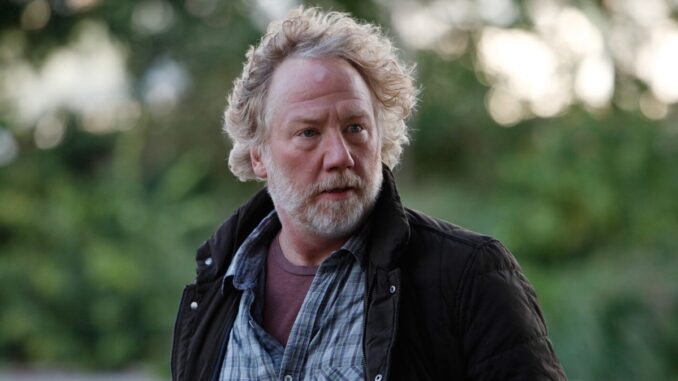
Timothy Busfield is a respected actor and director with a long résumé in television and film. His appearance on Law & Order: SVU immediately drew attention, not just because of his recognizable presence, but because of the weight the episode carried.
As is often the case with SVU, the storyline touched on themes of power, credibility, and how society treats allegations involving well-known or influential figures. These themes are not new to the franchise, but they remain deeply relevant — and often polarizing — in the real world.
For some viewers, the episode felt uncomfortably close to ongoing cultural conversations about accountability. For others, it raised questions about how fictional crime dramas should navigate stories that echo real-life controversies.
The challenge for SVU was clear: how do you tell a compelling story without appearing exploitative, dismissive, or tone-deaf?
SVU’s Long History of Walking a Fine Line
This is not the first time Law & Order: SVU has faced criticism or debate. Over the years, the series has been praised for tackling taboo subjects but also scrutinized for how it portrays justice, trauma, and resolution.
What sets SVU apart is its willingness to self-correct.
The show has evolved significantly since its early seasons. Characters now question the system more openly. Victims are given more emotional space. Resolutions are not always neat, and that messiness often reflects reality more honestly.
The Timothy Busfield episode exists within this modern version of SVU — one that understands the audience is more media-literate, more skeptical, and more sensitive to how stories are framed.
Choosing Resolution Over Retcon
Instead of rewriting history or pretending the episode never happened, SVU chose a subtler path.
The series addressed lingering questions through narrative continuity rather than direct explanation. Later episodes reframed certain elements, shifting focus away from controversy and back toward the emotional core of the show: the victims and the detectives who advocate for them.
This approach allowed SVU to acknowledge the discomfort without amplifying it.
By letting the story exist — but not dominate — the show reinforced a key principle it has embraced in recent years: not every episode needs to be endlessly revisited or defended. Sometimes, moving forward with clarity and consistency is the most responsible choice.
Why This Approach Works
What SVU did here was not dramatic. There was no public statement baked into the script, no overt moral lecture. And that restraint is precisely why it works.
Television, especially long-running television, survives by trust. Audiences return because they believe the show understands the weight of its subject matter. Over-explaining can feel defensive; ignoring issues entirely can feel dishonest.
Instead, SVU allowed the episode to stand as part of its larger body of work — one chapter in a much longer conversation.
This method respects viewers enough to let them draw their own conclusions, while still steering the series back to its central mission.
Mariska Hargitay’s Influence on the Show’s Direction
It’s impossible to talk about SVU’s evolution without mentioning Mariska Hargitay. As both the face of the series and a producer, her influence has reshaped how the show handles sensitive material.
In recent years, SVU has leaned more heavily into empathy, survivor advocacy, and emotional realism — values that align closely with Hargitay’s real-world activism.
The way the Timothy Busfield episode was handled feels consistent with this philosophy. Rather than sensationalizing the situation, the show maintained its focus on accountability and healing.
That consistency matters. It signals that SVU is not reacting impulsively, but operating from a clearly defined set of values.
Audience Reaction: Divided, But Engaged
Viewer responses to the episode — and how the show moved past it — were predictably mixed. Some fans wanted more explicit acknowledgment. Others appreciated the decision not to dwell on it.
What’s notable, however, is that the conversation remained largely thoughtful rather than hostile. That alone speaks to SVU’s credibility.
A show that has lost its moral footing tends to provoke outrage. SVU, instead, provoked discussion — a sign that viewers still believe in its intentions, even when they disagree with specific choices.
What This Means for SVU’s Future
As Law & Order: SVU continues into its later seasons, moments like this offer a glimpse into how the series plans to survive in a changing cultural landscape.
The lesson is clear: longevity isn’t about avoiding mistakes. It’s about how you respond to them.
By choosing nuance over noise, SVU demonstrated that it understands its role not just as entertainment, but as a reflection of society’s ongoing struggles with justice and accountability.
The Timothy Busfield episode may not be remembered as one of the show’s most iconic hours — but the way SVU dealt with it could become a quiet blueprint for how long-running dramas handle controversy with integrity.