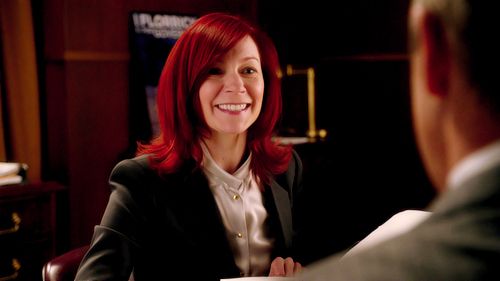
In a move that has instantly ignited conversation across the television industry, Elsbeth has officially been approved to switch Emmy categories — from Drama to Comedy. The decision, confirmed by awards insiders this week, reshapes not only the show’s awards trajectory but also the broader narrative about what kind of series Elsbeth truly is.
At first glance, the shift might raise eyebrows. After all, Elsbeth, the CBS procedural spinoff led by the ever-quirky Elsbeth Tascioni (Carrie Preston), operates within the crime-investigation framework. But anyone who has actually watched the series knows: this is not your typical grim courtroom drama.
Instead, Elsbeth dances between tones — blending murder mysteries with sharp wit, eccentric character beats, and a self-aware absurdity that often feels closer to Poker Face than Law & Order.
And now, the Television Academy seems to agree.
Why the Switch Matters
Emmy category placement is not just semantics. It’s strategy.
Shows competing in the Drama Series field often face juggernauts — prestige heavyweights packed with cinematic gravitas, morally tormented antiheroes, and sweeping orchestral scores. In recent years, dramas have dominated headlines with dark psychological arcs and sprawling narratives.
By contrast, the Comedy category has evolved into a far more elastic space. The traditional laugh-track sitcom is no longer the only definition of “comedy.” Today’s comedy nominees range from heartfelt dramedies to satirical workplace chaos to genre-bending hybrids.
That flexibility opens the door for Elsbeth to thrive.
The series’ tone — buoyant, eccentric, knowingly playful — fits far more comfortably in a field that rewards tonal dexterity. Its procedural structure remains intact, but the energy is distinctly mischievous. Elsbeth isn’t brooding over moral corruption; she’s outwitting suspects with whimsical logic and unexpected empathy.
The switch signals something important: the Academy recognizes Elsbeth as a tonal hybrid leaning toward comedy rather than dramatic gravitas.
A Procedural With a Wink
What makes Elsbeth such an unusual case is its structure. On paper, it resembles a classic procedural. Each episode presents a crime. The culprit is often revealed early. The tension lies in how Elsbeth methodically dismantles the suspect’s alibi.
But unlike traditional procedurals, the show doesn’t rely on intensity or grim realism. Instead, it thrives on character quirks and conversational sparring. Carrie Preston’s performance is full of micro-expressions, sideways glances, and cheerful tangents that somehow land precisely where they need to.
The humor isn’t slapstick. It’s situational. Intellectual. Sometimes delightfully awkward.
That tonal signature makes it far more aligned with comedic storytelling than prestige drama. The tension is intellectual rather than visceral. The stakes are clever rather than catastrophic.
Switching categories acknowledges what audiences have felt all along.
Carrie Preston: The Secret Weapon
One of the most fascinating aspects of this category shift is what it means for Carrie Preston.
Preston has long been celebrated for her work in The Good Wife and The Good Fight, where Elsbeth Tascioni originated as a scene-stealing supporting character. In those series, she operated in a legal drama ecosystem, albeit with comedic flair.
But Elsbeth as a standalone series amplifies her eccentric brilliance.
In the Drama Lead Actress category, Preston would have faced a battlefield crowded with intense, prestige performances rooted in trauma and gravitas. The Comedy Lead Actress race, however, opens an entirely different lane — one that rewards timing, tonal balance, and subtle absurdity.
Preston’s performance is intricate. It’s comedic without mugging for laughs. It’s warm without slipping into sentimentality. It’s sharp without ever feeling cruel.
If the series secures nominations in the Comedy field, Preston could very well become a formidable contender.
The Broader Trend: Genre Is Fluid
Elsbeth is hardly the first show to blur genre lines.
In recent Emmy history, several series have strategically shifted categories — or sparked debate over where they belong. The rise of “dramedy” storytelling has complicated traditional classifications.
Shows like The Bear ignited heated discussions about whether tonal intensity disqualifies something from being labeled a comedy. Meanwhile, series with light emotional textures but serious themes have comfortably sat in Comedy categories for years.
The Emmy rules allow for flexibility, but the approval process requires justification. For Elsbeth to successfully make the transition suggests the Academy sees the show’s primary identity as comedic in tone and execution.
It also reflects a larger industry shift: genre is no longer rigid.
Audiences expect tonal hybridity. Writers embrace it. Networks encourage it. And awards bodies are slowly adapting.
Strategic Timing and Awards Optics
There’s also a pragmatic side to this decision.
Awards campaigns are as much about positioning as performance. Competing in Drama would have placed Elsbeth alongside sprawling prestige epics — some backed by streaming giants with massive campaign budgets.
In Comedy, the competitive landscape remains strong but more diverse in tone. A procedural with personality can stand out in a field that increasingly values originality and voice.
Moreover, the move reframes how voters evaluate the show. Instead of asking, “Is this as emotionally devastating as the biggest dramas?” voters may now ask, “Is this one of the most cleverly written and uniquely performed comedies of the year?”
That subtle shift in framing can be powerful.
How Fans Are Reacting
Fan reaction has largely been enthusiastic — and perhaps unsurprised.
Many viewers have long described Elsbeth as “comfort TV with brains.” The joy of watching Elsbeth solve cases lies less in edge-of-your-seat suspense and more in watching her delightful logic unfold.
Social media conversations following the announcement reflect relief more than shock. Viewers feel the Comedy category better reflects the show’s spirit.
Some even argue the switch may help the show gain broader recognition. Awards attention often translates into new viewers — especially for broadcast network series competing in a streaming-dominated landscape.
What This Means for the Series’ Future
Beyond awards strategy, the category shift subtly reinforces the show’s creative direction.
By positioning itself as a comedy, Elsbeth has permission to lean even further into its playful identity. Writers can embrace absurdity without worrying about dramatic expectations. Character dynamics can expand into lighter territory without compromising awards optics.
That doesn’t mean the stakes will vanish. The crimes remain real. The moral undercurrents still matter. But the tonal framing shifts — from solemnity to sharp observation.
And in today’s television climate, that balance may be exactly what audiences crave.
The Emmy Landscape Ahead
With the switch now approved, attention turns to nomination forecasts.
Will Elsbeth break into the Comedy Series lineup? Could Carrie Preston secure a Lead Actress nod? Might the show earn recognition for writing or guest performances?
Much will depend on campaign momentum and voter visibility. But one thing is certain: the move from Drama to Comedy reshapes the conversation.
Instead of being an underdog in a crowded dramatic field, Elsbeth now enters a race where its voice feels distinctive rather than adjacent.
Final Thoughts
At its core, this Emmy category switch is less about paperwork and more about identity.
Elsbeth has always existed slightly off-center — a procedural with sparkle, a legal spinoff with mischief, a crime show that smiles while solving murder.
By approving its move to Comedy, the Television Academy isn’t redefining the show. It’s acknowledging what it already is.
Smart. Witty. Tonally agile.
And perhaps now, better positioned than ever to make its mark on awards season.