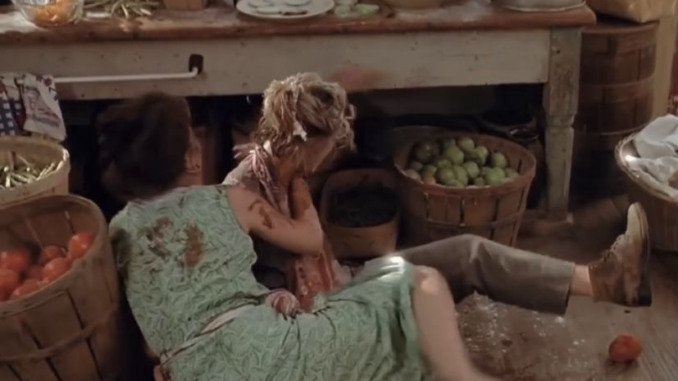
Since its release in 1991, Fried Green Tomatoes has been praised as a heartfelt Southern drama about friendship, resilience, and female empowerment. Set in Alabama during the early twentieth century, the film unfolds against the backdrop of racial segregation in the American South. While it acknowledges the existence of racism and injustice, critics have long debated whether the movie presents that reality through an overly nostalgic and softened lens.
The discussion around racial representation in Fried Green Tomatoes continues to resurface as new generations revisit the film.
Historical Context: The Jim Crow South
Fried Green Tomatoes is set during a period marked by racial segregation, discriminatory laws, and systemic inequality. The Jim Crow era shaped nearly every aspect of life in the Southern United States, from public facilities to economic opportunity.
The film includes references to this context, showing segregated spaces and the limited roles available to Black characters. However, some critics argue that the depiction remains largely in the background rather than being explored as a central narrative conflict.
Because the story focuses primarily on the friendship between white female characters, the broader racial tensions of the time are present but not deeply examined.

Criticism of a “Softened” Portrayal
One of the main points in the debate is that Fried Green Tomatoes approaches racism in a relatively gentle and nostalgic way. The film’s warm tone, sentimental music, and emphasis on community can make the era appear less harsh than historical reality.
Critics suggest that while the movie acknowledges injustice, it does not fully confront the violence, systemic oppression, and daily struggles faced by Black Americans during that period. Instead, racism is often implied rather than depicted in its full severity.
For some viewers, this choice reflects a broader trend in early 1990s Hollywood, where mainstream films often avoided deeply unsettling portrayals of racial brutality in favor of more accessible storytelling.
Representation of Black Characters
Another key issue raised in discussions about Fried Green Tomatoes is the depth of its Black characters. While the film includes Black supporting roles, some commentators argue that these characters are not given the same narrative complexity as their white counterparts.
Critics point out that the primary emotional arcs and character development center on Idgie, Ruth, and Evelyn. Meanwhile, Black characters often appear in supporting capacities without fully developed backstories or independent storylines.
This has led some viewers to question whether the film missed an opportunity to more fully explore the lived experiences of Black individuals in the segregated South.
Defenses of the Film’s Approach

Not all assessments of the film’s racial portrayal are critical. Some defenders argue that Fried Green Tomatoes was never intended to be a comprehensive examination of racial injustice. Instead, it tells a specific story about female friendship and empowerment within a particular community.
Supporters also note that the film does show acts of resistance and solidarity across racial lines, even if those moments are subtle. From this perspective, the movie reflects the storytelling priorities of its era and genre rather than attempting to serve as a historical drama focused on civil rights.
Reassessment in a Modern Context
In recent years, audiences have revisited Fried Green Tomatoes through streaming platforms and contemporary discussions about representation in film. As expectations for authentic and multidimensional portrayals of race have evolved, so too has the conversation surrounding older movies.
Modern viewers are more likely to analyze how historical settings are framed and whose perspectives are centered. In this context, the film’s nostalgic tone and limited exploration of racial trauma stand out more clearly than they may have in 1991.
The ongoing debate reflects broader shifts in cultural awareness and storytelling standards within Hollywood.
A Film Shaped by Its Time
Ultimately, the controversy over racial representation in Fried Green Tomatoes highlights the complexities of depicting historical injustice within mainstream cinema. The film remains beloved for its emotional storytelling and performances, yet it also serves as a reminder of how narratives about the American South have often been filtered through selective memory.
As conversations about race and representation continue to evolve, Fried Green Tomatoes remains part of that dialogue. Its portrayal of a segregated South, while meaningful to many, continues to invite discussion about whose stories are fully told and whose experiences remain in the margins.