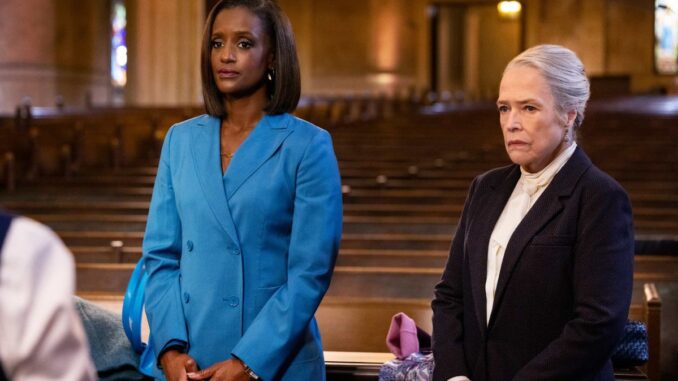
In Hollywood, there are moments that feel almost mythological in hindsight — the kind of stories that make you pause and wonder how many iconic performances nearly never happened. One such moment involves Academy Award winner Kathy Bates and the beloved 1998 sports comedy The Waterboy.
According to Bates herself, when she first received the script, she didn’t just hesitate. She didn’t simply set it aside. She didn’t even finish reading it.
She threw it straight into the garbage.
And yet, she would later deliver one of the most unforgettable comedic performances of her career as the fiercely overprotective Mama Boucher — a role that helped define the film’s enduring popularity.
So what happened between the trash can and cinematic history?
Let’s unpack the story behind Kathy Bates’ initial rejection of The Waterboy, why she changed her mind, and how that decision became a perfect example of Hollywood unpredictability at its finest.
A Script That Didn’t Stand a Chance — At First
By the late 1990s, Kathy Bates was already a towering figure in Hollywood. She had won the Academy Award for Best Actress for Misery (1990), proving she could dominate dramatic roles with psychological intensity and emotional depth. Her reputation was built on powerful, layered performances — characters that demanded nuance and gravity.
Then along came The Waterboy.
On paper, it looked like a broad, absurd sports comedy starring Adam Sandler — a comedian known at the time for loud, exaggerated humor that wasn’t exactly aligned with Bates’ usual artistic lane. The script centered on Bobby Boucher, a socially awkward waterboy with a stutter, an overbearing mother, and a surprising gift for tackling football players with terrifying intensity.
It was weird. Loud. Silly. Over-the-top.
And when Bates began reading it, she didn’t see herself anywhere in that world.
She has since recalled that the material simply didn’t resonate with her initial expectations. The tone felt extreme. The humor felt heightened. And before she even reached the end, she tossed the script in the trash — literally.
In Hollywood terms, that’s not unusual. Established actors often pass quickly on projects that don’t seem aligned with their brand, their instincts, or their creative goals.
But The Waterboy wasn’t done with Kathy Bates yet.
The Phone Call That Changed Everything
The turning point came not from the script itself, but from persistence — specifically from Adam Sandler and director Frank Coraci.
They didn’t just want Kathy Bates. They really wanted Kathy Bates.
Sandler reportedly admired her immensely and believed she was the only actress who could bring Mama Boucher to life with the right mix of intimidation, absurdity, and emotional sincerity. The character needed to be outrageous — but also believable. Funny — but also strangely grounded.
That balance required someone with real acting authority.
Eventually, Bates agreed to meet and talk about the role. And that conversation changed her perspective entirely.
Instead of viewing the character as purely comedic caricature, she began to see the psychological core underneath: a deeply controlling mother driven by fear of losing her son… wrapped in an exaggerated comedic shell.
That combination intrigued her.
And once she reconsidered the material through that lens, the role started to feel less ridiculous — and more like a fascinating challenge.
Understanding Mama Boucher: Comedy Built on Emotional Truth
What ultimately drew Bates in was the realization that Mama Boucher wasn’t just a joke machine. She was, at her core, a recognizable human figure — an extreme version of a parent who clings too tightly.
Her worldview is rigid. Her fears are outsized. Her influence over Bobby is suffocating. Yet beneath the comedic exaggeration lies something emotionally real: love expressed through control.
That emotional foundation gave Bates something to play with.
And when an actor of her caliber finds emotional truth — even inside a broad comedy — something special tends to happen.
Instead of performing Mama Boucher as a one-note punchline, Bates delivered a character who was terrifying, hilarious, and oddly believable all at once. Her sharp voice, rigid posture, and unwavering conviction made every line feel both absurd and sincere.
Lines like “Foosball is the devil!” became iconic not simply because they were funny — but because Bates delivered them with absolute, unshakable seriousness.
That commitment elevated the role beyond parody.
Why Casting Kathy Bates Was a Masterstroke
Looking back, it’s almost impossible to imagine The Waterboy without her.
The film thrives on contrast — and Bates provided the perfect counterweight to Adam Sandler’s chaotic energy. Where Bobby Boucher is emotionally explosive, Mama Boucher is rigid and immovable. Where he is uncertain, she is absolutely convinced of everything she believes.
That dynamic fuels much of the film’s comedy.
But it also grounds the story. Without a performer capable of making Mama Boucher feel real — even in exaggerated form — the entire emotional framework of the movie might have collapsed.
Casting a purely comedic actress could have made the character too cartoonish. Casting someone too restrained could have drained the humor.
Bates lived perfectly in between.
From Reluctance to Cultural Legacy
Released in 1998, The Waterboy became a massive commercial success. It grossed over $190 million worldwide and quickly entered pop culture memory, thanks in part to its endlessly quotable dialogue and unforgettable characters.
Mama Boucher became one of the film’s most beloved elements.
Audiences didn’t just laugh at her — they remembered her. They quoted her. They recognized the archetype she represented.
And all of that nearly never happened because the script landed in a garbage can.
A Lesson in Creative Instinct — and Creative Flexibility
Kathy Bates’ experience with The Waterboy highlights something fascinating about artistic decision-making: first impressions aren’t always final truths.
Actors often rely on instinct when evaluating scripts. That instinct is valuable — but sometimes incomplete. Context matters. Conversations matter. Reframing a character can completely transform how a story feels.
If Bates had never taken that meeting…
If Sandler had accepted her initial rejection…
If no one had pushed for a second look…
One of the most memorable comedic performances of the late 1990s might never have existed.
Why Audiences Still Love Mama Boucher Today
Decades later, Mama Boucher remains iconic because she represents a type of comedic character that rarely works without serious acting skill behind it: the exaggerated authority figure who never realizes how extreme she sounds.
Bates plays her with total conviction — and that sincerity makes the absurdity land harder.
She doesn’t wink at the audience.
She doesn’t soften the character.
She doesn’t play for laughs.
She plays the truth of the character — and the humor emerges naturally from that commitment.
That approach is a hallmark of great comedic acting, especially when performed by actors with dramatic backgrounds.
The Beautiful Irony of the Trash Can Story
There’s something poetic about the idea that one of Hollywood’s most memorable comedic roles was almost discarded before it was fully understood.
It reminds us that creative work is often messy, unpredictable, and full of reversals.
A script can seem wrong — until it suddenly feels perfect.
A role can feel absurd — until it reveals emotional depth.
A “no” can quietly turn into a career highlight.
And sometimes, greatness begins with something thrown away.
Final Thoughts
Kathy Bates tossing The Waterboy script into the garbage without finishing it might sound shocking — but it’s also deeply human. Artists respond instinctively. They protect their time. They trust their judgment.
But what makes this story remarkable isn’t the rejection.
It’s the reconsideration.
By taking a second look, Bates transformed what she once dismissed into one of the most beloved comedic performances of her career. Her Mama Boucher remains unforgettable — proof that even the most unexpected roles can become legendary when the right actor finds the emotional truth inside the absurd.
Hollywood is full of near-misses.
This one became a classic instead.
And somewhere in that story is a simple reminder:
Sometimes, the things we throw away deserve one more look.