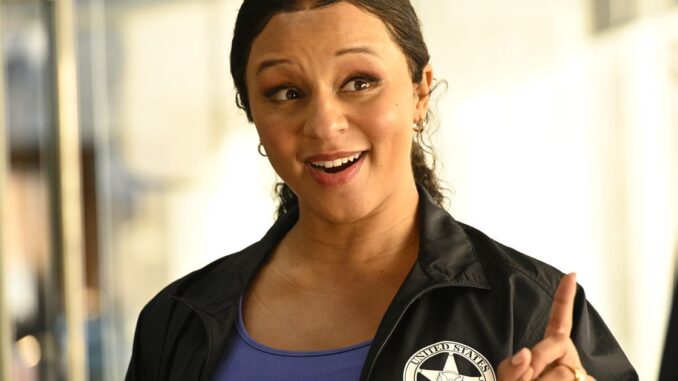
In an industry where awards recognition can shape a show’s legacy as much as ratings or critical buzz, Emmy category placement isn’t just a technicality — it’s strategy. That’s why the Television Academy’s decision to approve Elsbeth’s move from the drama categories to comedy has quickly become one of the most talked-about developments in television awards season.
At first glance, the shift might seem surprising. Elsbeth, after all, exists in the procedural universe that helped define modern television drama. It spun off from The Good Wife and The Good Fight, both legal dramas known for sharp writing, high-stakes courtroom tension, and layered political commentary. Yet anyone who has actually watched Elsbeth knows the show plays by a different emotional rhythm — one built less on tension and more on personality, curiosity, and delightfully offbeat humor.
Now that the Television Academy has officially approved the reclassification, the move raises a fascinating question: Was Elsbeth ever really a drama to begin with?
A Character Who Never Fit the Mold
From the moment Elsbeth Tascioni first appeared on The Good Wife, she stood apart from every other legal mind on television. Played with luminous eccentricity by Carrie Preston, Elsbeth wasn’t defined by power suits, aggressive cross-examinations, or steely courtroom dominance. She was defined by unpredictability.
She noticed things others didn’t.
She spoke in tangents that somehow revealed the truth.
She disarmed opponents not with force, but with cheerful persistence.
When CBS built an entire series around her, the tonal shift was inevitable.
Unlike its parent shows, Elsbeth leans into character-driven storytelling rather than legal procedural intensity. Yes, there are cases. Yes, there are investigations. But the emotional center of the show isn’t suspense — it’s perspective. The joy of watching Elsbeth think. The pleasure of seeing her unravel social dynamics as much as legal ones. The humor that emerges naturally from her worldview.
In other words, the series operates much closer to a comedic character study than a traditional drama.
The Emmy category switch simply acknowledges what audiences have been feeling all along.
Why Emmy Categories Matter More Than You Think
To casual viewers, award categories might seem like industry bureaucracy — an administrative label that doesn’t affect the actual show. But for networks, studios, and performers, category placement can dramatically influence visibility, nominations, and long-term prestige.
Drama categories are famously crowded. They tend to reward high emotional stakes, sweeping narratives, and cinematic storytelling. Competition often includes sprawling ensemble series, prestige cable productions, and heavyweight streaming dramas with massive budgets and cultural momentum.
Comedy categories, on the other hand, prioritize timing, character voice, tonal distinctiveness, and originality of perspective. They reward shows that create consistent emotional texture through humor — even if that humor coexists with serious themes.
Where a show competes determines not only who it competes against, but also how voters interpret what they’re watching.
By shifting to comedy, Elsbeth aligns its awards identity with its creative DNA.
That alignment matters.
A Procedural That Solves Tone Before Crime
One of the most distinctive things about Elsbeth is that the mystery is rarely the main attraction. The audience often knows more than Elsbeth does early in an episode — a structural choice more commonly associated with “howcatchem” storytelling than traditional whodunits.
Instead of asking who committed the crime, the show explores how Elsbeth will uncover the truth — and what social or psychological patterns she will notice along the way.
That approach naturally creates humor. Not slapstick. Not punchline-driven comedy. But observational humor rooted in human behavior.
Elsbeth’s gentle persistence often exposes vanity, insecurity, and absurdity in people who believe they are in control. The result is a tone that feels playful even when dealing with serious wrongdoing.
This tonal balance — lightness coexisting with criminal investigation — is far more characteristic of modern single-character comedies than classic procedural dramas.
Carrie Preston’s Performance Is the Center of Gravity
Award categories often follow performance style, and in Elsbeth, everything revolves around Carrie Preston’s portrayal of its titular character.
Her performance is meticulously calibrated. Elsbeth is never played as a joke, yet humor radiates from every interaction. Preston layers warmth, curiosity, and sincerity into a character who could easily have become caricature in less careful hands.
She doesn’t deliver punchlines — she is the tonal engine.
Many Emmy-winning comedic performances share this quality: humor emerging from authenticity rather than exaggeration. Think of characters whose worldview itself becomes the source of comedy, rather than scripted jokes.
Elsbeth belongs firmly in that tradition.
From an awards perspective, competing in the comedy field may actually give voters a clearer framework for appreciating what Preston is doing — not as genre subversion within drama, but as precision within comedy.
Industry Precedent for Genre Reclassification
Elsbeth is far from the first show to challenge the boundaries between drama and comedy. Television has been blurring that line for decades.
So-called “dramedies” have increasingly dominated awards conversations, from character-driven half-hour series to hour-long shows that balance emotional stakes with humor. The Television Academy has long faced the challenge of determining where tonal hybrids belong.
Historically, some shows have switched categories mid-run when their creative identity became clearer — or when producers believed voters were interpreting them differently than intended.
These moves are rarely arbitrary. They reflect ongoing negotiations between storytelling form and awards structure.
In that context, Elsbeth’s reclassification feels less like a radical shift and more like a formal correction.
Strategic Timing Could Benefit the Show
The approval comes at a moment when Elsbeth is still shaping its long-term reputation. Early seasons often define how voters and critics categorize a show’s identity. Making the switch now helps prevent years of tonal misalignment in awards campaigns.
From a strategic standpoint, the move could significantly improve nomination prospects — especially for Carrie Preston. Performances that blend subtle humor with emotional intelligence often struggle to stand out in drama fields dominated by intensity and gravitas.
Comedy voters, however, tend to reward nuance expressed through character voice.
If Emmy recognition is partly about clarity of artistic intent, then Elsbeth may now be competing in the environment where its strengths are most legible.
Audience Perception Has Always Been Comedic
Perhaps the most telling indicator that the switch makes sense is audience response. Viewers rarely describe Elsbeth as tense or emotionally heavy. Instead, they describe it as charming, clever, comforting, and quietly funny.
It’s a show people watch to feel intrigued — but also to feel at ease.
That emotional experience aligns far more closely with comedy consumption patterns than with dramatic immersion. The stakes may involve crime, but the experience is one of curiosity and delight.
Awards classification works best when it reflects how audiences actually engage with a series.
What This Means for the Broader TV Landscape
Genre fluidity is becoming television’s defining feature. As storytelling evolves, rigid categories become harder to maintain. Shows increasingly build identity around tone rather than format — emotional texture rather than structural conventions.
Elsbeth’s category shift is part of that broader evolution.
It signals that character perspective can define genre more than narrative subject matter. A crime story told with warmth, observational humor, and emotional lightness may belong in comedy — regardless of investigative plotlines.
The Television Academy’s decision suggests growing institutional recognition of that reality.
Could the Move Influence Other Shows?
Industry observers are already speculating that Elsbeth’s successful reclassification could encourage other hybrid shows to reconsider their own placements.
If a series centered on criminal investigation can compete as comedy based on tone and character voice, it expands the conceptual space for genre definition across television.
Producers may feel more empowered to campaign based on how stories feel rather than what stories depict.
That could reshape Emmy competition in subtle but lasting ways.
Ultimately, the Switch Affirms the Show’s Identity
Perhaps the most important takeaway is that the Emmy category change doesn’t alter Elsbeth itself. The show remains exactly what it has always been: a character-driven exploration of human behavior through the lens of one delightfully unconventional observer.
What the change does is bring institutional recognition into alignment with creative reality.
It acknowledges that the heart of Elsbeth isn’t suspense.
It isn’t procedural structure.
It isn’t courtroom intensity.
It’s perspective. Personality. Observation.
And yes — humor.
A Reclassification That Feels Inevitable in Retrospect
Looking back, the more surprising thing may be that Elsbeth was ever considered a drama contender in the first place.
Its storytelling rhythm, emotional tone, and performance style all point toward comedy — not the broad or joke-heavy variety, but the sophisticated, character-centered form that has defined some of television’s most beloved series.
By approving the switch, the Television Academy isn’t changing the show’s nature. It’s simply acknowledging it.
And if awards season is ultimately about recognizing artistic identity, then Elsbeth may finally be competing in the category where it truly belongs.