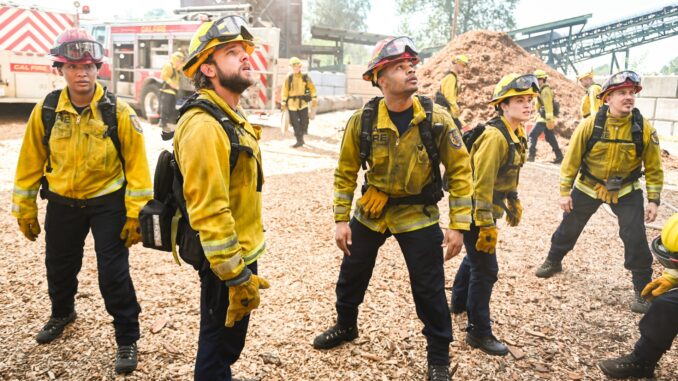
The first half of Fire Country Season 4 doesn’t just raise the stakes — it deepens the soul of the series. What began as a high-octane firefighting drama has evolved into something more layered and emotionally resonant. In Part 1, the show leans heavily into themes of grief, personal growth, and redemption, delivering some of its most powerful storytelling yet.
Grief That Feels Earned, Not Exploited
Season 4 opens with emotional weight that lingers. Loss — whether personal, professional, or communal — isn’t treated as a quick plot device. Instead, it reshapes relationships and decisions. Characters are forced to confront what survival truly costs.
Unlike earlier seasons, where action sometimes overshadowed emotional fallout, Part 1 allows space for silence, reflection, and consequence. The show understands that firefighters don’t just battle flames — they carry the psychological scars long after the smoke clears.
This grounded portrayal of grief makes every rescue feel more urgent and every quiet moment more meaningful.
Growth Under Pressure
Season 4 Part 1 challenges its core characters in ways that feel transformative rather than repetitive. Leadership roles shift. Loyalties are tested. Personal flaws can no longer be ignored.
Growth in this season isn’t neat or linear. It’s messy, uncomfortable, and often triggered by failure. Characters who once relied on impulse are forced to slow down and think. Others who avoided vulnerability are confronted with emotional truths they can no longer outrun.
This evolution gives the season momentum beyond emergency calls. It’s not just about whether they survive the fire — it’s about who they become afterward.
Redemption With Real Stakes
Redemption has always been central to Fire Country, particularly with its inmate firefighter program. But in Season 4 Part 1, redemption feels more fragile and more costly.
Second chances aren’t handed out easily. Trust must be rebuilt. Sacrifices must be made. The show examines whether redemption is a destination or a daily choice — especially when past mistakes continue to resurface.
What makes these arcs compelling is that they’re never guaranteed a clean outcome. The possibility of relapse, regression, or loss always lingers.
A More Cinematic, Focused Tone
Stylistically, Part 1 feels tighter and more intentional. The pacing balances explosive action sequences with emotionally driven dialogue. Visual storytelling — from smoke-filled horizons to intimate close-ups — reinforces the internal battles happening alongside the physical ones.
The writing also feels more serialized. Consequences carry from episode to episode rather than resetting at the hour’s end. That continuity makes the emotional stakes feel cumulative.
Why It Hits Harder
Ultimately, Season 4 Part 1 resonates because it trusts its audience. It doesn’t rely solely on spectacle. It slows down enough to explore trauma, accountability, and healing.
The fires may still rage, but the deeper story is about rebuilding — not just homes or forests, but identities and relationships.
If the first half of Season 4 is any indication, Fire Country is no longer just about survival. It’s about transformation — and that emotional maturity is exactly why this chapter hits harder than ever.