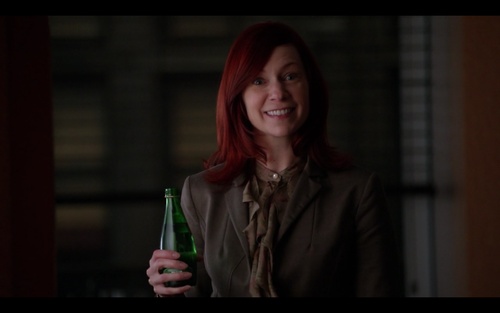
In the increasingly strategic world of awards campaigns, television networks and studios are constantly searching for ways to position their shows — and stars — for maximum recognition. Sometimes that means promoting a breakout performance. Sometimes it means launching a massive marketing push. And sometimes, it means redefining what a show is.
That’s exactly what appears to be happening with Elsbeth, which is reportedly shifting its awards category positioning to comedy — a move that could dramatically reshape its awards trajectory and place Carrie Preston squarely in the spotlight.
Industry watchers are buzzing with one big question: is this a clever tactical maneuver… or the beginning of an unstoppable awards run?
Let’s break down why this shift matters — and why it could lead to one of the most talked-about Emmy victories in recent memory.
What Makes Elsbeth So Hard to Categorize?
From its very first episode, Elsbeth has lived comfortably in genre-blurring territory.
On the surface, it’s a procedural.
Dig a little deeper, and it’s a character study.
Watch closely, and you’ll find sharp satire woven through the storytelling.
The series follows Elsbeth Tascioni, an unconventional attorney whose brilliance hides behind a seemingly scattered, eccentric personality. Her observations are razor-sharp. Her logic is unpredictable. Her presence turns even the most routine legal situation into something delightfully chaotic.
That tonal blend has always made the show difficult to label:
-
It investigates crimes like a drama
-
It builds cases like a legal thriller
-
It delivers punchlines like a comedy
-
It centers on character quirks like a dramedy
Awards bodies, however, don’t love ambiguity. They require categories. And categories require choices.
By leaning into comedy, the show isn’t changing what it is — it’s choosing which side of its personality to highlight.
Why Comedy Might Be the Perfect Awards Category
Awards strategy is often about positioning as much as performance. And comedy categories offer several advantages that may benefit Elsbeth.
1. Character-Driven Humor Is the Show’s Secret Weapon
Unlike many procedurals that rely heavily on plot mechanics, Elsbeth thrives on personality. The humor emerges organically from Elsbeth’s worldview — her unusual speech patterns, surprising deductions, and offbeat emotional responses.
This isn’t joke-per-minute sitcom comedy. It’s character comedy — subtle, layered, and performance-driven.
That kind of humor often resonates strongly with awards voters who appreciate nuance.
2. Tonal Lightness Highlights Emotional Precision
Comedy categories frequently reward performances that balance humor with vulnerability. Elsbeth is not simply quirky — she’s perceptive, empathetic, and often quietly profound.
By competing in comedy, the show frames its emotional intelligence as part of its humor rather than a departure from it.
3. The Competition Landscape Changes
In drama categories, Elsbeth might compete against sweeping prestige epics with massive production scale. In comedy, the focus shifts more toward performance texture and originality — areas where the show excels.
Strategically, that matters.
Carrie Preston’s Performance: The Center of Everything
Any discussion of awards potential inevitably circles back to Carrie Preston’s performance — and for good reason.
Her portrayal of Elsbeth is one of the most technically intricate performances currently on television.
She balances multiple layers simultaneously:
-
outward distraction vs. inner focus
-
social awkwardness vs. intellectual authority
-
warmth vs. unpredictability
-
comedic rhythm vs. emotional grounding
The character’s speech patterns alone require extraordinary control. Preston delivers lines that feel spontaneous yet precisely timed — a hallmark of elite comedic acting.
But what truly elevates her performance is restraint. She never plays eccentricity as a gimmick. Every choice feels psychologically grounded.
That authenticity transforms what could be caricature into something deeply human.
And awards voters notice that kind of craftsmanship.
The History of Smart Category Placement
Switching category emphasis isn’t unprecedented. Television history is filled with shows that successfully reframed themselves for awards consideration.
Genre-blending series often find their strongest recognition when they embrace the category that best showcases performance rather than structure.
In many cases, comedy categories reward innovation — especially when humor emerges from character complexity rather than traditional joke formats.
Elsbeth fits that mold almost perfectly.
Why This Move Signals Confidence — Not Uncertainty
Some viewers might interpret a category shift as indecision. But in awards strategy, it often signals the opposite: clarity.
Choosing comedy suggests the creators and network understand the show’s core appeal.
They’re not trying to redefine it — they’re emphasizing what audiences already respond to:
-
the wit
-
the charm
-
the character-first storytelling
-
the delightfully unconventional lead
It’s less about changing identity and more about sharpening focus.
Industry Buzz: Momentum Is Building
Early reactions within industry circles suggest the move is being taken seriously. Awards analysts tend to look for three key indicators when predicting strong Emmy contenders:
-
Distinctive central performance
-
Clear tonal identity
-
Strategic category positioning
Elsbeth now appears to check all three boxes.
And when those elements align, nominations often follow.
Wins sometimes do too.
The “Timing Advantage”
Awards success often depends on timing as much as talent.
When a show reaches peak creative confidence at the same moment its awards positioning becomes clear, momentum can build rapidly. Voters are more likely to rally around a performance that feels both fresh and fully realized.
Many observers believe Elsbeth is currently in that exact window.
The writing is sharper.
The character is more defined.
The performance feels effortless yet intricate.
That combination is difficult to ignore.
What Would a Win Mean?
If Carrie Preston were to win in a comedy acting category, the impact would extend beyond a single trophy.
It would validate:
-
genre-blending storytelling
-
character-driven procedural design
-
subtle comedic performance styles
-
unconventional female leads in network television
It would also reinforce the idea that complexity and humor are not opposites — they are complementary forces.
For television storytelling, that’s a meaningful shift.
Why Audiences Are Rooting for It
Awards narratives resonate most strongly when viewers feel emotionally invested — and Elsbeth Tascioni is a character audiences connect with deeply.
She is:
-
brilliant without arrogance
-
odd without alienation
-
observant without cruelty
-
funny without trying to be
That sincerity creates loyalty. And when audiences sense that a performer fully inhabits a character — rather than simply playing one — support tends to grow organically.
Awards campaigns can amplify momentum. But genuine affection sustains it.
The Big Question: Is a Win Really Possible?
Nothing in awards season is ever guaranteed. Category competition can shift. New contenders emerge. Industry sentiment evolves.
But several factors suggest that Carrie Preston’s chances are more than speculative:
-
a performance critics consistently praise
-
a character voters instantly recognize
-
a category that highlights her strengths
-
a show gaining cultural traction
When those elements converge, nominations become likely.
Victories become plausible.
Final Verdict: A Strategic Masterstroke?
Reframing Elsbeth as a comedy contender may turn out to be one of the smartest awards strategies of the year.
It aligns the show’s strengths with the category most equipped to recognize them.
It places Carrie Preston’s performance front and center.
It clarifies the show’s identity without limiting its complexity.
Most importantly, it transforms an already beloved performance into a potential awards frontrunner.
So is a big Emmy win incoming?
No one can say for certain.
But one thing is clear — the conversation has already begun.