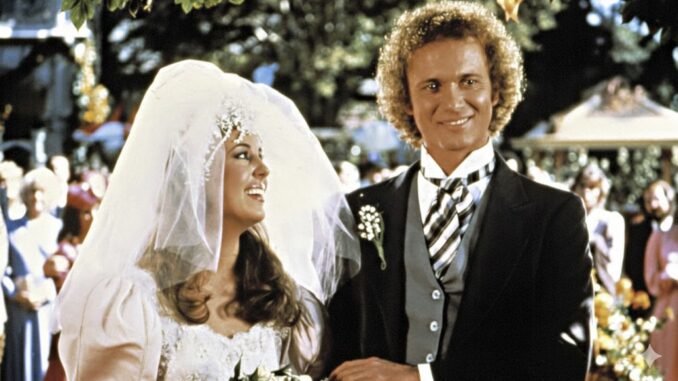
In November 1981, television history was made when Luke and Laura said “I do” on General Hospital. What should have been just another soap opera storyline became something far bigger — a cultural phenomenon that brought America to a standstill. An estimated 30 million viewers tuned in to watch the wedding of Luke Spencer and Laura Webber, played by Tony Geary and Genie Francis. It wasn’t just daytime drama anymore. It was a national event.
At the height of its popularity, the Luke and Laura romance transcended the soap world. Newspapers covered it. Bars and college dorms organized viewing parties. Even people who had never watched an episode before found themselves drawn into the fairy-tale spectacle. The lavish ceremony, complete with dramatic music and over-the-top glamour, felt like something out of primetime — yet it unfolded in the middle of the afternoon.
But behind the sweeping romance and record-breaking ratings were layers of complexity that continue to spark debate more than four decades later. Luke and Laura’s love story was never simple. Their relationship began under deeply controversial circumstances, a storyline that has been reexamined through a modern lens and criticized for how it was framed at the time. What 1981 audiences embraced as epic romance has since become part of an ongoing conversation about storytelling, accountability, and how television reflects cultural attitudes.
That duality is part of why the wedding remains so iconic. It represents both the peak of soap opera influence and a reminder of how much the medium — and society — has evolved. For some, the wedding is pure nostalgia: a moment when daytime TV commanded the nation’s attention. For others, it’s inseparable from the complicated history surrounding the characters. The magic and the mess exist side by side.
As tonight’s tribute to Tony Geary airs, the memories feel especially emotional. Geary’s portrayal of Luke Spencer helped redefine what a soap antihero could be — charismatic, flawed, unpredictable, and impossible to ignore. His chemistry with Genie Francis turned Luke and Laura into one of television’s most talked-about couples. Together, they created lightning in a bottle.
Revisiting the wedding now carries a different weight. It’s not just about the spectacle of a fictional ceremony; it’s about honoring a chapter of television history that changed the game. The episode proved that daytime drama could rival primetime in cultural impact. It showed networks the power of serialized storytelling at a time when appointment viewing truly meant something.
The legacy of Luke and Laura’s wedding lives on in every super-couple storyline that followed. It set the template: heightened stakes, sweeping romance, and an audience emotionally invested enough to clear their schedules. Yet it also serves as a time capsule, preserving the attitudes and creative choices of an earlier era.
That’s what makes this tribute moment so powerful. It invites fans — old and new — to look back with both admiration and reflection. The wedding that once stopped America still resonates, not just because of its scale, but because of the conversations it continues to inspire.
Click the link to revisit the ceremony that changed TV history — and decide for yourself how this legendary moment should be remembered.