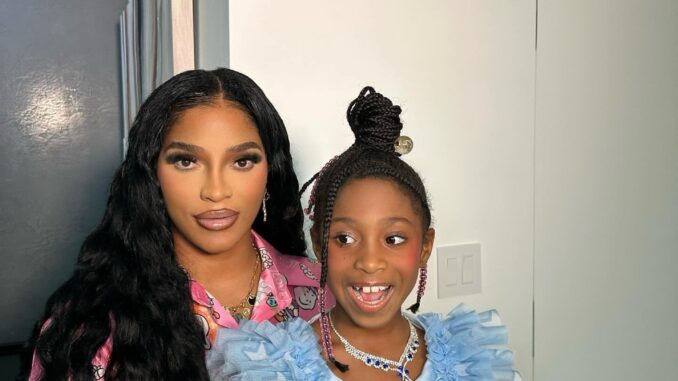
Joseline Hernandez is drawing a firm line between reality TV drama and real-life motherhood — and she’s not holding back.
The outspoken television personality, known for her fiery presence on screen, says it deeply hurts when critics question her abilities as a mother based solely on what they see in edited episodes. For Joseline Hernandez, the bold, confrontational energy viewers associate with her brand is part of the job — not a reflection of how she parents behind closed doors.
In a recent statement, Joseline made it clear that television is performance. It’s production. It’s storytelling crafted for ratings. “I would never do anything to put my child in harm’s way,” she emphasized, shutting down narratives that suggest otherwise. According to her, the chaos, arguments, and explosive moments that fuel reality TV are carefully constructed entertainment — and her daughter is not a participant in that world.
Joseline has long been a headline magnet, from her early days on Love & Hip Hop: Atlanta to her own projects like Joseline’s Cabaret. Her larger-than-life persona has become her brand: unfiltered, unpredictable, and unapologetically bold. But she insists that the persona stops when the cameras do.
She says her daughter is shielded from the drama viewers see unfold. Far from the flashing lights and heated confrontations, Joseline describes a home filled with structure, stability, and love. She maintains that her child is surrounded by protection, proper care, and a nurturing environment that looks nothing like the high-voltage scenes fans consume for entertainment.
The disconnect, she believes, stems from the blurred lines that reality TV often creates. Viewers feel like they “know” cast members because they see so much of their lives on screen. But what they’re seeing is a curated version — hours of footage condensed into dramatic story arcs designed to spark conversation. Context is trimmed. Nuance is edited. And characters are heightened.
For Joseline, that distinction matters most when it comes to motherhood. She understands that being in the public eye invites scrutiny, but she draws a hard boundary when it comes to her child. Critique her business decisions. Debate her on-screen behavior. But questioning her devotion as a mother? That’s where it becomes personal.
Her message is simple: entertainment is not reality.
She also points out the double standard that often exists for women in reality television. Male stars are rarely asked to defend their parenting based on aggressive or controversial on-screen behavior. Yet women, especially mothers, frequently face harsh judgment about how their public personas might reflect on their families.
At the core of Joseline’s response is something deeply relatable — the desire to protect one’s child from public narrative. Fame magnifies everything, including assumptions. And in an era where social media commentary moves faster than facts, reputations can be shaped by viral clips rather than lived truth.
Joseline wants fans to understand one thing above all else: motherhood is not a storyline. It’s her priority. No ratings, no production arc, no dramatic confrontation is more important than her daughter’s well-being.
And while reality TV may thrive on spectacle, Joseline insists her real life is grounded in something far more important — love, responsibility, and a mother’s unwavering commitment.