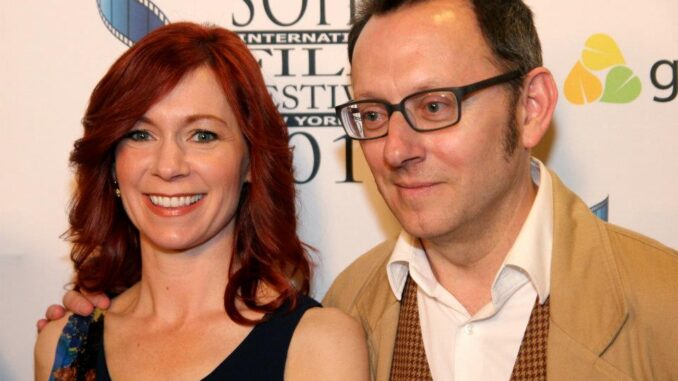
When a breakout series builds its identity on razor-sharp observation, psychological nuance, and emotional complexity, the idea of blind spots becomes especially intriguing. That’s exactly what fans can expect when Season 3 of Elsbeth arrives, according to star and executive producer Carrie Preston.
Following the show’s increasingly layered second season, Preston has teased that the upcoming chapter will dive deeper into hidden vulnerabilities — particularly involving Teddy and Alec. And if her hints are anything to go by, Season 3 won’t just expand the mystery-of-the-week format. It will reshape how characters understand themselves — and each other.
This isn’t just a narrative shift. It’s an emotional one.
Below, we unpack what Preston’s “blind spots” comment really means, why Teddy and Alec are central to the show’s evolving emotional architecture, and how Season 3 could redefine the core themes that have made Elsbeth one of television’s most distinctive character-driven dramas.
⭐ Carrie Preston on What “Blind Spots” Really Means
For an actor known for playing hyper-perceptive characters, Carrie Preston understands the power of what remains unseen.
Her tease about Season 3’s “blind spots” is not just about plot twists or surprise reveals. Instead, it points to something more psychologically layered: the things characters cannot — or will not — see about themselves.
In storytelling, blind spots operate on multiple levels:
Emotional denial
Misjudgment of others
Moral self-justification
Relationship imbalance
Unrecognized trauma or fear
Preston suggests Season 3 will examine these internal gaps more deliberately than ever before. And rather than being random weaknesses, these blind spots will actively drive character decisions — sometimes with unintended consequences.
In other words, what characters don’t know may become more dangerous than what they do.
🧠 Why Teddy and Alec Matter More Than Ever
While Elsbeth has always balanced episodic cases with character development, Teddy and Alec appear poised to become emotional anchors for Season 3.
Preston’s comments imply their roles will move beyond supporting presence into narrative catalysts. Their relationships — with Elsbeth and with each other — may expose tensions that have quietly existed beneath the surface.
So why focus on them now?
Because blind spots rarely emerge in isolation. They reveal themselves through connection.
Possible emotional dynamics Season 3 may explore:
1. Misplaced trust
Characters believing they fully understand one another — only to discover hidden motives or misunderstood intentions.
2. Protection vs. control
Attempts to protect someone can unintentionally limit or silence them.
3. Identity assumptions
People often see others through fixed expectations, missing signs of change or struggle.
4. Emotional avoidance
Unspoken history may finally demand confrontation.
These dynamics are fertile ground for drama — especially in a show built on the idea that perception is rarely neutral.
🔍 The Evolution of Character-Driven Mystery
From its beginning, Elsbeth has stood apart from traditional procedural dramas. Yes, it offers compelling investigations. But its real focus is psychological perspective.
This storytelling approach comes directly from the DNA of its predecessor, The Good Wife, where character psychology often shaped legal outcomes as much as evidence did.
Season 3 appears ready to push that tradition further.
Instead of simply solving cases, the narrative may explore:
How personal bias shapes investigation
How emotional history influences judgment
How perception becomes its own form of evidence
How intelligence can coexist with vulnerability
Blind spots, in this context, are not flaws to eliminate — they are forces to understand.
❤️ Emotional Risk as the New Narrative Engine
Television drama increasingly thrives on emotional realism, and Elsbeth has excelled at balancing intellect with empathy. But Season 3 may elevate emotional risk to the forefront.
Preston’s tease hints that characters may face situations where:
Logic cannot resolve conflict
Insight arrives too late
Self-awareness carries painful consequences
Relationships change irreversibly
This represents a shift from solving problems to living with revelations.
And that distinction matters.
Because revelation — especially about oneself — often creates instability rather than closure.
🧩 Blind Spots as a Mirror for the Audience
One of the most compelling aspects of Preston’s preview is its thematic universality. Blind spots are not just narrative devices. They are human experiences.
Viewers may recognize themselves in moments such as:
Defending a belief despite evidence
Misreading someone’s intentions
Ignoring emotional warning signs
Holding onto outdated self-perceptions
By grounding dramatic tension in these recognizable psychological patterns, Season 3 could deepen audience identification with the characters.
Rather than asking “Who committed the crime?”
The show may increasingly ask: “Why couldn’t they see what was right in front of them?”
🎭 Performance Complexity and Character Vulnerability
For an actor, portraying blind spots requires subtlety. It’s not about obvious ignorance — it’s about believable self-certainty.
Carrie Preston has built her performance style around precisely this tension:
Confidence paired with curiosity
Insight paired with eccentricity
Emotional intelligence paired with unpredictability
If Season 3 pushes Elsbeth into situations where she experiences blind spots, it could mark one of the most significant character developments in the series.
A hyper-observant protagonist confronting her own unseen limitations would create powerful dramatic symmetry.
🏛️ Structural Changes Fans Might Notice
If Preston’s comments reflect broader creative direction, viewers may see storytelling adjustments such as:
Longer emotional arcs rather than purely episodic resolution
Recurring consequences from earlier decisions
Shifting relationship dynamics across episodes
Less certainty, more ambiguity
This would align with modern prestige drama structures — where character transformation matters as much as narrative outcome.
📺 What This Means for Season 3’s Tone
Expect a tone that remains witty and sharp — but with deeper emotional resonance.
Possible tonal shifts:
More introspective character moments
Heightened relational tension
Moral ambiguity in decision-making
Emotional revelations embedded within investigative plots
In short: the show may become more personal without losing its intellectual edge.
🌟 Why This Direction Matters for the Series’ Legacy
Every successful television drama eventually faces a crucial challenge: evolution without losing identity.
By focusing on blind spots, Elsbeth may achieve exactly that.
It keeps the core themes of perception and observation — but turns them inward.
Instead of asking how characters read the world…
Season 3 may ask how accurately they read themselves.
That shift could redefine the emotional legacy of the series.
🔮 The Big Question Moving Forward
Carrie Preston’s teaser leaves fans with one compelling idea:
Even the most perceptive people miss things.
If Teddy and Alec’s storylines expose emotional truths long hidden, Season 3 could become the show’s most psychologically revealing chapter yet.
And perhaps its most human.
Because the real mystery may not be what characters uncover —
but what they finally learn to see.