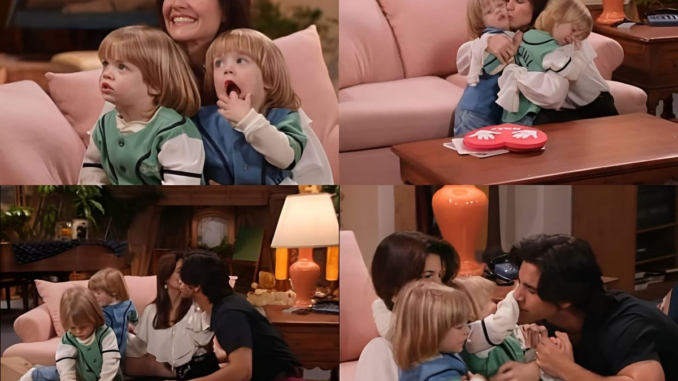
When most people think about Full House, they picture hugs, cheesy jokes, and warm life lessons wrapped in laughter.
You remember the theme song, the kitchen talks, the goofy Uncle Jesse moments. It feels safe, cozy—like comfort food after a long day.
But underneath the smiles, Full House carried a surprisingly heavy emotional core.
And once you notice it, the show feels less like a sitcom… and more like a quiet family drama hiding behind laugh tracks.
Let’s talk about the truth most fans overlook.
The Premise Was Built on Tragedy
Before any jokes, before any hugs, Full House starts with heartbreak.
Danny Tanner’s wife, Pam, dies in a car accident.
Three little girls lose their mom overnight. A father becomes a widower instantly.
That’s not a sitcom setup—it’s raw emotional trauma.
Every episode grows from that loss.
Danny Tanner’s Hidden Grief
Danny, played by Bob Saget, often seemed cheerful and goofy.
But look closer.
His obsession with cleaning, his constant worrying, his need to hold the family together—it all screams grief coping.
He wasn’t just neat. He was scared.
Scared of losing control again.
Three Girls Growing Up Without Their Mom
D.J., Stephanie, and Michelle didn’t just crack jokes—they grew up in grief.
Candace Cameron Bure portrayed D.J. as strong and responsible beyond her years.
Jodie Sweetin showed Stephanie dealing with insecurity and loneliness.
And Michelle, played by Mary-Kate Olsen and Ashley Olsen, never even knew her mom.
That’s heavy stuff for a sitcom.
The Show Used Comedy as Emotional Armor
Why so many jokes? Why the silly catchphrases?
Because humor helped the family survive.
Real families do this too. We laugh when life hurts.
Comedy became their shield.
Uncle Jesse’s Fear of Responsibility
John Stamos’ character started as a carefree rock guy.
But suddenly, he helped raise kids.
He struggled with maturity, commitment, and identity.
That storyline showed real-life pressure many young adults face.
Joey Gladstone’s Loneliness
Dave Coulier played Joey as a goofy comedian.
But why did he move in? Why did he stay?
Because he had nowhere else to go.
Behind the jokes, Joey dealt with loneliness and fear of growing up.
The Dark Truth: Everyone Was Broken
Here’s the real truth about Full House.
Every character was coping with loss, fear, or insecurity.
Danny feared failing his kids.
D.J. feared growing up too fast.
Stephanie feared being invisible.
Jesse feared responsibility.
Joey feared loneliness.
It wasn’t just a comedy. It was therapy.
Real-Life Struggles of the Cast
Behind the scenes, some cast members faced personal challenges while growing up in the spotlight.
Child actors dealt with pressure, fame, and expectations.
Life imitated art.
Sometimes painfully.
Episodes That Felt Like Drama
Remember episodes about bullying, peer pressure, or losing friends?
They weren’t light jokes.
They were serious lessons wrapped in laughter.
The show tackled grief, body image, addiction, and fear.
Pretty bold for family TV.
Why the Show Needed Humor
Without humor, Full House would’ve been heartbreaking.
Imagine watching only sadness every week.
The jokes were oxygen.
They let viewers breathe.
The Power of the Kitchen Table Talks
Every episode ended with a serious talk.
A hug. A lesson. A quiet truth.
Those moments felt real because they were rooted in grief and healing.
You weren’t just watching TV—you were watching emotional recovery.
Why Fans Didn’t Notice the Darkness
As kids, we focused on jokes and catchphrases.
As adults, we see deeper meaning.
Full House grew up with us.
And suddenly, we understand the sadness underneath.
The Show Reflected Real Families
Real families aren’t perfect.
They laugh. They argue. They cry. They heal.
Full House captured that truth.
That’s why it still feels relatable today.
Why the Series Still Comforts Us
Because it shows hope.
No matter how broken things get, love rebuilds.
That message feels like a warm blanket.
And honestly, we all need that sometimes.
How Full House Influenced Future Sitcoms
Shows after Full House blended comedy and drama more openly.
Writers realized audiences wanted real emotion.
Full House helped start that trend.
Why This Dark Truth Makes the Show Better
Knowing the deeper story doesn’t ruin Full House.
It makes it richer.
Like discovering hidden lyrics in a song you’ve loved for years.
You hear it differently.
You feel it more.
Conclusion
Full House looked like a simple sitcom, but underneath the laughter lived a story about grief, healing, and family survival.
The Tanner family wasn’t perfect—they were hurting, trying, and growing. And that’s why the show still touches hearts decades later.
Because real life isn’t pure comedy. It’s messy, emotional, funny, and sad all at once.
Full House captured that truth beautifully.
And maybe that’s why we still love it.
FAQs
1. What is the dark truth about Full House?
The show’s story revolves around a family coping with the death of a mother and the emotional struggles that followed.
2. Was Full House meant to be a drama?
No. It was a sitcom, but it included deep emotional themes about grief and healing.
3. Why did Full House focus on family talks?
Writers wanted to teach life lessons while keeping the show family-friendly.
4. Did the cast face real-life struggles?
Yes. Growing up in Hollywood brought pressure and personal challenges for some actors.
5. Why does Full House still feel comforting today?
Because it shows love, healing, and hope—timeless emotions everyone understands.