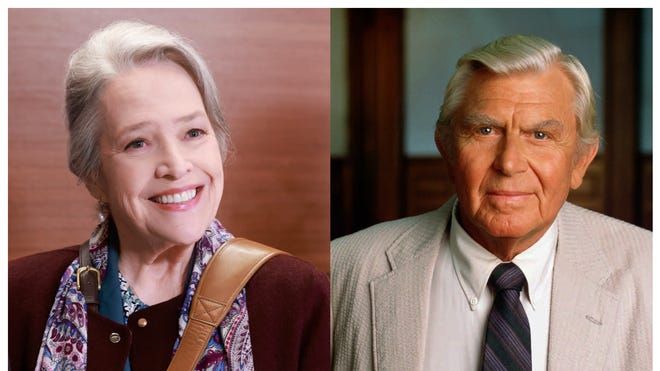
In Hollywood, every hit comedy has an origin story — and sometimes, that story is almost as funny as the film itself. According to Adam Sandler, one of his most beloved movies nearly lost a major casting opportunity before it even got off the ground. The reason? A script that didn’t exactly scream “Oscar material” at first glance.
Speaking candidly in a recent interview, Sandler recalled that acclaimed actress Kathy Bates once tossed the script for The Waterboy straight into the garbage after reading just the first page. Yes — that Waterboy.
And if you’ve seen the 1998 sports comedy that became a cultural touchstone for a generation, you know that’s the kind of twist that feels almost too perfectly ironic.
A Comedy Classic That Almost Wasn’t
Released in 1998 and directed by Frank Coraci, The Waterboy starred Sandler as Bobby Boucher, a socially awkward waterboy for a college football team who discovers he has a surprising talent for tackling. The film blended absurd humor, Southern caricature, and heartfelt moments about self-worth and maternal overprotection.
While critics were divided at the time of release, audiences embraced it. The film grossed over $190 million worldwide, solidifying Sandler’s status as a box-office force in the late ’90s.
But as Sandler now jokes, the movie almost didn’t benefit from the presence of Bates — who delivered one of its most memorable performances as the fiercely protective Mama Boucher.
“She Threw It in the Garbage”
During the interview, Sandler described the moment with his signature mix of self-deprecating humor and affection.
According to him, Bates read the first page of the script — which opened with Bobby Boucher’s exaggerated Cajun accent and outlandish premise — and reportedly dismissed it immediately. To her, it seemed ridiculous. Over-the-top. Maybe even beneath her.
And who could blame her?
At the time, Bates was already an Academy Award winner known for powerhouse dramatic performances, most notably in Misery. The tonal gap between psychological horror and slapstick football comedy is… significant.
Sandler admitted that he understood her reaction. The opening of The Waterboy is unapologetically broad. It doesn’t ease you in. It dives headfirst into absurdity.
Still, as fate would have it, the script found its way back to Bates — and this time, she kept reading.
Why Kathy Bates Changed Her Mind
So what made Bates reconsider?
Sandler explained that once she moved past the initial shock of the first page, she saw the heart of the story. Beneath the cartoonish humor was a character study of a young man underestimated by everyone around him — including himself.
Mama Boucher, meanwhile, wasn’t just a comedic foil. She was a fiercely loving, if wildly controlling, mother whose devotion bordered on mythic. It was a role that required more than punchlines. It demanded commitment.
And Bates committed fully.
Her performance balanced absurdity with sincerity. She leaned into the character’s eccentricities while grounding her in genuine emotion. The result? One of the most quotable, unforgettable maternal figures in ’90s comedy.
It’s hard to imagine anyone else delivering lines about “foosball being the devil” with such conviction.
The Risk of Comedy Scripts
Comedy on paper can be a tough sell — especially broad, character-driven comedy. Dramatic scripts often read more “impressively” because they rely on emotional tension and complex dialogue. Comedy, on the other hand, frequently depends on timing, performance, and tone — elements that don’t always leap off the page.
Sandler acknowledged this reality. A joke that kills in a theater can feel flat in black-and-white text. Accents, physical humor, and absurd premises require imagination.
In Bates’ case, the first page simply didn’t translate.
But that’s part of the magic — and risk — of filmmaking.
Sandler’s Late-’90s Comedy Streak
By the time The Waterboy hit theaters, Sandler was riding a wave of commercial success following films like Billy Madison and Happy Gilmore. His brand of man-child absurdism had become a defining comedic voice of the era.
Still, casting an Oscar-winning dramatic actress in such an outrageous role was not the most obvious move.
But Sandler has often surrounded himself with performers willing to play against type — and that unpredictability has become one of his strengths as a producer and collaborator.
Bates’ initial hesitation, in hindsight, makes her eventual involvement even sweeter.
A Reminder That Even Great Scripts Get Rejected
Hollywood history is filled with near-misses and early dismissals. Classic films have been passed over, scripts shredded, projects labeled “unmakeable.”
What makes this story resonate is how relatable it feels. Even established creatives can misjudge a project at first glance. Even Oscar winners can toss aside what later becomes a cult classic.
Sandler tells the anecdote not with bitterness, but with amusement. It’s a reminder that rejection — even dramatic rejection — is part of the creative process.
And sometimes, you just need someone to take a second look.
The Legacy of The Waterboy
Nearly three decades later, The Waterboy remains one of Sandler’s most quoted films. It captures a specific moment in late-’90s comedy — exaggerated accents, sports underdog narratives, and a healthy dose of absurdity.
More importantly, it represents a turning point. The film helped cement Sandler’s ability to deliver box-office hits built around highly specific characters. It also demonstrated that respected dramatic actors could step into broad comedy and thrive.
Bates’ performance, once nearly discarded along with the script, became a highlight.
Her Mama Boucher is larger-than-life but oddly grounded — the emotional anchor of a film that could easily have spun out into pure farce.
From Garbage to Gold
There’s something poetic about a script going from trash can to triumph.
Sandler’s recollection isn’t about embarrassment; it’s about perspective. Creative projects evolve. First impressions shift. And sometimes, what looks ridiculous on page one turns out to be exactly what audiences are craving.
For Bates, the gamble paid off. For Sandler, the anecdote adds another layer to the mythology of his early career.
And for fans, it’s a delightful behind-the-scenes story that makes revisiting the film even more enjoyable.
Final Thoughts
The image of Kathy Bates tossing The Waterboy script into the garbage after one page feels like a punchline straight out of the movie itself. Yet it underscores a deeper truth about filmmaking: art is subjective, and instincts can change.
Had Bates stuck with her first impression, one of the film’s most iconic performances might never have happened.
Instead, she gave the script a second chance — and turned what seemed like nonsense into comedy gold.
In Hollywood, that’s the real underdog story.