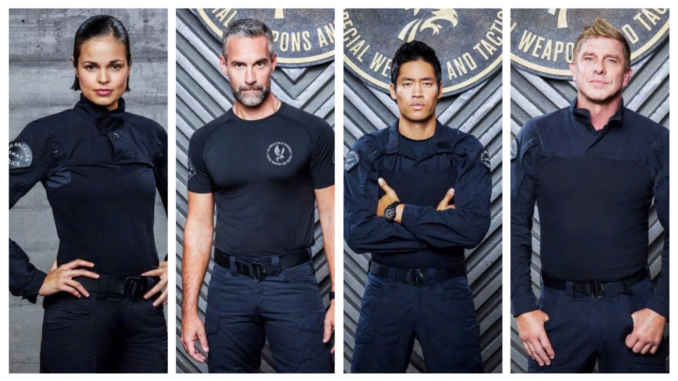
Before Playing S.W.A.T., What Roles Did These Actors Play?
When you watch S.W.A.T., it’s easy to assume the cast was built for tactical gear and high-stakes action from day one.
They move like a unit. They handle weapons convincingly. They deliver intensity without hesitation.
But here’s the truth: none of them started there.
Before the armored vehicles and breach sequences, these actors built careers across soap operas, teen dramas, sitcoms, legal thrillers, and blockbuster films.
Let’s rewind the clock and explore where the S.W.A.T. cast really came from.
Shemar Moore: From Daytime Drama to Action Commander
Malcolm Winters on The Young and the Restless
Long before he led 20-Squad, Shemar Moore became a household name in daytime television.
He portrayed Malcolm Winters for over a decade. Soap operas demand emotional stamina—fast shooting schedules, intense dialogue, constant drama.
That environment sharpened Moore’s discipline and screen presence.
Derek Morgan on Criminal Minds
Then came the career-defining leap.
As Derek Morgan, Moore embodied strength, loyalty, and controlled intensity. That role made him a prime-time staple and positioned him perfectly to lead an action procedural.
Without Criminal Minds, there would likely be no Hondo.
Jay Harrington: From Comedy to Tactical Drama
Dr. Ron McCready on Desperate Housewives
Before becoming Deacon Kay, Jay Harrington built a reputation in lighter roles.
His recurring role in Desperate Housewives showcased charm and comedic timing rather than tactical grit.
Ted Crisp on Better Off Ted
In this workplace satire, Harrington leaned fully into comedy. Sharp delivery. Corporate absurdity. No riot shields in sight.
That contrast highlights his versatility. Transitioning from satire to tactical drama isn’t accidental—it’s range.
David Lim: From Legal Drama to Elite Sniper
Sebastian Chen on Quantico
Before playing Victor Tan, David Lim appeared in Quantico, a fast-paced FBI thriller.
That role required discipline and intensity, making his pivot into S.W.A.T. feel organic.
Guest Appearances Across Network TV
Lim also appeared in:
-
NCIS
-
Supergirl
These supporting roles helped him build procedural credibility before joining 20-Squad.
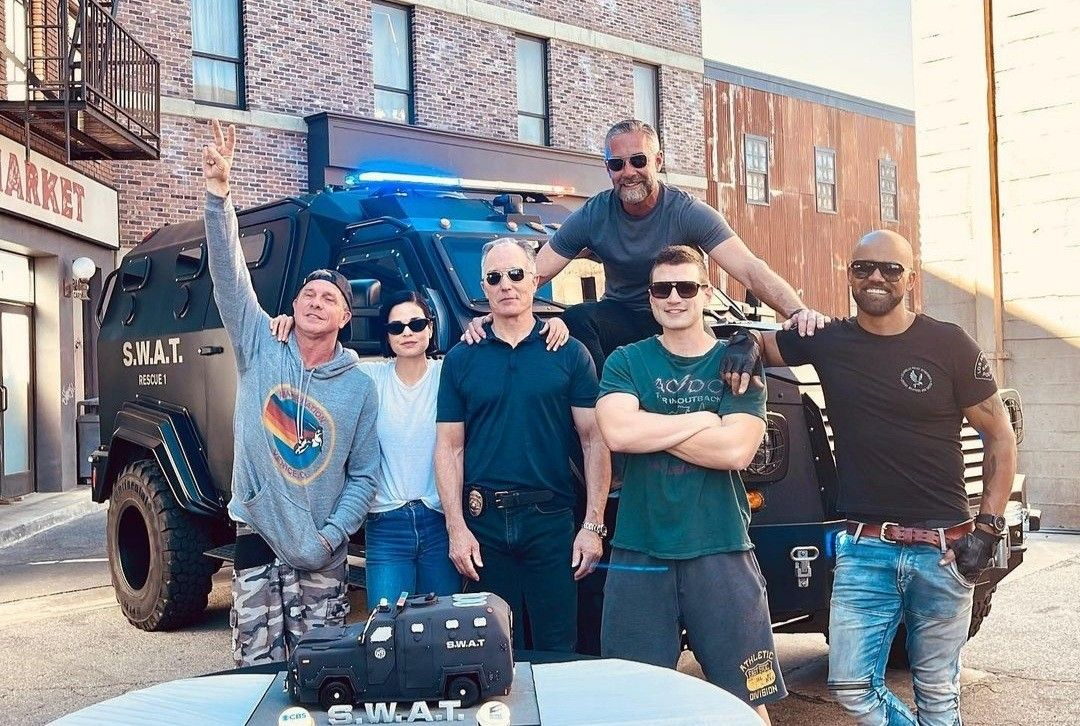
Patrick St. Esprit: The Veteran Authority Figure
Romano on Sons of Anarchy
Before portraying Commander Hicks, Patrick St. Esprit frequently played commanding figures.
In Sons of Anarchy, he brought stern authority to complex situations—skills that translate seamlessly into a leadership role.
Recurring Roles in Procedural Television
St. Esprit built a career portraying law enforcement and military characters across various dramas.
Typecasting? Perhaps.
Mastery of authoritative presence? Absolutely.
Alex Russell: From Superhero Films to Tactical Officer
Firestorm in Chronicle
Before playing Jim Street, Alex Russell appeared in the found-footage superhero film Chronicle.
That film explored power, morality, and youthful intensity—dramatic themes far removed from disciplined police work.
Supporting Role in Carrie
Russell also appeared in the 2013 remake of Carrie. Horror, not heroism.
His transition into procedural action required recalibrating his on-screen persona toward control and tactical precision.
Lina Esco: From Independent Film to Tactical Officer
Lead Role in Free the Nipple
Before portraying Christina “Chris” Alonso, Lina Esco led the controversial independent film Free the Nipple.
That project positioned her as an activist and producer, showcasing boldness beyond traditional acting.
Television Appearances in Crime Dramas
Esco also appeared in:
-
CSI: NY
-
Kingdom
Those experiences sharpened her comfort within high-intensity storytelling environments.
Kenny Johnson: The Character Actor’s Journey
Curtis Lemansky on The Shield
Before playing Dominique Luca, Kenny Johnson earned acclaim in The Shield.
That role required emotional volatility and moral ambiguity—traits that translate effectively into layered police drama.
Herman Kozik on Sons of Anarchy
Johnson also appeared in Sons of Anarchy, further cementing his gritty reputation.
His career leaned heavily into rough-edged roles long before S.W.A.T..
The Pattern: Procedural Experience Matters
One thing becomes clear:
Many cast members had prior experience in:
-
Crime dramas
-
Legal thrillers
-
Authority roles
-
Action-adjacent projects
Hollywood doesn’t gamble on inexperience when launching a physically demanding series.
The cast wasn’t randomly assembled.
They were strategically selected.
Versatility Before Specialization
Interestingly, several actors transitioned from:
-
Comedy
-
Horror
-
Independent drama
-
Soap operas
into tactical action.
That pivot demonstrates adaptability.
Playing law enforcement convincingly requires restraint. Many of these actors sharpened emotional control in earlier genres.
How Previous Roles Shaped Their S.W.A.T. Performances
Soap opera intensity helped Moore command emotional scenes.
Comedy refined Harrington’s timing.
Superhero films trained Russell for action choreography.
Crime dramas prepared Johnson for moral complexity.
No career move was wasted.
Each role acted like a rehearsal for what came next.
The Hollywood Career Ladder
Actors rarely leap directly into high-budget action leads.
They build:
-
Visibility
-
Credibility
-
Reliability
-
Audience recognition
By the time S.W.A.T. premiered, this cast had accumulated all four.
Why Viewers Don’t Always Notice the Transition
When actors fully inhabit new roles, prior personas fade.
That’s effective transformation.
Audiences now associate these performers with tactical gear and police radios.
But their careers tell a broader story.
Conclusion: No One Starts in Tactical Gear
Before breaching doors and commanding elite units, the S.W.A.T. cast honed their craft across genres.
Soap operas built discipline.
Sitcoms sharpened timing.
Thrillers cultivated tension.
Independent films expanded depth.
By the time they assembled as 20-Squad, they weren’t beginners.
They were seasoned professionals stepping into a new evolution of their careers.
That journey—from varied beginnings to unified action ensemble—is what makes their performances feel authentic.
Because behind every tactical move is years of preparation.
FAQs
1. Did Shemar Moore do action roles before S.W.A.T.?
Yes. His role in Criminal Minds involved physical intensity and procedural storytelling.
2. Which cast member had the most diverse early career?
Several did, but Jay Harrington’s transition from comedy to tactical drama stands out.
3. Were most of the actors experienced in crime dramas before S.W.A.T.?
Yes. Many had prior roles in procedural or law enforcement series.
4. Did any cast members come from film backgrounds?
Yes. Alex Russell notably appeared in films like Chronicle before joining the show.
5. Why do casting directors favor actors with procedural experience?
Because familiarity with the genre reduces risk and enhances on-screen authenticity.