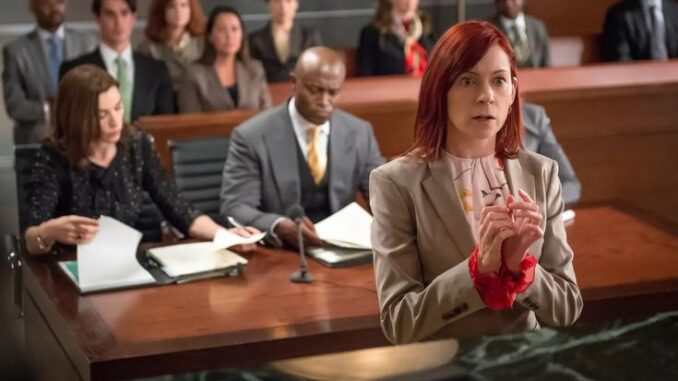
If there’s one thing Elsbeth continues to prove in its third season, it’s that no crime is ever just a crime. In Season 3, Episode 11 — fittingly titled “Ol’ Man Liver” — the show delivers one of its most unsettling and morally complex cases yet. What begins as a tragic medical death spirals into a jaw-dropping murder investigation involving organ donation, power plays, and a betrayal that cuts deeper than any scalpel.
Below is a full recap and analysis of one of the most shocking episodes of the season.
A Promising Transplant Turns Fatal
Episode 11 opens with what seems like a hopeful milestone at St. Barnaby’s Hospital. A prominent real estate mogul, Gerald Voss, is hours away from receiving a long-awaited liver transplant. The hospital’s transplant board, led by celebrated surgeon Dr. Nathaniel Kessler, has approved the procedure after months of testing and waiting.
But before the surgery can take place, the unthinkable happens.
The donor — a retired construction worker named Arthur “Artie” Malone — is declared brain-dead following a car accident. His liver is cleared for transplant. Yet, within hours, Malone’s condition is suddenly reevaluated by a junior attending physician who raises concerns about the timeline of brain death confirmation.
Then the twist: Malone’s life support is withdrawn — legally, officially — and Voss receives the transplant.
Two days later, Elsbeth Tascioni walks into the case.
Elsbeth’s Curiosity Is Triggered
True to form, Elsbeth isn’t officially assigned to investigate malpractice or homicide. She’s initially at the hospital on unrelated business. But as soon as she overhears a tense exchange between Dr. Kessler and Malone’s grieving daughter, something doesn’t sit right.
The daughter, Rebecca Malone, claims her father was still responsive before the ventilator was turned off. She insists he squeezed her hand. The medical chart, however, tells a different story.
Elsbeth’s signature style — asking deceptively simple questions — begins to unravel the tidy hospital narrative. She wants to know:
-
Why was the second neurological exam rushed?
-
Why did Dr. Kessler personally oversee the transplant clearance?
-
And why was Gerald Voss quietly moved up the transplant list?
As viewers, we quickly realize this isn’t just about medical ethics. It’s about power, influence, and desperation.
The Real Target: The Transplant List
The transplant waiting list becomes the episode’s central battleground.
Gerald Voss wasn’t supposed to receive a liver for another three months. Yet suddenly, after Malone’s accident, he becomes the top candidate.
Elsbeth digs into the transplant board’s decision-making process. With her usual blend of awkward charm and razor-sharp logic, she exposes inconsistencies in the scoring metrics used to prioritize recipients.
The most damning discovery? Voss had made a sizable donation to St. Barnaby’s Hospital just weeks before the accident.
Was it a coincidence? Or a strategic investment?
A Junior Doctor’s Conscience
One of the episode’s strongest emotional arcs belongs to Dr. Priya Raman, the young physician who initially questioned Malone’s brain-death diagnosis.
Dr. Raman struggles with guilt. She signed off on the documentation under pressure from Dr. Kessler, who assured her everything was “within acceptable clinical boundaries.”
In a pivotal scene, Elsbeth gently coaxes Dr. Raman into revisiting the hospital footage from the ICU. What they discover is chilling: Malone exhibits minimal but unmistakable neurological response mere minutes before the official time of death is recorded.
It’s not definitive proof of murder — but it raises serious doubt about the legality of the organ harvest.
The Shocking Twist: It Wasn’t About Voss
Midway through the episode, the narrative flips.
For most of the hour, we’re led to suspect that Dr. Kessler orchestrated the timeline manipulation to secure the liver for Voss. But Elsbeth notices something peculiar: Voss’s medical file contains a rare antibody complication that actually made him a high-risk transplant candidate.
Why push so aggressively for his surgery?
Because Voss wasn’t the intended beneficiary.
In one of the episode’s most jaw-dropping revelations, Elsbeth uncovers that a second liver recipient was quietly scheduled the same week — Dr. Kessler’s own brother-in-law, Thomas Kessler.
Thomas’s condition had rapidly deteriorated. Unlike Voss, he didn’t have the financial leverage or public profile to influence the board. But he did have a powerful relative overseeing transplant operations.
The manipulation wasn’t to benefit a billionaire donor. It was to create a domino effect in the organ allocation chain, freeing up another compatible liver for Thomas.
Arthur Malone’s premature declaration of brain death wasn’t just unethical.
It was deliberate.
The Moment of Truth
The confrontation scene between Elsbeth and Dr. Kessler is one of the season’s finest.
Instead of accusing him outright, Elsbeth walks him through a hypothetical scenario: “If someone loved their brother-in-law very much, and they believed the system was unfair, might they convince themselves they were just… adjusting fate?”
Kessler’s composure cracks.
He insists Malone would have died anyway. He argues that transplant medicine always involves difficult judgment calls. But Elsbeth counters with a simple, devastating truth:
“Difficult isn’t the same as dishonest.”
The evidence — altered time stamps, pressured sign-offs, and internal emails — becomes overwhelming. Dr. Kessler is arrested on charges of medical fraud and second-degree murder.
Moral Complexity at the Core
What makes “Ol’ Man Liver” so effective isn’t just the twist. It’s the moral ambiguity.
Dr. Kessler isn’t portrayed as a cold-blooded villain. He’s a desperate man trying to save someone he loves. The episode forces viewers to grapple with uncomfortable questions:
-
Is manipulating a flawed system ever justified?
-
Does intent matter when a life is taken prematurely?
-
And how fragile is trust in medical institutions?
Elsbeth doesn’t deliver a moral lecture. She simply insists on accountability.
Rebecca Malone’s Quiet Grief
In the closing moments, we return to Rebecca Malone. She doesn’t celebrate Kessler’s arrest. She doesn’t seek vengeance.
She just wants acknowledgment that her father mattered.
Elsbeth sits beside her in a quiet hospital chapel and says, “He wasn’t just a donor. He was a person.”
It’s a small line, but it encapsulates the episode’s emotional weight.
Final Thoughts
“Ol’ Man Liver” stands out as one of the most gripping episodes of Elsbeth Season 3. It blends medical ethics, personal desperation, and institutional corruption into a tightly constructed mystery that keeps viewers guessing until the final act.
The shocking organ donor murder twist isn’t just a plot device — it’s a commentary on how systems meant to save lives can be manipulated by those who believe they know better.
As Season 3 continues, this episode sets a high bar. It reminds us why Elsbeth Tascioni remains such a compelling protagonist: she sees what others overlook, asks what others avoid, and refuses to let uncomfortable truths stay buried.
And in “Ol’ Man Liver,” the truth was as unsettling as it was unforgettable.