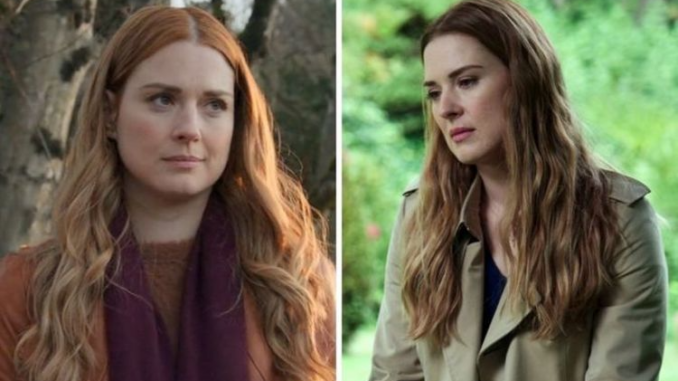
If Mel Were Really Okay, She Probably Wouldn’t Have Stayed at Virgin River
Let’s say the quiet part out loud.
If Mel Monroe had genuinely healed—if she had fully processed her grief, rebuilt her identity, and regained emotional equilibrium—would she have stayed in Virgin River?
It’s a tough question. But the honest answer is probably no.
In Virgin River, Mel’s decision to stay isn’t just romantic. It isn’t simply about a job opportunity or even love. It’s about emotional survival. It’s about choosing safety while still carrying invisible fractures.
And that changes everything.
Mel Didn’t Move Because She Was Strong—She Moved Because She Was Shattered
When Mel left Los Angeles, she wasn’t chasing adventure. She wasn’t climbing a new career ladder. She was drowning in grief after losing her husband and the future she imagined.
People who are truly okay don’t abandon their lives in emotional freefall.
They rebuild from stability.
Mel relocated because staying meant suffocating under memories. Virgin River wasn’t a bold new chapter—it was an escape hatch.
But grief doesn’t respect geography. You can drive for hours, cross counties, even change careers. It still rides shotgun.
Virgin River as Emotional Shelter
Look at the town itself.
Small.
Slow.
Predictable.
Intimate.
Virgin River feels like a soft landing. And when you’re emotionally bruised, soft landings matter.
The town functions like a cocoon. Inside it, life moves gently. There’s room to breathe. Room to break down quietly. Room to reconstruct yourself without the noise of a city constantly demanding productivity.
But here’s the nuance: safety can mimic healing.
Feeling calmer doesn’t automatically mean you’re healed. It might just mean you’ve found insulation.

Jack Was Stability—But Also Gravity
Now let’s talk about Jack Sheridan.
Jack didn’t just represent romance. He represented grounding. He understood trauma. He carried his own emotional scars. Their shared pain built immediate intimacy.
When two wounded people meet, they often create a powerful bond. It’s raw. It’s honest. It feels real.
But sometimes that bond forms because each person sees their reflection in the other’s hurt.
If Mel were completely okay, she wouldn’t need Jack to stabilize her world. She would want him—not rely on him.
There’s a difference between choosing love and clinging to it as emotional oxygen.
Comfort Isn’t the Same as Growth
Here’s where it gets uncomfortable.
Virgin River offered comfort. Familiar faces. Community warmth. Predictable rhythms. A slower pace of life.
But growth? Growth usually demands discomfort.
Growth pushes you into spaces that stretch your capacity. It challenges your identity. It forces you to redefine yourself without leaning too heavily on external anchors.
If Mel had reached full emotional stability, she might have felt strong enough to test herself elsewhere. She might have sought expansion rather than refuge.
Instead, she chose steadiness.
That choice makes sense. But it also reveals something.
Identity After Loss Is Fragile
When you lose a spouse, you don’t just lose a partner. You lose a shared future. You lose the version of yourself that existed inside that relationship.
Mel didn’t simply grieve her husband. She grieved the woman she used to be.
Virgin River gave her space to rebuild that identity quietly. No social expectations. No career pressure. No constant reminders of her old life.
She needed that pause.
But needing a pause isn’t the same as being okay.
The Psychology of Staying When You Have Options
Mel had options.
She was skilled. Educated. Capable. She could have worked in any major city. She could have built a new life somewhere entirely different.
Yet she stayed.
Why?
Because leaving would have forced her to confront a deeper question: was she actually healed, or was she simply safe?
Sometimes we stay not because it’s the best choice—but because it feels like the least risky one.
Virgin River minimized uncertainty. It reduced emotional volatility. It created a controlled environment for recovery.
That’s understandable. It’s human.
But it’s not the behavior of someone who is completely okay.
Healing Is Messy, and Mel Proves It
One of the reasons this story resonates is because Mel’s healing isn’t clean.
She regresses.
She doubts.
She questions herself.
She reopens old wounds.
That’s real life.
Healing doesn’t move in a straight line. It zigzags. It loops. It stalls. It accelerates without warning.
Her decision to stay reflects that unfinished process. She wasn’t standing on solid ground yet. She was still learning how to breathe without collapsing.
Love After Loss Is Complicated
Falling in love again after losing a spouse isn’t simple.
It carries guilt. It carries comparison. It carries fear.
Mel’s relationship with Jack is layered with those complexities. She isn’t just choosing a new partner. She’s renegotiating her loyalty to the past.
If she were fully okay, that negotiation would feel lighter. It would feel grounded in confidence instead of vulnerability.
Instead, her love story unfolds alongside her healing. They are intertwined.
And when healing and romance overlap, it’s hard to separate choice from necessity.
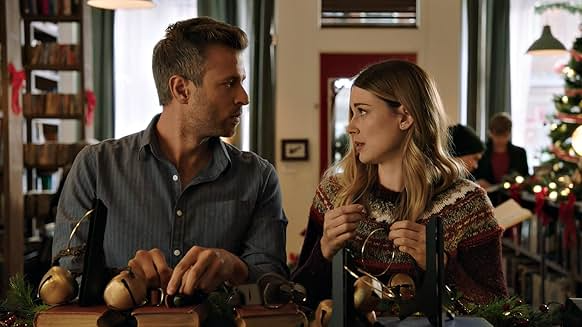
Community as Emotional Medicine
Virgin River offers something rare: collective care.
Doc challenges her.
Hope tests her patience.
The community surrounds her.
Belonging is powerful medicine. It soothes isolation. It counters despair.
But medicine isn’t the same as cure.
Mel needed that collective embrace. She needed people to remind her she still mattered. That need tells us she was still rebuilding.
Would a Fully Healed Mel Have Stayed?
Let’s imagine a different version of her.
She has processed her grief thoroughly.
She feels emotionally independent.
She trusts her resilience.
She no longer fears solitude.
Would that woman automatically choose to stay in a small town defined by comfort?
Maybe.
But her reasons would look different.
She wouldn’t stay because she needed shelter.
She would stay because she wanted a life there.
That distinction changes everything.
Staying Doesn’t Mean Weakness—But It Means Something
It’s important to be clear: staying isn’t failure. It isn’t weakness. It isn’t emotional incompetence.
It’s human.
When we’re wounded, we gravitate toward environments that feel steady. We choose what calms our nervous system. We prioritize survival over ambition.
Mel did exactly that.
But survival mode isn’t the same as thriving.
And if she were truly okay from the start, she probably wouldn’t have needed Virgin River the way she did.
Conclusion: She Stayed Because She Was Healing, Not Because She Was Whole
So let’s return to the original claim: if Mel were really okay, she probably wouldn’t have stayed at Virgin River.
The evidence supports it.
She didn’t stay because she was completely healed.
She stayed because she was in the middle of healing.
Virgin River wasn’t her destination—it was her recovery room. A place to stabilize, to rediscover who she was without the weight of unbearable memories.
Over time, staying may transform into genuine choice. But in the beginning, it was refuge.
And sometimes refuge is exactly what a broken heart needs.
FAQs
1. Did Mel move to Virgin River to escape her past?
Yes. Her relocation followed profound grief and emotional trauma, making escape a significant motivator.
2. Is Mel’s relationship with Jack based on dependency?
Initially, their connection is strengthened by shared vulnerability, which can blur the line between support and emotional reliance.
3. Does staying in Virgin River mean Mel is weak?
No. It reflects her need for stability during recovery, not weakness.
4. Could Mel have rebuilt her life elsewhere?
Absolutely. Her professional qualifications gave her options, making her decision psychologically meaningful.
5. Is Mel fully healed by the later seasons?
Healing remains ongoing. The series portrays recovery as layered and nonlinear.