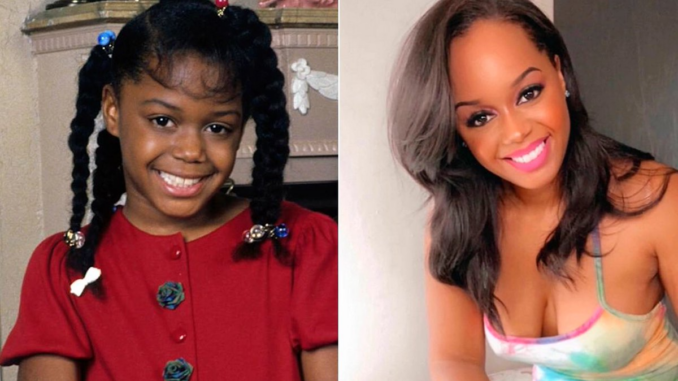
A Childhood Star’s Sudden Disappearance
If you grew up watching 90s television, chances are you remember the sweet, wide-eyed Judy Winslow from Family Matters. Then—almost overnight—she vanished. No farewell episode. No dramatic send-off. Just gone.
So what really happened to Jaimee Foxworth? Why did she leave a successful sitcom? And how did her life take such a dramatic turn into the adult entertainment industry?
The answers aren’t simple. They’re layered with industry politics, financial hardship, identity struggles, and the harsh reality of growing up in the spotlight. Let’s unpack it all—honestly, thoughtfully, and without judgment.
The Early Days: A Promising Start in Hollywood
Jaimee Foxworth began acting at a young age. She appeared in commercials and small television roles before landing her breakthrough part on Family Matters in 1989.
She played Judy Winslow, the youngest daughter in the Winslow household. At first, Judy was part of the family’s everyday life—birthday parties, sibling arguments, school stories. But over time, something shifted.
And that shift would change everything.
The Rise of Family Matters and a Changing Focus
Family Matters became one of the most beloved sitcoms of the 90s. However, as the show gained popularity, the spotlight increasingly focused on one character: Steve Urkel.
The quirky neighbor, portrayed by Jaleel White, became a cultural phenomenon. Catchphrases, merchandise, spin-offs—you name it.
As the show leaned harder into comedy centered around Urkel, other characters received less screen time. Unfortunately, Judy Winslow was one of them.
Why Was Judy Winslow Written Off the Show?
Here’s where it gets complicated.
There was no dramatic storyline explaining Judy’s absence. She simply stopped appearing after Season 4. The show never addressed it directly.
Behind the scenes, reports suggest that budget cuts played a role. Sitcoms sometimes reduce cast members to control costs, especially when certain characters are no longer central to the evolving storyline.
Jaimee Foxworth later shared that she and her family were told her character was being removed due to financial reasons. Just like that, her steady acting job was gone.
Imagine being a teenager and suddenly losing not just your income—but your identity.
The Emotional Impact of Sudden Fame Loss
Child stardom can be a double-edged sword.
One minute, you’re on a hit show with national recognition. The next, you’re watching former co-stars continue without you. That kind of rejection hits hard—especially at a young age.
Jaimee has spoken in interviews about feeling confused and hurt. She struggled with self-worth and direction. When your entire world revolves around being “the kid from TV,” what happens when the cameras stop rolling?
That question haunted her.
Financial Pressure and Family Struggles
After leaving Family Matters, work didn’t come easily. Casting opportunities slowed down. The income that once supported her family began to dry up.
Hollywood can be brutal. Today’s star is tomorrow’s forgotten headline.
Jaimee has been open about her family experiencing financial difficulties during that period. Bills piled up. Stability disappeared. And when money stress enters the picture, decision-making becomes more desperate.
That pressure set the stage for the next chapter of her life.
The Transition into the Adult Industry
As a young adult, Jaimee made the decision to enter the adult film industry under a different name. It was a controversial move—especially for someone once known as America’s TV daughter.
But context matters.
She has explained that financial hardship heavily influenced her decision. At the time, it felt like a way to regain control and earn income quickly.
Let’s pause here.
It’s easy to judge from the outside. But imagine feeling backed into a corner. No steady acting work. Limited options. Public memory tied to a role you no longer had. What would you do?
Life isn’t always black and white.
The Psychological Toll of Reinvention
Reinvention sounds glamorous, doesn’t it?
In reality, it can feel like survival mode.
Jaimee later admitted that the adult industry chapter did not bring long-term fulfillment. Instead, it added emotional complexity to an already difficult period of her life.
When someone moves from child star to adult performer, the public reaction can be harsh. Headlines sensationalize. Social media judges. People forget there’s a human being behind the story.
That kind of scrutiny can take a serious mental toll.
Struggles with Identity and Public Perception
One of the hardest parts of growing up in Hollywood is that people freeze you in time.
Audiences remembered Jaimee as Judy Winslow—the innocent youngest child. Transitioning into adulthood while carrying that image created tension between who she was and who the public expected her to be.
That mismatch can feel suffocating.
It’s like trying to grow a tree in a pot that’s too small. Eventually, something has to give.
Substance Abuse and Personal Challenges
During this turbulent time, Jaimee also struggled with substance use. She has spoken publicly about battling alcohol dependency, which intensified her difficulties.
Substance abuse often doesn’t start as recklessness. It can begin as coping—an attempt to numb pain, silence criticism, or escape disappointment.
The entertainment industry is filled with similar stories. The difference? Not everyone chooses to speak openly about it.
Jaimee did.
The Turning Point: Seeking Help and Recovery
Every powerful story has a turning point.
For Jaimee, that moment came when she decided to seek help. She entered recovery and began rebuilding her life from the ground up.
That takes courage.
Recovery isn’t flashy. It’s not dramatic like a TV finale. It’s daily work. It’s choosing better decisions one small step at a time.
And in many ways, that part of her journey is more inspiring than anything else.
Life After the Spotlight
After stepping away from adult entertainment and focusing on recovery, Jaimee shifted her priorities toward family and personal growth.
She has appeared in interviews reflecting on her past with honesty. There’s no denial. No sugarcoating. Just perspective.
And perspective changes everything.
Instead of being defined by her mistakes, she began defining herself by resilience.
What Hollywood Can Learn from This Story
This isn’t just a celebrity tale. It’s a cautionary one.
Child actors often lack long-term support systems. Once their roles disappear, so does the structure around them. There’s little preparation for the emotional and financial fallout.
Should networks provide better transition support? Should families receive financial planning guidance? Should young performers have stronger mental health resources?
These questions matter.
Because Jaimee’s story isn’t isolated.
The Pressure of Growing Up in Public
Growing up is awkward for everyone.
Now imagine doing it while millions of people watch—and judge.
Every mistake becomes a headline. Every career pivot becomes controversy. There’s no room to experiment privately.
When Jaimee entered the adult industry, it was magnified because of her past fame. But at its core, it was a young adult making a controversial decision during a vulnerable period.
The spotlight just made it louder.
Breaking the Stigma Around Career Changes
Society tends to label people permanently.
But human beings evolve.
People change careers every day. Some transitions are applauded. Others are criticized. The difference often lies in perception, not morality.
Jaimee’s journey forces us to ask uncomfortable questions about stigma, redemption, and second chances.
Should someone be forever defined by one chapter of their life?
Or do we allow room for growth?
Resilience: The Most Overlooked Part of the Story
If you strip away the headlines, what remains?
A child actor who lost her job.
A young woman who faced financial hardship.
A person who made controversial choices.
And ultimately, someone who sought recovery and stability.
That’s resilience.
And resilience doesn’t trend on social media the way scandal does—but it matters more.
Conclusion: A Story Bigger Than a Headline
So why did Jaimee Foxworth leave Family Matters and enter the adult industry?
The short answer: financial strain, lost opportunity, and personal struggle.
The real answer: it was a complicated intersection of fame, rejection, pressure, and survival.
Her story reminds us that celebrities are human. They face insecurity. They make mistakes. They evolve.
And sometimes, the most powerful comeback isn’t returning to television—it’s reclaiming your life.
FAQs
1. Why was Judy Winslow written out of Family Matters?
Reports indicate that budget cuts and shifting focus toward other characters led to the removal of her character without an on-screen explanation.
2. Did Jaimee Foxworth choose to leave the show?
Based on interviews, she did not voluntarily leave. The decision came from the production side.
3. Why did she enter the adult film industry?
She has explained that financial hardship and limited acting opportunities influenced her decision during a vulnerable time.
4. Did she remain in the adult industry long-term?
No. She eventually stepped away and later spoke openly about that period as part of her personal growth journey.
5. What is she doing now?
She has focused on family life, personal recovery, and occasionally shares reflections about her experiences in the entertainment industry.