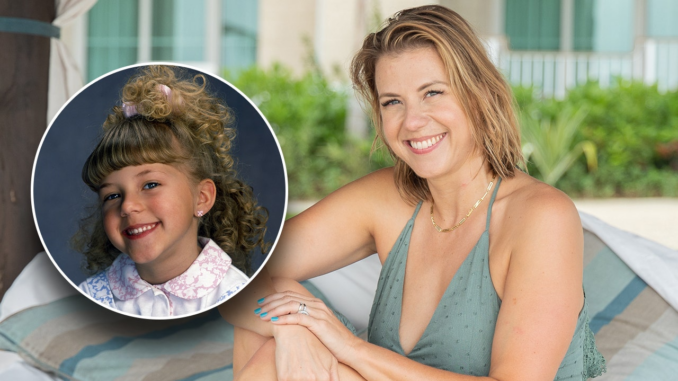
The Hidden Factor Behind Child Star Survival
Let’s be honest — Hollywood has a complicated relationship with child stars.
Some grow up grounded and successful. Others struggle under the weight of early fame. Why does that happen? Is it talent? Luck? Timing?
According to Jodie Sweetin, the answer is surprisingly simple: parents who aren’t chasing the spotlight.
And coming from someone who grew up in front of millions on Full House, that insight carries weight.
From Stephanie Tanner to Real-Life Advocate
Sweetin was just five years old when she stepped into the role of Stephanie Tanner. America watched her grow up — awkward phases, catchphrases, emotional scenes and all.
But behind the scenes, her childhood wasn’t just about scripts and stage lights. It was about structure. Stability. Boundaries.
She credits much of her survival in Hollywood to parents who prioritized her well-being over red carpets.
That’s not just refreshing — it’s powerful.
Why Fame-Hungry Parenting Can Be Dangerous
Let’s talk about the elephant in the room.
When parents see their child as a ticket to fame or financial security, things shift. Decisions stop being about the child’s happiness. They become about career moves and image management.
Sweetin has openly discussed how young actors need protection — not pressure.
Children don’t understand contracts, media scrutiny, or public expectations. They need adults who do.
But more importantly, they need adults who care more about bedtime than box office numbers.
Hollywood’s History with Child Stars
Hollywood has celebrated child actors for decades. But it has also failed many of them.
The pressure to perform, maintain image, and stay relevant can overwhelm a developing mind. When parental guidance centers on career advancement instead of emotional support, cracks form.
Sweetin’s perspective feels like a caution sign posted at the entrance of fame.
The Importance of Normalcy in a Not-So-Normal World
Imagine juggling homework and national fame at the same time.
Child actors live in two worlds — one ordinary and one extraordinary. Sweetin emphasizes the importance of keeping at least one of those worlds stable.
Family dinners. School routines. Friendships outside the industry.
These small anchors matter more than we realize.
Without them, fame becomes a storm without shelter.
Boundaries Over Blind Ambition
Sweetin’s message isn’t anti-success. It’s anti-exploitation.
Parents can support their child’s dreams without living vicariously through them.
That difference may seem subtle, but it changes everything.
When a parent says, “You can quit anytime,” it sends a powerful message: your worth isn’t tied to ratings.
The Emotional Toll of Early Stardom
Childhood is supposed to be messy. Experimental. Private.
But child stars grow up under a magnifying glass.
Sweetin has spoken candidly in the past about the personal struggles she faced after Full House ended. Her honesty adds credibility to her current message about healthy parenting.
She knows firsthand how complicated fame can become.
Revisiting Success with ‘Fuller House’
Years after Full House ended, Sweetin returned as Stephanie Tanner in Fuller House.
That comeback wasn’t just nostalgic — it was symbolic.
It showed growth. Healing. Maturity.
And perhaps most importantly, it showed what long-term survival in Hollywood can look like when someone rebuilds with intention.
Why Parents Shape the Narrative
Talent opens doors. Parents decide which ones to walk through.
When guardians prioritize education, mental health, and balanced schedules, children build resilience.
But when every decision revolves around fame, burnout becomes inevitable.
Sweetin’s advice? Let children be children first.
The spotlight can wait.
The Difference Between Support and Control
There’s a thin line between guiding and controlling.
Supportive parents ask, “Are you happy?”
Controlling parents ask, “What’s next?”
That distinction matters deeply in entertainment.
Sweetin’s stance challenges a system that sometimes rewards ambition over well-being.
Financial Motivation vs. Emotional Protection
Hollywood can be lucrative. For some families, a child’s acting career changes their financial trajectory.
But Sweetin’s warning suggests that when money becomes the driving force, emotional damage follows.
Children shouldn’t feel responsible for adult stability.
That burden weighs heavy — even if it’s never spoken out loud.
Lessons for Modern Child Influencers
Today’s entertainment landscape looks different. Social media has created a new generation of young stars.
The principle remains the same.
Whether it’s television or TikTok, kids need adults who filter opportunities through a lens of protection — not popularity.
Sweetin’s advice feels more relevant than ever.
Breaking the Cycle of Public Pressure
Public validation can become addictive.
Applause. Followers. Headlines.
But children need identity beyond public approval.
Sweetin’s own journey reflects the importance of separating personal value from performance metrics.
It’s a lesson many adults still struggle to learn.
The Power of Honest Conversations
One thing that makes Sweetin’s voice resonate? Transparency.
She doesn’t sugarcoat the realities of growing up famous. She doesn’t glamorize it either.
Her honesty creates space for healthier industry conversations.
And that might be her most impactful role yet.
Parenting in the Entertainment Industry Today
Parents navigating Hollywood today face complex challenges: social media exposure, constant connectivity, viral culture.
The stakes feel higher. The pace feels faster.
Sweetin’s advice offers a grounding reminder: slow down.
Ask what your child wants.
And listen to the answer.
Why This Message Matters Beyond Hollywood
You don’t need to live in Los Angeles to relate.
The broader takeaway? Children thrive when adults prioritize their humanity over achievement.
Whether it’s sports, academics, or acting, the formula doesn’t change.
Love first. Ambition second.
Conclusion: Protect the Child Before the Career
Jodie Sweetin’s message isn’t flashy. It doesn’t promise overnight success or viral fame.
It offers something better — sustainability.
The entertainment industry will always chase the next big thing. But children aren’t trends. They’re human beings.
Parents hold the power to shield or expose. To ground or pressure.
And if Sweetin’s journey teaches us anything, it’s this: the brightest spotlight shouldn’t outshine a child’s well-being.
Success lasts longer when it’s built on stability, not hunger for fame.
Frequently Asked Questions
1. What did Jodie Sweetin say about child star success?
She stated that the key factor in child star success is having parents who are not driven by fame or personal ambition.
2. Why are fame-hungry parents considered harmful?
When parents prioritize fame over their child’s well-being, it can lead to emotional stress, burnout, and long-term psychological challenges.
3. How did Jodie Sweetin’s upbringing influence her perspective?
Growing up on Full House, she experienced early fame firsthand and later reflected on the importance of stability and parental support.
4. Does this advice apply only to actors?
No. The principle applies to any competitive environment, including sports, music, academics, and social media influencing.
5. What is the main takeaway from Sweetin’s message?
Children need protection, balance, and unconditional support — not pressure to maintain fame or financial success.