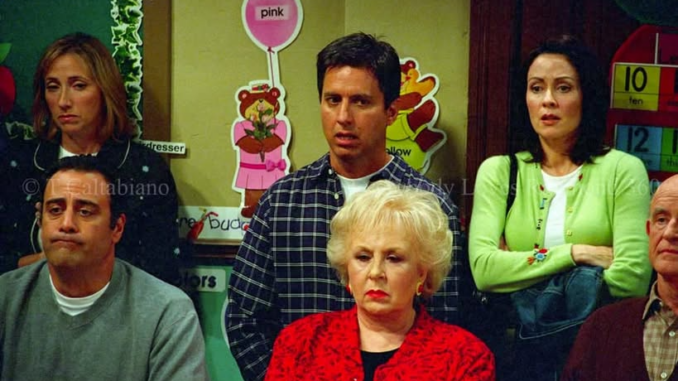
The Sitcom That Felt Too Real to Be Fiction
For nine seasons, Everybody Loves Raymond delivered sharp humor wrapped in suburban chaos. We laughed at the passive-aggressive dinners. We recognized the sibling rivalry. We winced at Marie’s meddling.
But here’s the thing—sometimes the drama off-camera rivaled the tension on-screen.
Behind the steady laugh track and cozy living room set, there were power struggles, personal battles, and emotional goodbyes that shaped the series in ways most fans never saw.
Let’s dive into 12 darker behind-the-scenes moments that gave this beloved sitcom its unexpected edge.
1. The Explosive 2003 Salary Dispute
The most public controversy hit during Season 8.
Brad Garrett walked off set over a massive pay gap between himself and series lead Ray Romano. Romano had secured a record-breaking contract reportedly worth around $1.8 million per episode.
Garrett, despite being essential to the ensemble dynamic, earned significantly less.
Production stalled. Headlines flared. The fictional Barone sibling rivalry suddenly mirrored reality.
2. Cast-Wide Contract Tensions
Garrett wasn’t alone.
Co-stars including Patricia Heaton, Doris Roberts, and Peter Boyle also sought renegotiations.
What looked like a unified TV family faced real economic friction.
Negotiation may be business—but it feels personal when cameras are rolling.
3. The Pressure of a Network Powerhouse
At its peak, the show dominated ratings on CBS.
Success sounds glamorous, right? But sustained dominance breeds expectation. Writers had to top themselves weekly. Actors felt pressure to maintain chemistry year after year.
When a show becomes a flagship, there’s no room for off days.
4. Creative Disagreements Over Tone
The series thrived on grounded humor—awkward pauses, subtle jabs, and emotional realism.
But not every storyline landed easily.
Behind closed doors, writers and producers occasionally clashed over how far to push marital conflict or parental meddling. Some favored sharper satire. Others wanted warmth to remain the priority.
Balancing edge and empathy isn’t easy.
5. Ray Romano’s Real-Life Marriage Inspiration
Here’s something fascinating.
Romano often drew inspiration from his real marriage for storylines. That authenticity fueled the show’s relatability.
But mining personal life for comedy can blur boundaries. When art imitates life too closely, it can create tension at home.
Comedy isn’t always painless.
6. Patricia Heaton’s Emotional Struggles
Patricia Heaton has openly discussed the intense workload of filming a weekly sitcom while raising a family.
Long hours. Script rewrites. Late-night tapings.
The exhaustion didn’t make headlines, but it was real.
Television glamorizes production. It rarely shows the toll.
7. Peter Boyle’s Health Challenges
Peter Boyle, who portrayed Frank Barone with gruff brilliance, faced health issues during the show’s run.
The production team quietly adjusted schedules when needed.
Watching Frank bark insults, viewers had no idea of the vulnerability behind the scenes.
That’s professionalism at its quietest.
8. Doris Roberts’ Fight Against Ageism
Doris Roberts delivered one of television’s most iconic mother-in-law performances.
Yet she also spoke publicly about Hollywood’s ageism.
Landing a role of that magnitude later in life was rare. Sustaining it required persistence.
Her success challenged industry assumptions—and that’s no small feat.
9. The Emotional Weight of the Finale Decision
Unlike many shows that overstay their welcome, Everybody Loves Raymond ended while ratings remained strong.
Romano chose to conclude the series after nine seasons.
Walking away from financial security isn’t easy. But he feared creative decline more than lost income.
That’s bold—and risky.
10. The Divisive Series Finale Reaction
When the finale aired in 2005, some fans expected a dramatic send-off.
Instead, they received a quiet, intimate episode centered around a medical scare.
No grand twist. No sweeping farewell montage.
Some viewers praised its realism. Others felt underwhelmed.
The debate lingered long after the credits rolled.
11. The Weight of Syndication Money
Syndication transformed the show into a financial juggernaut.
As reruns generated massive revenue, conversations about who benefited most intensified.
When money multiplies, scrutiny follows.
It’s not glamorous—but it’s honest.
12. Loss and Legacy
Years after the series ended, the deaths of Peter Boyle and Doris Roberts cast a bittersweet shadow over the sitcom’s legacy.
Rewatching episodes now feels different.
What once sparked laughter now carries nostalgia layered with grief.
Sometimes the darkest moments arrive long after the cameras stop.
Why the Darkness Didn’t Define the Show
Here’s the twist: none of these behind-the-scenes struggles destroyed the magic.
If anything, they strengthened it.
Conflict can fracture—or it can refine. In this case, it sharpened the performances. It deepened the emotional beats. It reminded everyone involved that success isn’t effortless.
It’s negotiated. Earned. Protected.
The Paradox of Sitcom Perfection
Sitcoms sell simplicity.
Behind them lies complexity.
The Barone household looked chaotic but loving. The real production environment looked professional but pressured.
That contrast fascinates us because it mirrors life.
We smile publicly. We negotiate privately.
What These Moments Teach About Hollywood
This isn’t just a story about one show.
It’s about creative industries everywhere.
-
Talent deserves fair compensation.
-
Collaboration requires compromise.
-
Success amplifies both rewards and tension.
-
Endings matter as much as beginnings.
The “dark” moments weren’t scandals in the tabloid sense. They were human realities in a high-stakes business.
Why Fans Still Rewatch Today
Despite salary wars, creative tension, and emotional farewells, the show remains beloved.
Why?
Because authenticity survives controversy.
When Ray and Debra argued, it felt real. When Robert felt insecure, it felt relatable. When Marie meddled, it felt painfully familiar.
The off-camera friction never overshadowed the on-camera heart.
Conclusion: The Shadows Behind the Spotlight
The 12 darker behind-the-scenes moments of Everybody Loves Raymond reveal something essential: even the warmest comedies grow in complicated soil.
Salary disputes. Creative disagreements. Health struggles. Emotional goodbyes.
They didn’t ruin the show. They shaped it.
And maybe that’s the most human truth of all.
Behind every laugh track lies effort. Behind every “perfect” family sits imperfection.
That’s not scandal.
That’s life.
FAQs
1. What was the biggest behind-the-scenes controversy?
The 2003 salary dispute, when Brad Garrett walked off set over pay disparities, remains the most publicized conflict.
2. Did the cast feud affect the show’s success?
No. The issue was resolved, and the show continued successfully until its planned conclusion.
3. Why was the series finale considered controversial?
Some fans expected a dramatic ending but received a quieter, emotionally grounded episode instead.
4. Did health issues impact production?
Yes, adjustments were made to accommodate certain cast members’ health needs during filming.
5. Is the show still popular today?
Absolutely. It remains a staple in syndication and continues attracting new viewers through streaming platforms.