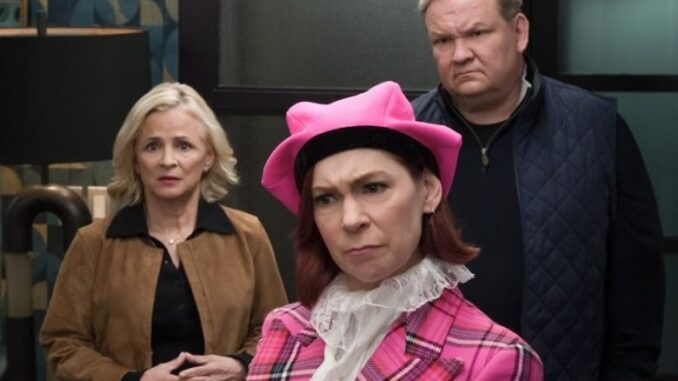
Television thrives on balance. The best procedural comedies know how to juggle absurd humor with genuine mystery, emotional stakes with lighthearted chaos. That delicate balance is something Elsbeth has generally handled quite well since its premiere.
Season 3 has especially leaned into the show’s quirky identity: eccentric investigations, delightfully strange suspects, and the ever-unpredictable brilliance of Elsbeth Tascioni. But Episode 12, while still entertaining, demonstrates what happens when one narrative thread pulls attention away from what should have been a purely fun mystery.
The result is a mixed episode—one that contains plenty of laughs and clever moments, yet feels slightly weighed down by a subplot that simply never quite earns its place.
A Delightfully Ridiculous Mystery at the Center
At its core, Episode 12 offers the kind of case that Elsbeth excels at: a bizarre mystery involving a failed magic show, a missing rabbit, and a suspiciously timed blackout at a Manhattan theater.
The premise alone sounds ridiculous—and that’s exactly the point.
The episode opens with a magician’s dramatic stage performance that suddenly collapses into chaos. A trick goes wrong, the theater lights go out, and when they return, the headlining magician is nowhere to be found. Was it part of the act? A kidnapping? Or something far stranger?
Enter Elsbeth.
As always, her investigative style is equal parts brilliance and confusion. She wanders through the theater asking questions that initially sound unrelated:
-
Why is the stage manager allergic to rabbits?
-
Why did the assistant magician suddenly switch shoes before the performance?
-
And why does the theater’s lighting technician keep referring to “perfect timing”?
These questions eventually unravel the mystery in the way only Elsbeth can manage—through a combination of keen observation and seemingly random curiosity.
It’s classic procedural comedy storytelling. The case itself may not be the most complex puzzle the show has ever presented, but it is playful and creative enough to keep viewers entertained.
In other words, the main storyline works.
The Humor That Makes the Series Work
One of the reasons audiences have embraced Elsbeth is its willingness to lean into absurdity.
Unlike many crime procedurals that focus on tension and dark subject matter, this series thrives on awkward humor, eccentric personalities, and unexpected logic. Elsbeth’s thought process often seems chaotic at first—but eventually everything clicks together in a way that feels oddly satisfying.
Episode 12 includes several standout comedic moments:
-
Elsbeth accidentally participating in a rehearsal magic trick and vanishing behind the curtain.
-
A suspect dramatically confessing—only to realize they misunderstood the question.
-
A hilariously awkward interrogation involving stage props and a malfunctioning fog machine.
Moments like these highlight what makes the show unique. The series doesn’t try to be the most serious procedural on television; instead, it focuses on character-driven humor and clever misdirection.
And in that sense, Episode 12 mostly succeeds.
Where the Episode Starts to Struggle
Unfortunately, while the main case delivers the kind of silly fun fans expect, the episode introduces a secondary storyline that struggles to justify its presence.
This subplot focuses on a bureaucratic dispute inside the police department involving budget cuts and new reporting rules. In theory, this storyline was likely intended to explore workplace dynamics and add a layer of realism to the otherwise whimsical narrative.
In practice, however, it feels strangely disconnected from the main plot.
Instead of enhancing the episode, the subplot repeatedly interrupts the investigation. Scenes that could have expanded the mystery instead shift to meetings about paperwork, compliance reports, and internal oversight procedures.
The tonal shift is noticeable.
One moment the episode is exploring a suspicious disappearing magician; the next it’s discussing departmental forms and funding allocations.
For a show that thrives on momentum and humor, those scenes slow things down considerably.
A Subplot That Feels Like Setup Rather Than Story
Another issue with the secondary storyline is that it appears designed more as future setup than as a meaningful part of Episode 12 itself.
Television writers often introduce smaller arcs that will pay off later in the season. That strategy can work when the subplot still serves the current episode.
Here, though, the bureaucratic conflict feels like it belongs in a different episode entirely.
The characters involved spend most of their time explaining policies and expressing mild frustration, but the storyline never reaches a satisfying conclusion within the episode. Instead, it simply lingers in the background before fading out.
The result is narrative imbalance.
Viewers are left wondering why the subplot received so much screen time when the main mystery could have benefited from additional development.
Lost Opportunities in the Main Story
Because of the extra focus on the departmental subplot, the central case ends up feeling slightly compressed.
Several potentially interesting details receive only brief attention:
-
The rival magician who might have sabotaged the performance
-
The mysterious blackout timing
-
The assistant’s suspicious behavior backstage
Each of these clues could have been expanded into more comedic or investigative scenes.
Instead, the episode occasionally jumps away from the theater mystery just as things are getting interesting.
It’s not enough to ruin the episode—but it does create the sense that something stronger could have been hiding beneath the surface.
The Strength of the Lead Character Still Carries the Episode
Despite these structural issues, Episode 12 still benefits from the series’ biggest strength: its lead character.
Elsbeth Tascioni remains one of television’s most distinctive investigative personalities.
Her brilliance comes from an unusual perspective. While other detectives focus on obvious evidence, Elsbeth notices the strange little details that everyone else ignores. A misplaced prop. A nervous laugh. A magician who refuses to perform a particular trick.
That observational style makes the mystery-solving process feel fresh even when the overall story is relatively simple.
And importantly, the character’s optimism keeps the show feeling light.
Even when investigating suspicious circumstances, Elsbeth rarely loses her sense of curiosity or compassion.
Why the Episode Is Still Fun to Watch
Despite its narrative imbalance, Episode 12 remains enjoyable.
The pacing of the main mystery, the creative setting inside a theater, and the playful humor all contribute to a satisfying viewing experience. The episode never becomes boring—it simply feels slightly distracted.
For longtime fans of the series, the charm of Elsbeth herself is enough to carry the episode across the finish line.
And in fairness, not every installment of a procedural series needs to be perfect.
Sometimes a story can be a little messy and still be entertaining.
Episode 12 fits squarely into that category.
Looking Ahead to the Rest of the Season
If the subplot introduced here does indeed lead into a larger storyline later in Season 3, the decision to include it may make more sense in retrospect.
Television seasons often plant seeds several episodes in advance. What feels unnecessary in the moment can eventually evolve into a compelling arc.
But even if that payoff arrives later, Episode 12 still illustrates the risk of overloading a lighthearted procedural with too many narrative threads at once.
Elsbeth works best when the show leans into its core identity: quirky mysteries, eccentric suspects, and the delightful unpredictability of its main character.
When those elements take center stage, the series shines.
Final Verdict
Season 3 Episode 12 of Elsbeth is ultimately a fun but slightly uneven installment.
The central mystery is playful, creative, and filled with the kind of oddball humor that fans have come to expect from the series. The theater setting provides a fresh backdrop, and Elsbeth herself remains as charming and observant as ever.
However, the episode’s weakest subplot—focused on internal department bureaucracy—pulls attention away from the more entertaining storyline.
It doesn’t ruin the episode, but it does dilute some of the energy that the central mystery generates.
Still, even with that distraction, the episode delivers enough laughs and clever moments to remain a worthwhile watch.
Sometimes a show doesn’t need to be perfect to be enjoyable.
Sometimes it just needs to be fun.
And on that level, Elsbeth Episode 12 still manages to pull off its own little magic trick.