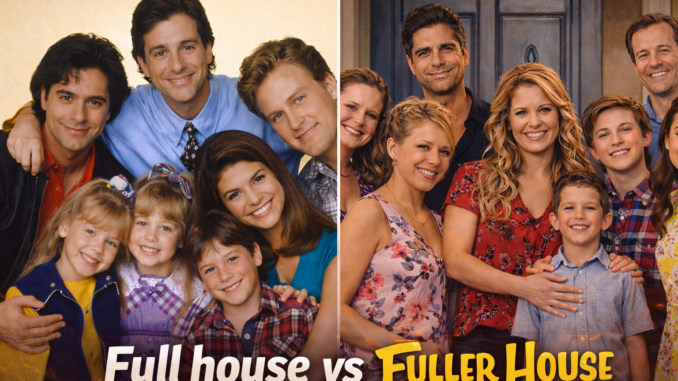
When Full House ended in 1995, it left behind one of the most beloved families in television history. For years, fans wondered what happened to the Tanner family after the cameras stopped rolling.
More than two decades later, that story continued with Fuller House on Netflix. The revival wasn’t just a nostalgic reunion—it was a thoughtful continuation of the themes, characters, and heart that made the original show so special.
Here’s how Fuller House successfully carried the legacy of Full House into a new generation.
A New Generation in the Same Family Home
One of the smartest creative decisions behind Fuller House was reversing the original premise.
In Full House, Danny Tanner raised three daughters with help from his brother-in-law Jesse and best friend Joey after losing his wife.
In Fuller House, the story mirrors that dynamic. After becoming a widow, D.J. Tanner-Fuller moves back into her childhood home to raise her three sons. Just like before, family and friends step in to help.
Her sister Stephanie Tanner and lifelong best friend Kimmy Gibbler move in, creating the same chaotic but loving household dynamic fans remember.
This clever parallel made the revival instantly familiar while still telling a fresh story.
Nostalgia Done Right
A huge part of Fuller House’s success came from its ability to balance nostalgia with new storytelling.
The show frequently referenced memorable moments from the original series, brought back classic catchphrases, and welcomed appearances from beloved characters like Jesse Katsopolis and Joey Gladstone.
These cameos weren’t just fan service—they reminded viewers that the Tanner family history still mattered.
At the same time, the show focused on the next generation of kids, ensuring the story didn’t feel stuck in the past.
Familiar Humor and Heart
Both Full House and Fuller House share the same storytelling formula: lighthearted comedy mixed with emotional family lessons.
Episodes often begin with humorous misunderstandings or everyday chaos but eventually lead to heartfelt conversations about friendship, responsibility, and growing up.
This blend of humor and sincerity became the defining tone of the Tanner universe. It’s what allowed both shows to appeal not only to children, but also to parents watching alongside them.
Character Growth Across Decades
Another reason the revival worked so well was that it allowed fans to see how their favorite characters had grown over time.
Children who once watched Stephanie learning life lessons were now watching her as an adult navigating relationships and personal dreams.
Meanwhile, DJ evolved from the responsible older sister into a single mother balancing family and career.
Seeing these characters grow up alongside the audience made the continuation feel authentic and emotionally rewarding.
A Celebration of Family
At its core, both Full House and Fuller House are built on one simple idea: family doesn’t have to be perfect to be strong.
The Tanner household has always been loud, messy, and sometimes overwhelming—but it’s also full of unconditional support.
By keeping that central message intact, Fuller House honored the spirit of the original series while introducing the Tanner family to a new generation of viewers.
And in doing so, it proved that some TV legacies truly never fade. ❤️