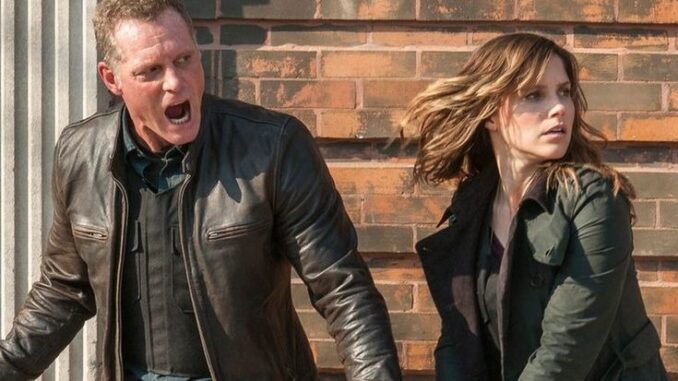
Few crime dramas have managed to sustain emotional weight and narrative intensity quite like Chicago P.D. Over more than a decade on the air, the series has consistently blended gritty police work with deeply human storytelling. Season 13 continues that tradition, and Episode 14—titled “Meant to Be”—may be one of the season’s most quietly powerful chapters.
While the episode delivers the procedural thrills fans expect, it also dives into deeper questions: Are certain events destined to happen? Or are they the result of choices—good or bad—made by people in moments of desperation?
“Meant to Be” explores those ideas through a case that initially seems straightforward but quickly spirals into something far more complicated. By the end of the episode, the Intelligence Unit isn’t just solving a crime—they’re confronting the uncomfortable possibility that sometimes justice doesn’t bring closure.
The Episode’s Central Case: A Crime That Feels Too Coincidental
The episode opens with a late-night car accident on Chicago’s South Side. What initially appears to be a tragic but routine collision soon reveals a darker truth: the driver of one vehicle, a young woman named Elena Marquez, has been shot.
The Intelligence Unit is called in when detectives discover that Elena had no known enemies, no criminal record, and seemingly no reason to be targeted. That’s when the investigation takes its first twist.
Security footage shows that Elena wasn’t supposed to be at the intersection where the shooting occurred. In fact, she had taken a completely different route home that night—one she almost never used.
As Sergeant Hank Voight begins piecing together the timeline, the case starts to feel less random and more like a chain of strange coincidences.
Or, as the episode title suggests, something that was “meant to be.”
Voight’s Moral Dilemma Takes Center Stage
As expected, Voight remains the emotional and strategic anchor of the episode. But unlike many high-stakes episodes where he’s operating with ruthless certainty, “Meant to Be” shows him grappling with something more ambiguous: doubt.
When evidence points toward a suspect named Calvin Rhodes, a former gang member trying to rebuild his life, the situation becomes complicated. Rhodes had been in the area that night—but claims he was there by chance.
Normally, Voight might push aggressively for a confession. But the more he learns about Rhodes, the more uncertain he becomes.
Rhodes had recently started working at a community center and had been mentoring teenagers trying to avoid gang life. The man doesn’t fit the typical profile of a calculated killer.
Yet the evidence keeps stacking up against him.
This tension becomes the heart of the episode: Can someone truly escape their past, or does fate always pull them back?
Burzek’s Emotional Subplot Adds Depth
Beyond the central investigation, the episode also offers a meaningful subplot involving Kim Burgess and Adam Ruzek, a relationship fans affectionately call “Burzek.”
After years of ups and downs, the pair appear to be in a more stable place—but “Meant to Be” subtly tests that stability.
When Burgess interviews a witness who believes destiny played a role in the crime, the conversation triggers something deeper within her. She begins reflecting on her own life choices, particularly the unpredictable path that brought her and Ruzek back together.
Their scenes in this episode are understated but effective. Rather than dramatic confrontations, the writers opt for quiet conversations—moments where both characters acknowledge how much their lives have been shaped by chance.
In one particularly touching scene, Ruzek remarks:
“Sometimes I think the worst things that happened to us are the reason we’re still here.”
It’s a line that perfectly captures the emotional core of the episode.
The Investigation Takes a Surprising Turn
Midway through the episode, the case takes another unexpected twist.
The team discovers that Elena Marquez had recently been involved in a legal dispute over a small inheritance left by her late grandmother. The dispute involved a distant cousin who had suddenly reappeared in her life.
At first glance, the conflict seems minor. But digging deeper reveals that the inheritance wasn’t just sentimental—it included property potentially worth millions due to a planned development project.
Suddenly, what looked like a random act of violence begins to resemble something far more deliberate.
However, the suspect isn’t who the team originally expected.
In a carefully constructed reveal, the investigation leads to someone much closer to Elena’s daily life—someone who believed that eliminating her was the only way to secure their future.
Themes of Fate vs. Choice
What makes “Meant to Be” stand out is how effectively it explores its central theme without becoming overly philosophical.
Throughout the episode, different characters express conflicting beliefs about fate.
Some argue that life is nothing more than a series of random events.
Others believe certain moments are inevitable.
Voight’s perspective seems to land somewhere in the middle. By the end of the episode, he suggests that fate might exist—but people still choose what they do with the circumstances they’re given.
It’s a nuanced take that fits perfectly with the tone Chicago P.D. has built over the years.
A Quiet but Powerful Ending
Unlike some episodes that conclude with explosive action, “Meant to Be” opts for a more restrained ending.
The real perpetrator is eventually identified and arrested, but the resolution doesn’t feel triumphant.
Instead, the final scenes focus on the ripple effects of the crime—particularly on Elena’s family, who struggle to understand how such a senseless tragedy could happen.
In one of the episode’s most haunting moments, Voight watches from a distance as the family gathers outside their home.
He doesn’t say anything.
He simply observes.
For a character known for his tough exterior, the silence speaks volumes.
Performance Highlights
The cast delivers strong performances across the board.
Jason Beghe once again proves why Voight remains one of television’s most compelling law enforcement characters. His portrayal balances authority, empathy, and quiet vulnerability in ways few actors could achieve.
Meanwhile, Marina Squerciati and Patrick John Flueger bring emotional authenticity to Burgess and Ruzek’s storyline, grounding the episode in personal stakes beyond the investigation.
Guest actors also deserve credit for adding depth to the case. Rather than presenting simple villains, the episode portrays individuals shaped by complex motivations and circumstances.
Direction and Atmosphere
Visually, the episode maintains the gritty realism that has become a hallmark of Chicago P.D.
Nighttime scenes dominate the episode, reinforcing the mood of uncertainty and moral ambiguity.
The cinematography frequently frames characters in shadows or reflections—subtle visual cues that mirror the episode’s themes of hidden truths and unpredictable outcomes.
It’s a reminder that even after thirteen seasons, the show’s creative team continues to find new ways to keep the storytelling visually engaging.
Final Verdict
“Meant to Be” may not be the most explosive episode of Chicago P.D. Season 13, but it’s certainly one of the most thoughtful.
By blending a compelling investigation with deeper reflections on fate, choice, and consequence, the episode delivers a story that lingers long after the credits roll.
In a television landscape crowded with crime dramas, Chicago P.D. continues to prove that procedural storytelling can still feel fresh—especially when it focuses on the humanity behind the badge.
If the rest of the season maintains this level of emotional depth, fans have plenty to look forward to.