
When Roseanne was abruptly canceled, many assumed the story of the Conner family had come to an end. For decades, the show had been inseparable from Roseanne Barr—its lead, its voice, and its defining presence. Without her, it seemed impossible to imagine the series continuing in any meaningful way.
But the story did not end. It was rewritten.
A new series, The Conners, emerged from the remains of the original show. Familiar faces returned. The setting was the same. The tone attempted to preserve what audiences once loved. Yet one absence defined everything: Roseanne Conner herself.
Rather than gradually phasing out the character, the writers chose a definitive and irreversible solution. Roseanne Conner was written out of the story through an off-screen death, later explained as the result of an opioid overdose. It was a narrative decision that carried a stark finality—one that left no room for ambiguity, no path for return.
For viewers, the impact was immediate and unsettling. A character who had anchored the series for years was gone, not through a dramatic farewell or emotional closure, but through a sudden absence explained after the fact. The method of her departure—quiet, indirect, and absolute—contrasted sharply with the force of her presence in earlier seasons. 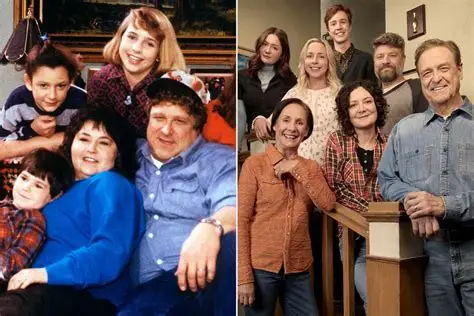
Beyond its narrative function, the decision signaled something larger. It marked a deliberate effort to separate the future of the franchise from its past. By removing Roseanne entirely, the show could continue without the weight of the controversy surrounding its former star. The story moved forward, but it did so by redefining its own foundation.
This kind of removal is rare in television. Characters are often replaced, recast, or written out, but seldom erased so completely from a world they once defined. In this case, the fictional death carried symbolic weight. It reflected not only the end of a character, but also the severing of a connection between creator and creation.
The result is a narrative that feels both continuous and fractured. The Conners continues the lives of the same family, in the same home, facing similar struggles. And yet, at its center, there is a silence—a missing presence that cannot be fully replaced.
In the end, the most haunting aspect of this transition is not the way the character died, but the way she disappeared. The world she helped build remains intact, continuing without her, as if she had never been essential to it at all.